

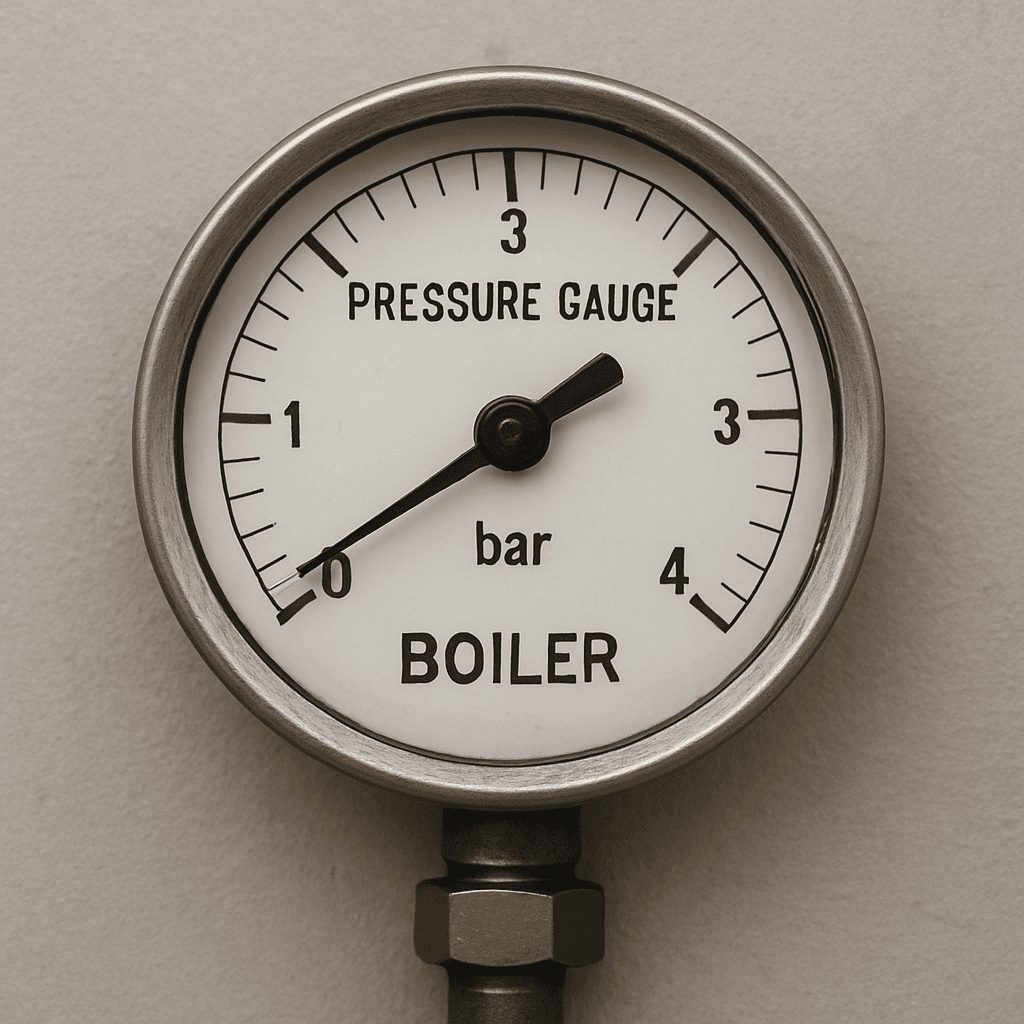
If your boiler suddenly shows an F1 fault code, it usually means the system pressure has dropped too low for the boiler to operate safely. That is why heating stops, hot water can become unreliable, and the boiler locks out until the pressure issue is dealt with.
While the code itself is common, the important question is what caused the pressure to fall in the first place.
What the F1 fault code means
The F1 code is most commonly linked to low system pressure. In a sealed central heating system, pressure is needed to circulate water through the boiler, radiators, and pipework. If that pressure falls too far, the boiler shuts down to protect itself.
In most systems, normal pressure sits around 1.0 to 1.5 bar when cold. If it drops below that range, an F1 fault can appear.
Why the pressure drops
An F1 code is usually a symptom rather than the fault itself. Common causes include:
- Water escaping from pipework, radiators, or valves
- Pressure loss after bleeding radiators
- A pressure relief valve discharging water
- Expansion vessel problems causing pressure instability
- Internal boiler faults affecting pressure retention
If pressure keeps dropping after topping up, the system is not holding water properly.
Why the fault often comes back
Many homeowners top the pressure back up, reset the boiler, and find it works again for a short time. If the F1 fault then returns, it usually means the underlying cause has not been resolved.
This often points to a small but ongoing leak somewhere within the heating system, especially if no obvious water is visible.
Safe checks you can make
Before calling for help, there are a few sensible checks you can make yourself:
- Look at the pressure gauge and confirm whether it is below normal range
- Check whether radiators have been bled recently
- Inspect visible valves and pipework for signs of moisture
- Check whether the pressure drops again after topping up
If pressure falls repeatedly, the issue needs proper investigation rather than repeated resetting.
When the F1 code points to a hidden leak
One of the most common reasons for recurring low-pressure faults is a leak within concealed heating pipework. Because pipes often run under floors, behind walls, or through ceilings, water may escape without obvious signs at first.
In these cases, the boiler fault is simply the first visible sign that something within the system is wrong.
Why it should not be ignored
The F1 fault itself is a protective shutdown, but repeated low-pressure operation can lead to wider problems if the cause is ignored.
- Heating becomes unreliable
- Radiators may stop performing properly
- Components are placed under extra strain
- Leaks can worsen over time
What starts as an occasional reset can turn into a bigger heating system issue if left unresolved.
The takeaway
An F1 boiler fault code usually means the system pressure has dropped too low, but the code does not tell you why. In many cases, the real issue is water loss somewhere within the heating system.
For a full breakdown of causes and pressure behaviour, see our central heating leaks explained guide.
If your boiler keeps showing F1 or losing pressure, our central heating leak detection service can identify the cause accurately and without unnecessary disruption.