

Different boiler manufacturers use slightly different systems for repressurising. Here’s a breakdown of how to use the filling loop on some of the most common brands in the UK:
🔧 Ideal Boilers (F1 Fault Code)
- Look for a silver braided hose beneath the boiler with two black taps.
- Turn both taps slowly so they line up with the pipe.
- Watch the pressure gauge climb to 1.0–1.5 bar.
- Close both taps firmly.
- If the F1 code remains, reset the boiler.
Newer models use a fixed link with 2 x blue knobs. operation is the same
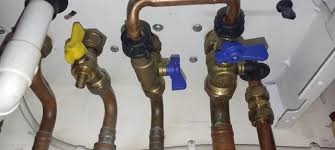
🔧 Baxi Boilers (E119 Fault Code)
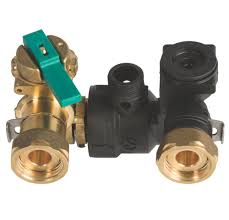
- On most Baxi combi models (200 & 400 range), the filling loop is located underneath.
- You’ll see a tap with a blue or black handle.
- Turn it slowly to let water into the system.
- Once the gauge reaches the correct pressure, close the tap.
- Clear the E119 error code by resetting the boiler if needed.
older models will have 2 x blue or black taps on fixed pipework. (it may have been removed and capped. It should have been kept with the boiler)
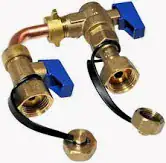
🔧 Vaillant Boilers (F22 Fault Code)
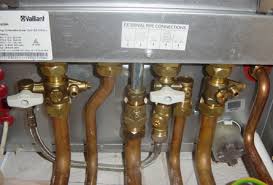
- Vaillant often uses an internal filling loop.
- There’s usually 2x small grey plastic levers beneath the boiler.
- Turn one lever fully and the control the flow with the second until the pressure gauge rises to 1.2 bar.
- Turn both back fully to close.
- The F22 low-pressure code should disappear automatically.
The newer ecofit range have 2 x fixed black knobs with flat head screw holes in them . the procedure is the same.
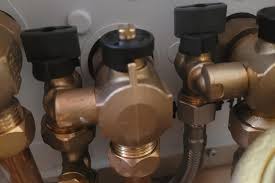
🔧 Worcester Bosch Boilers (Flashing Blue Light / Error 1017 GZ)
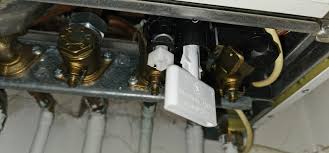
- Some Worcester models use a keyed filling link.
- Insert the Worcester filling key into the slot underneath the boiler.
- Turn it to lock (it’s a bayonet connection), then slowly rotate the white tap to allow water in.
- When pressure reaches 1.0–1.5 bar, close the tap and remove the key.
- If your boiler has an external braided hose, use it like other brands by opening both taps.
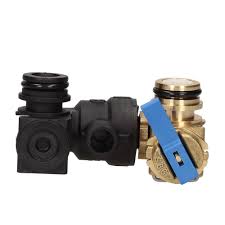
There is also an option with a blue lever instead of a key. Just pull the blue lever down, its spring loaded and so will close naturally.
🔧 Main Boilers (E119 Fault Code)
- Main Heating boilers are part of the same group as Baxi, and use similar filling loops.
- Locate the braided hose beneath the boiler with two taps.
- Turn them both slowly to allow water in.
- Close firmly once pressure is back to normal.
- The E119 code should clear after reset.
🔧 Glow-worm Boilers (F22 / F75 Fault Codes)
Glow-worm boilers often share components with Vaillant, meaning the repressurising process is similar.
How to repressurise a Glow-worm boiler:
- Locate the filling loop, usually a silver braided hose beneath the boiler.
- Open the two taps slowly so they align with the pipe.
- Watch the pressure gauge until it rises to 1.0–1.5 bar.
- Close both taps securely.
- Reset the boiler if the F22 (low pressure) or F75 (pump/pressure issue) code remains.
Older models have a blue tap underneath, newer boilers have a 2 x knob with screw head system. see below:
🔧 Ariston Boilers (108 / 109 Fault Codes)
Ariston boilers typically show fault code 108 for low pressure, or 109 if the system can’t detect water.
How to repressurise an Ariston boiler:
- Find the built-in filling loop, usually with black or grey levers beneath the boiler.
- Open the levers carefully to allow water into the system.
- Keep an eye on the pressure gauge, topping up to 1.2 bar when cold.
- Close the valves firmly once complete.
- Reset the boiler if necessary to clear the fault code.
🔧 ATAG Boilers (118 / 101 Fault Codes)
ATAG boilers are high-efficiency systems, and low pressure often triggers error 118 (low water pressure) or 101 (general no ignition, often linked to pressure).
How to repressurise an ATAG boiler:
- Look for the integrated filling loop beneath the boiler. Some ATAG models use a built-in lever system rather than a separate hose.
- Turn the lever slowly to let water in.
- Monitor the gauge until it reaches 1.0–1.5 bar.
- Turn the lever back to the closed position.
- Restart the boiler if the 118 or 101 fault code remains.
Safety Reminder ⚠️
- Never overfill your boiler — do not exceed 2.0 bar.
- (don’t worry if you do it’s just an indication of how much water is in the system and not dangerous)
- Always close the filling loop securely after use.
- If pressure drops repeatedly, keep topping up to keep the boiler on. However, this usually means there’s a hidden leak in the system that requires professional detection.
For a full breakdown of causes and pressure behaviour, see our central heating leaks explained guide.
If your system is losing pressure or showing signs of a leak, it’s important to identify the cause rather than repeatedly topping it up. Our central heating leak detection service will locate the issue accurately.