

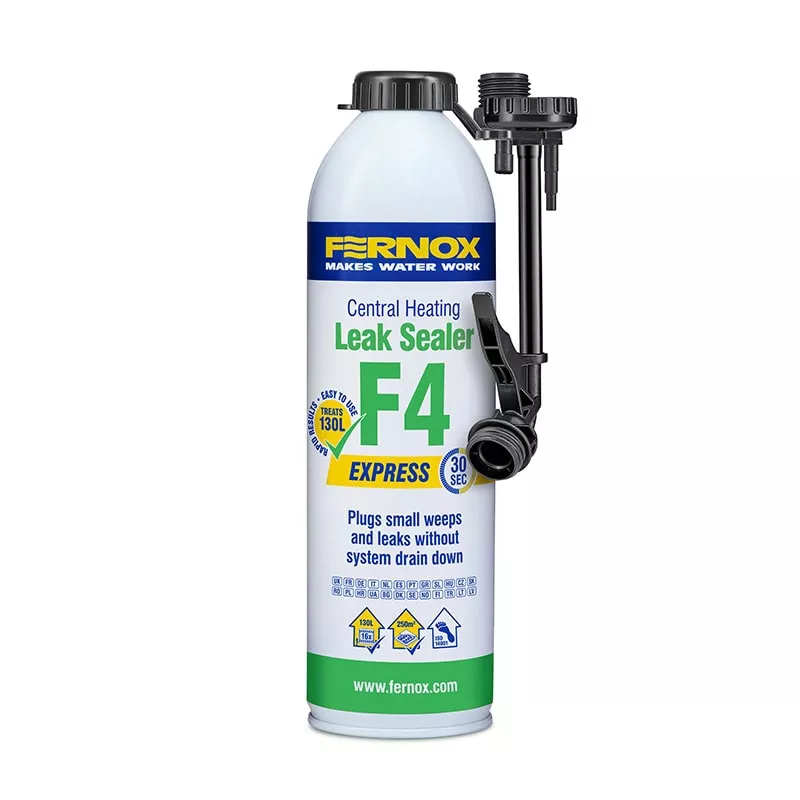
If you’ve been told to use central heating leak sealant, or you’re considering it as a quick fix, it’s important to understand what it actually does — and what it doesn’t do.
Leak sealants are often seen as an easy solution to pressure loss, but in most cases they only mask the problem rather than fixing it.
What central heating leak sealant is designed to do
Leak sealant is a liquid added into the heating system. As it circulates, it reacts when it reaches a small leak, helping to temporarily slow or seal the escape of water.
It is typically added via a radiator, filling loop, or dosing point.
In theory, it offers a way to reduce pressure loss without opening floors or walls.
When leak sealant might work
In very specific situations, sealant can help — but these are limited.
- Very small pinhole leaks
- Micro-leaks in inaccessible areas
- Short-term use while planning a repair
Even in these cases, it should be seen as a temporary measure, not a solution.
Why leak sealant often doesn’t solve the problem
Most heating system leaks are not simple pinholes. They are caused by:
- Corrosion inside pipework
- Failing joints or valves
- Movement or stress within the system
- Ongoing pressure instability
Sealant does not repair any of these issues — it simply attempts to block the symptom.
The risks of relying on leak sealant
Using sealant without proper diagnosis can create further problems.
- Blockages in pumps, filters, or heat exchangers
- Reduced system efficiency
- Masked leaks that continue to worsen
- Delays in identifying the real fault
This is why many systems continue to lose pressure even after sealant has been added.
What leak sealant is often used for in reality
In practice, sealant is often used when the source of a leak hasn’t been identified. It becomes a way of avoiding disruption rather than solving the issue.
However, if pressure continues to drop, the underlying problem is still there — just harder to trace.
When you should avoid using sealant
Leak sealant is usually not appropriate if:
- Pressure drops regularly or quickly
- The system needs frequent topping up
- The cause of the leak is unknown
- There are signs of corrosion or system deterioration
In these cases, proper investigation is far more effective than temporary fixes.
The better approach
If your heating system is losing pressure, the most reliable solution is to identify where water is escaping and why.
This avoids repeated topping up, prevents further damage, and ensures the issue is resolved properly.
The takeaway
Central heating leak sealant can sometimes reduce very small leaks, but it is not a repair. In most cases, it delays proper diagnosis and allows underlying problems to continue.
If your system is losing pressure or showing signs of a leak, our central heating leak detection service can pinpoint the cause without unnecessary disruption. You can also read our signs of a central heating leak guide to understand how concealed leaks are identified.