

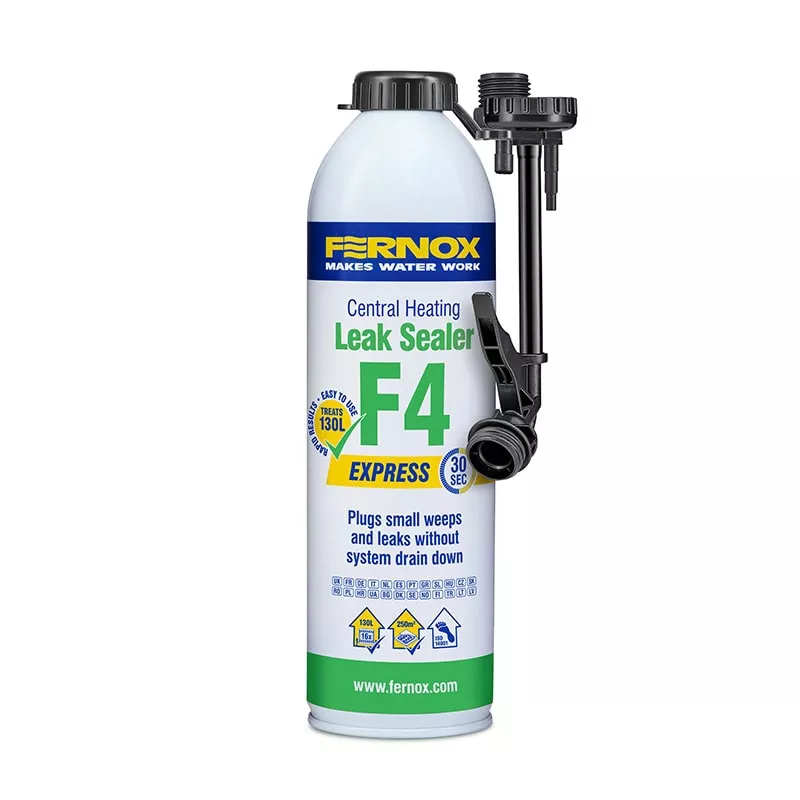
When a central heating system develops a leak, it’s common to look for a quick and low-disruption solution. One option often considered is a chemical leak sealer, designed to circulate through the system and seal very small leaks from the inside.
While these products can work in specific situations, they are not a replacement for proper diagnosis. Understanding when they are appropriate — and when they are not — is key to avoiding further problems within the system.
What central heating leak sealers actually do
Leak sealers are liquid additives introduced into a sealed heating system. As they circulate, they react with oxygen at the point where water escapes, forming a temporary seal.
They are designed to target very small leaks such as pinholes or hairline cracks within pipework or radiators.
They do not repair damaged pipework or failing components.
When a leak sealer may help
In limited situations, a leak sealer can reduce water loss where:
- The leak is extremely small
- Pipework is inaccessible without major disruption
- Pressure loss is gradual rather than rapid
- No visible damage is present
In these cases, sealant may stabilise the system temporarily.
Where leak sealers are not suitable
Leak sealers are not designed for faults involving structural failure or active water loss.
- Visible leaks from pipes, joints, or radiators
- Pipework that has split or failed
- Leaks causing damp patches or water damage
- Repeated or rapid pressure loss
In these situations, using sealant can delay proper repair and allow the problem to worsen.
The limitations of chemical sealing
Even where sealants appear to work, there are important limitations.
- They do not fix the underlying cause
- Their effect is often temporary
- Performance depends on system condition
- They can mask developing pipework failure
Because the root issue remains, pressure loss or further leaks may return over time.
Why correct diagnosis matters
In most central heating systems, pressure loss is caused by water escaping somewhere within the pipework. Without identifying where that loss is occurring, any solution is based on assumption rather than confirmation.
You can read more about how these issues develop in our where central heating leaks occur guide.
A more reliable approach
Where pressure loss continues or the cause is unclear, locating the source is more effective than attempting to seal it indirectly.
Professional detection uses non-invasive methods such as acoustic testing, thermal imaging, and tracer gas to identify the exact location of the problem.
The takeaway
Central heating leak sealers can help in very specific situations, but they are not a permanent repair. In most cases, they should be viewed as a temporary measure rather than a solution.
If your system is losing pressure or showing signs of a leak, identifying the cause early prevents further damage and avoids repeated issues.
Our central heating leak detection service locates the source accurately, allowing the problem to be resolved properly without unnecessary disruption.