

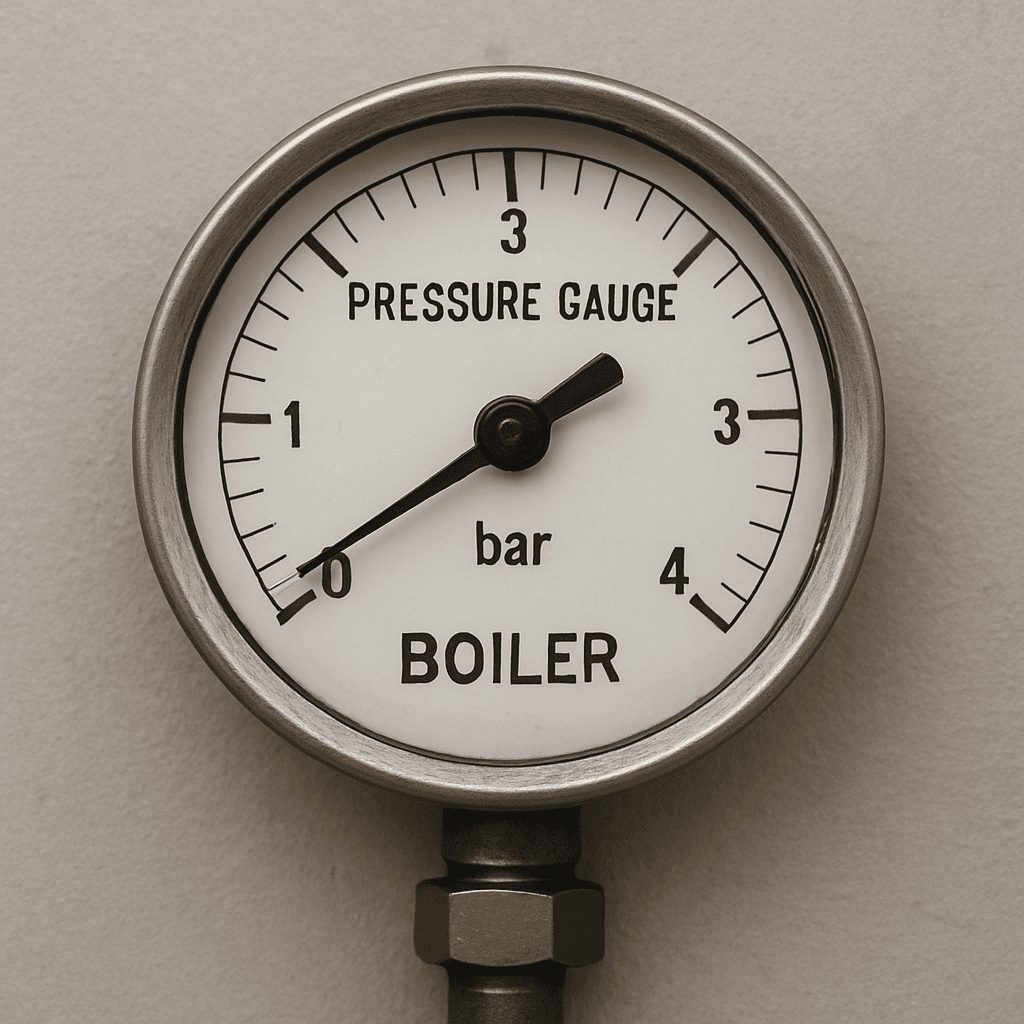
A boiler losing pressure is one of the clearest signs that a central heating system is no longer sealed or operating correctly. While the system may still run temporarily, ongoing pressure loss always points to an underlying issue that requires attention.
If you are regularly topping up your boiler, water is escaping somewhere within the system or a component is failing to maintain pressure properly.
Quick answer: why boiler pressure drops
Boiler pressure usually drops for one of the following reasons:
- Water escaping from pipework, radiators, or joints
- A pressure relief valve releasing water
- Expansion vessel failure causing pressure instability
- Air entering the system and being released
- Internal faults within the boiler
In most properties, repeated pressure loss is linked to water escaping somewhere within the heating circuit.
How boiler pressure should behave
A sealed central heating system circulates the same water continuously. Pressure should remain stable, with only small changes as the system heats and cools.
- Typically 1–1.5 bar when cold
- Rising slightly when the system heats
If pressure drops outside of this normal range, the system is either losing water or failing to control pressure correctly.
The most common cause: water loss
The most common reason a boiler loses pressure is simple: water is leaving the system.
Because heating pipework is rarely fully visible, leaks often develop in concealed areas such as:
- Under floors
- Behind walls
- Within ceilings
In these cases, water may never become visible, which is why pressure loss is often the first and only sign.
Other causes of pressure loss
While leaks are the most common cause, other faults can also affect system pressure.
Pressure relief valve discharge
If system pressure rises too high, the pressure relief valve may release water externally. This can go unnoticed if the discharge pipe is not regularly checked.
Expansion vessel failure
A faulty expansion vessel cannot absorb pressure changes properly. This often leads to pressure rising when hot and dropping when the system cools.
Air entering the system
Air entering the system disrupts circulation and is released when radiators are bled, causing further pressure loss.
What repeated pressure loss tells you
The pattern of pressure loss often indicates the type of issue:
- Gradual loss over time usually indicates a small leak
- Pressure dropping after heating cycles often suggests expansion vessel issues
- Frequent topping up confirms water is leaving the system
If you are topping up regularly, the system is not holding water correctly.
Why topping up is not a solution
Repressurising restores the system temporarily but does not fix the cause.
Repeated topping up introduces oxygen into the system, which can lead to:
- Internal corrosion
- Sludge build-up
- Reduced system lifespan
Over time, this makes the problem worse rather than better.
When further investigation is needed
You should investigate if:
- Pressure drops repeatedly
- The system needs frequent topping up
- No visible leak can be found
- Heating performance becomes inconsistent
At this stage, identifying the cause is more effective than replacing parts or guessing.
The takeaway
A boiler losing pressure is not a fault to ignore. In most cases, it is a clear indication that the system is losing water or failing to maintain pressure correctly.
For a full breakdown of causes and pressure behaviour, see our central heating leaks explained guide.
If the cause is not obvious, our central heating leak detection service identifies the issue accurately before unnecessary repairs or replacement are carried out.