

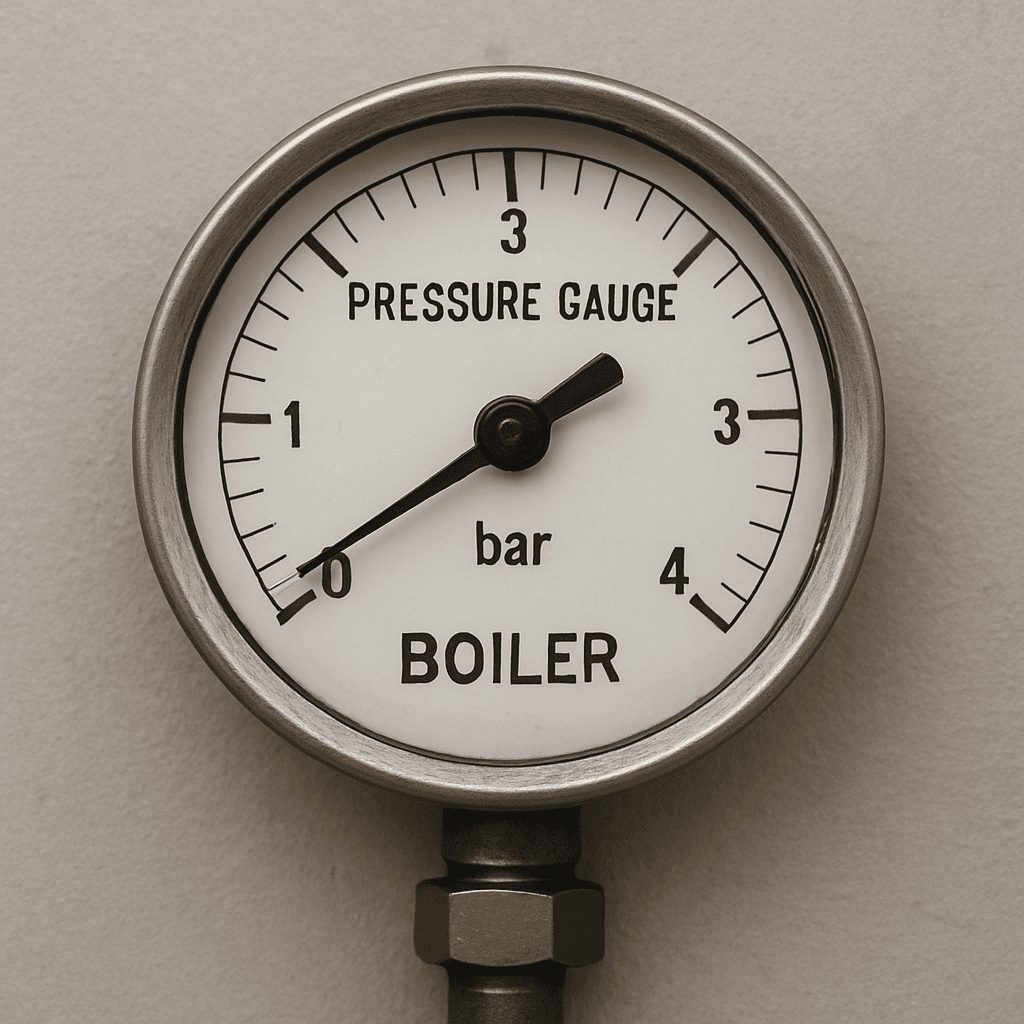
If your boiler pressure drops overnight, it can feel confusing. Everything may seem to work normally during the day, only for the pressure gauge to fall or the boiler to show a fault by morning.
This pattern is often linked to how the system behaves as it cools, rather than a fault that suddenly appears overnight.
Why pressure drops are often noticed overnight
During the day, the heating system is active. Water is circulating, components are warm, and pressure remains relatively stable.
Overnight, when the system is switched off, the conditions change. As water cools, it contracts slightly. In a properly functioning system, this change is controlled by components such as the expansion vessel.
If those components are not working correctly, or if there is a weakness in the system, pressure can drop gradually while the boiler is idle.
Common causes of overnight pressure loss
There are several reasons this pattern may occur.
Expansion vessel problems
The expansion vessel is designed to absorb pressure changes. If it loses its charge or the internal diaphragm fails, it can no longer regulate pressure effectively. This often leads to drops that become more noticeable as the system cools.
Pressure relief valve releasing water
A worn or partially stuck pressure relief valve may release small amounts of water as pressure fluctuates. This can happen slowly and without obvious signs inside the property.
Small leaks in concealed pipework
Leaks beneath floors or behind walls may allow water to escape steadily. These leaks often go unnoticed during the day but become more apparent when the system is not in use.
For a full breakdown of causes and pressure behaviour, see our central heating leaks explained guide.
Recent system changes
If radiators have been bled or the system has been topped up recently, pressure may drop overnight as the system stabilises and underlying weaknesses become apparent.
Why there are often no visible signs
Overnight pressure loss rarely produces obvious symptoms like visible water or damp patches.
In many cases:
- Leaks are too small to be seen
- Water evaporates before becoming visible
- Discharge occurs through external pipework
This is why the issue is often only noticed through changes in the pressure gauge.
Why topping up in the morning is not a solution
It is common to top up the pressure in the morning and carry on. However, this only restores pressure temporarily and does not address the cause.
Repeated topping up can:
- Introduce oxygen into the system
- Increase corrosion
- Lead to sludge build-up
- Shorten the lifespan of components
If pressure drops regularly overnight, the system needs investigation rather than repeated refilling.
When to take overnight pressure loss seriously
It is worth investigating if:
- Pressure drops consistently overnight
- The boiler locks out by morning
- You are topping up daily or every few days
- The pattern has been ongoing for some time
These signs usually indicate an underlying fault within the system.
The takeaway
Boiler pressure that drops overnight is rarely random. It is usually a sign of a system that is not maintaining pressure correctly as it cools.
Recognising this pattern early helps prevent further damage and avoids more disruptive repairs later.
If your pressure keeps falling overnight, our central heating leak detection service can identify the cause accurately and with minimal disruption.