

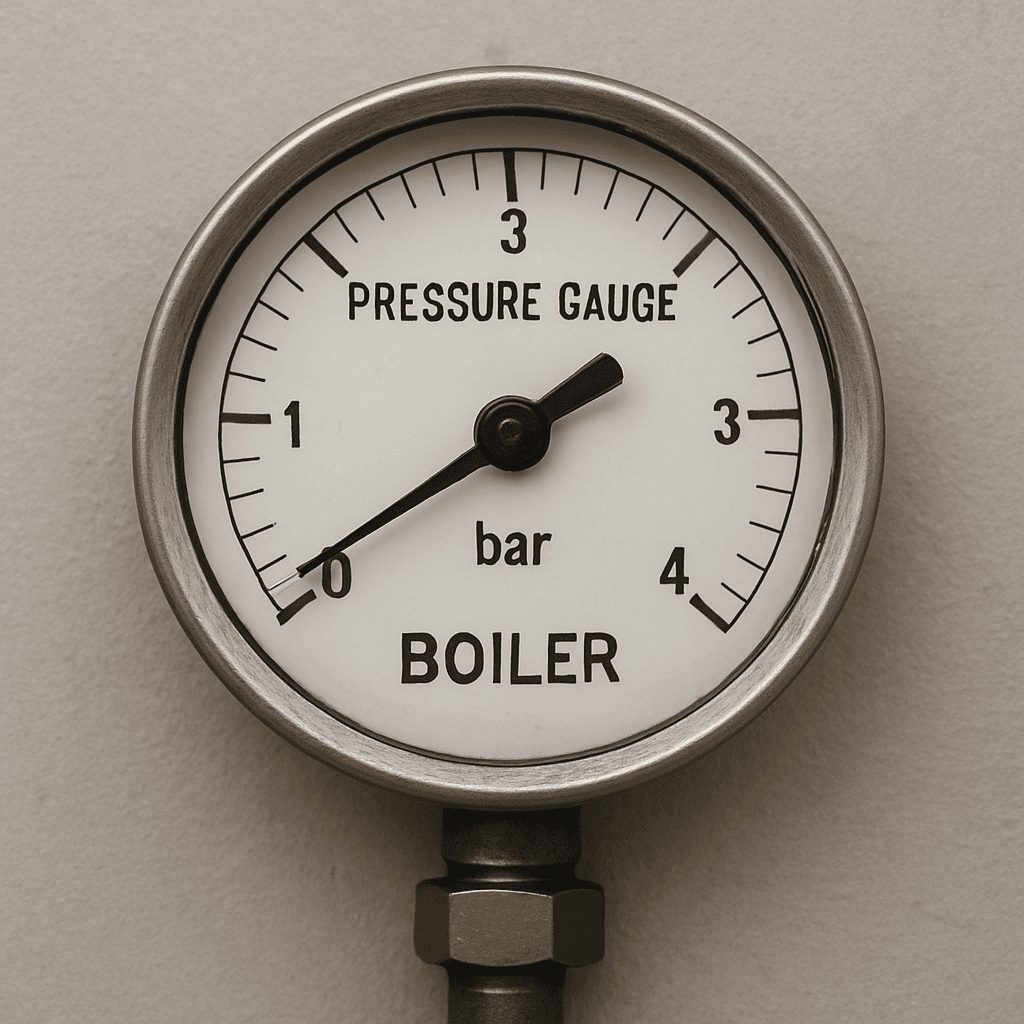
When your boiler pressure keeps dropping but there is no visible sign of water anywhere in the property, it can be difficult to understand what is going wrong. Everything appears dry, yet the pressure gauge continues to fall.
In a sealed central heating system, pressure should remain stable. If it does not, it usually means water is escaping somewhere within the system — even if you cannot see it.
Why pressure can drop without visible leaks
Modern heating systems hide most of their pipework. Pipes often run beneath floors, behind walls, or through ceilings, meaning leaks can develop out of sight.
In some cases, water escapes so slowly that it evaporates before becoming visible. In others, it drains away through areas that are rarely checked, such as external discharge pipes.
Just because there is no visible water does not mean there is no leak.
Common hidden causes of pressure loss
Several issues can cause pressure to fall without obvious signs.
Small leaks in concealed pipework
Hairline cracks or loose joints in pipework hidden under floors or inside walls can leak small amounts of water continuously. These leaks often go unnoticed in the early stages.
Pressure relief valve discharging externally
The pressure relief valve may release water through a pipe that exits outside the property. This is easy to miss unless the pipe is checked directly.
Internal boiler component faults
Some leaks occur inside the boiler casing itself. These can affect seals, heat exchangers, or internal pipe connections, allowing water to escape without any visible signs outside the unit.
Expansion vessel problems
If the expansion vessel is not functioning correctly, pressure changes can force water out of the system intermittently, leading to gradual pressure loss.
Why the issue often gets worse over time
Hidden pressure loss rarely stays the same. Small leaks tend to worsen as components wear, seals degrade, or corrosion develops.
What starts as occasional pressure loss can gradually become more frequent, requiring regular topping up.
Each time fresh water is added, oxygen enters the system, increasing corrosion and the risk of sludge build-up.
Why topping up is not a long-term fix
Topping up the system restores pressure temporarily, but it does not solve the underlying issue.
Repeated topping up can:
- Increase corrosion inside the system
- Reduce efficiency
- Shorten the lifespan of components
- Lead to further faults over time
If pressure continues to fall, the system needs investigation rather than repeated refilling.
Signs the problem needs investigation
You should investigate further if:
- Pressure drops steadily over time
- The boiler locks out without visible leaks
- Radiators take longer to heat
- Air builds up in the system after topping up
These signs usually indicate a fault within concealed pipework or system components.
What you can check yourself
There are a few basic checks you can carry out safely:
- Inspect the external pressure relief pipe for signs of discharge
- Check around the boiler for dampness
- Monitor how quickly pressure drops after topping up
These checks can help identify patterns, but they do not replace proper investigation.
The takeaway
Boiler pressure that drops without visible leaks is rarely harmless. In most cases, it points to a hidden issue within the system that gradually worsens over time.
Understanding that pressure loss can occur out of sight helps ensure the real problem is identified rather than overlooked.
For a full breakdown of causes and pressure behaviour, see our central heating leaks explained guide.
If your boiler pressure keeps dropping with no visible leak, our central heating leak detection service can pinpoint the cause accurately and with minimal disruption.