

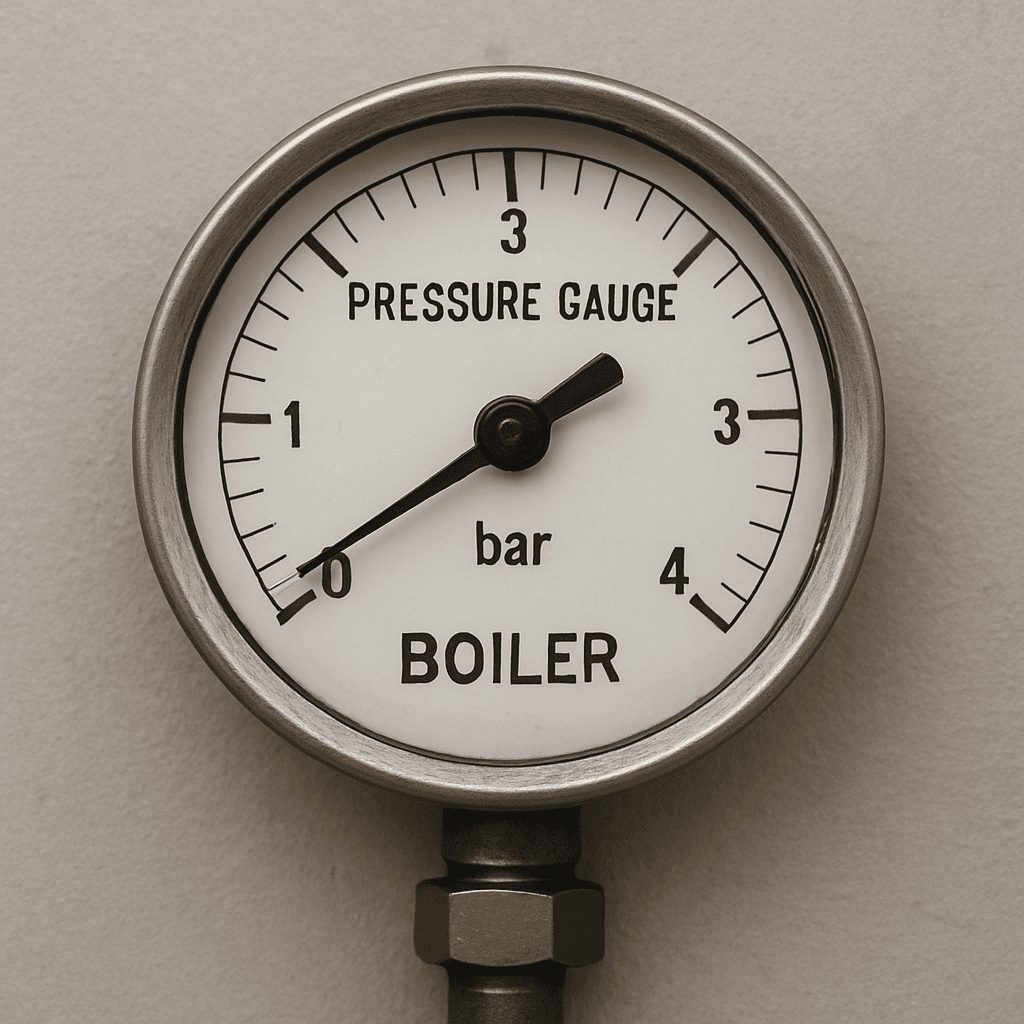
Repeated boiler pressure loss should not be dismissed as a minor fault. While a one-off drop may not always be serious, ongoing pressure loss usually means something within the system is failing, leaking, or no longer operating correctly.
If the issue is ignored and the system is repeatedly topped up without proper investigation, the problem often becomes more expensive and more disruptive to fix.
Why repeated pressure loss matters
Boiler pressure is essential for circulating water around the heating system. When pressure drops too low, water cannot move efficiently, which affects heating performance and places extra strain on key components.
Over time, that strain can lead to breakdowns, poor circulation, and worsening system reliability.
What happens when pressure keeps dropping
Repeated pressure loss can affect the system in several ways.
Boiler lockouts
Most modern boilers are designed to shut down if the pressure drops below a safe operating level. Repeated lockouts are inconvenient, but they also suggest the underlying fault is getting worse.
Component wear
Pumps, valves, and heat exchangers all rely on the correct pressure to work properly. When pressure is regularly too low, those parts can suffer increased wear and reduced performance.
Poor heating performance
If water is not circulating properly, radiators may heat unevenly and rooms may take longer to warm up. This often leads to reduced comfort and higher running costs.
Why topping the system up is not a real fix
Repeatedly repressurising the system may get the heating working again temporarily, but it does not solve the underlying problem.
Every time fresh water is added, more oxygen enters the system. Over time, that can contribute to:
- Corrosion inside the pipework
- Sludge formation
- More wear on heating components
This is one reason small pressure-loss issues often turn into bigger and more expensive heating problems.
Could a hidden leak be causing the problem?
In many properties, repeated pressure loss is linked to a hidden leak within the heating system. Because pipework is often buried in floors, boxed in, or routed behind walls, water can escape without any obvious visible signs at first.
That is why pressure loss is often noticed before damp patches or visible water damage appear.
What can happen if it is ignored
Leaving repeated pressure loss unresolved can lead to more serious problems over time, including:
- Worsening leaks within concealed pipework
- Damp and mould caused by escaping water
- Damage to floors, walls, or finishes
- Breakdowns during colder weather when the system is under more demand
- Higher repair costs due to delayed investigation
Even if the boiler continues to run for a while, the underlying fault rarely improves on its own.
Signs the problem needs attention now
It is worth investigating promptly if:
- The pressure drops every few days
- You need to top up the boiler regularly
- The boiler locks out more than once
- Heating performance is getting worse
- There are signs of damp but no visible leak source
These signs usually point to an active fault somewhere in the system.
The takeaway
Repeated boiler pressure loss is rarely harmless. In most cases, it is an early warning sign that something within the heating system needs attention.
Dealing with the cause early helps protect the system, reduce repair costs, and avoid bigger problems later.
For a full breakdown of causes and pressure behaviour, see our central heating leaks explained guide.
If your boiler pressure keeps dropping, our central heating leak detection service can identify the cause accurately and with minimal disruption.