

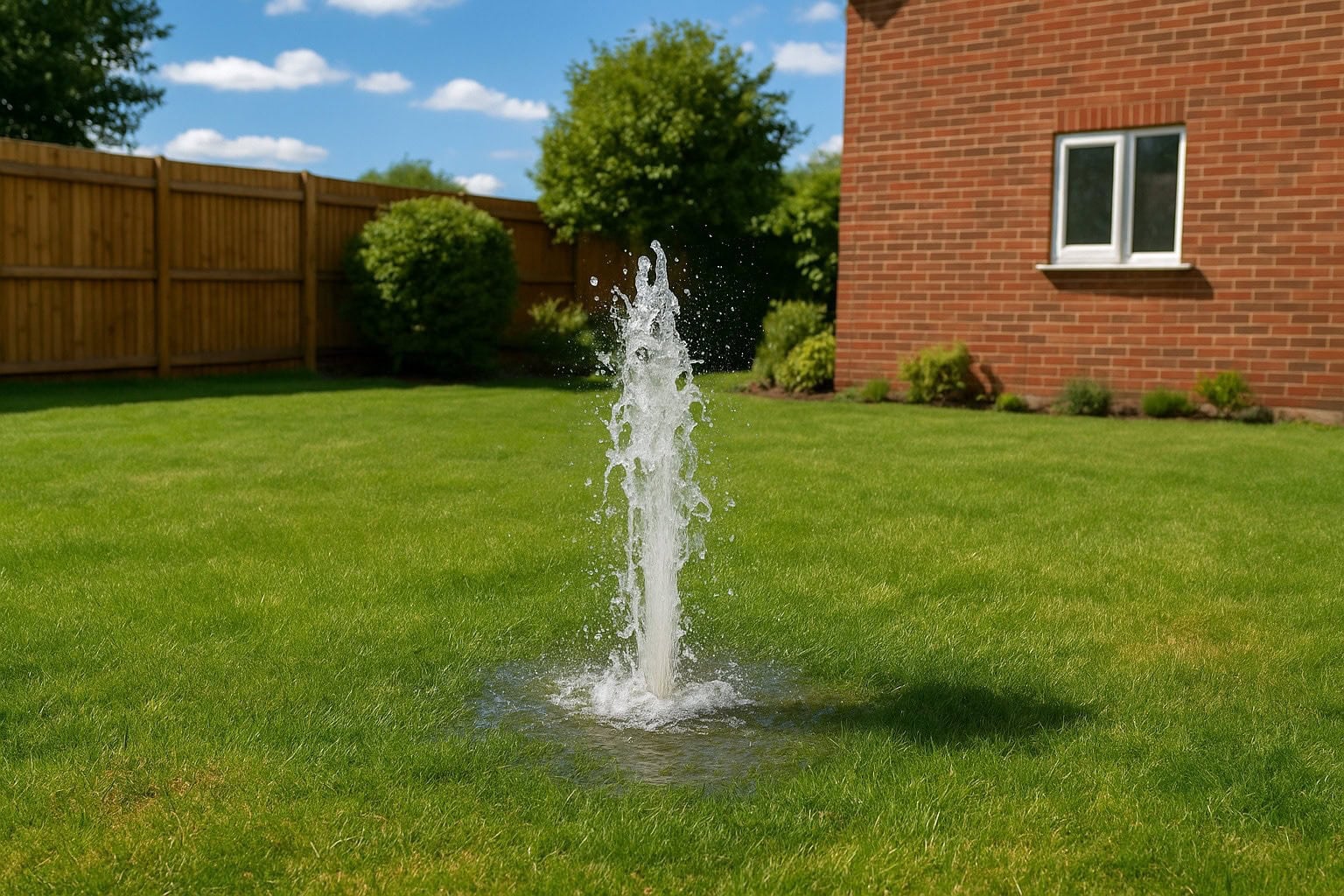
Many homeowners assume underground water leaks only affect gardens, driveways, or outdoor pipework. In reality, some of the most serious cases of finding underground water leaks begin when damage appears inside the house, even though the leak itself is outside or below ground level.
Because the source is hidden, the connection between underground leaks and internal damage is often missed.
How underground leaks reach the inside of a property
Water escaping below ground doesn’t always stay outside. Over time, moisture can migrate toward the building, particularly if the leak is close to the foundations or beneath the property.
Water can enter the home by:
- Seeping through foundation walls
- Rising through concrete floors
- Following service entry points
- Saturating sub-floor spaces
Once moisture reaches internal structures, damage can develop quickly.
Common signs of internal damage caused by underground leaks
Internal damage from underground leaks often appears gradually and may be mistaken for other issues.
Typical signs include:
- Damp patches on ground-floor walls
- Moisture staining near skirting boards
- Warped or lifting flooring
- Persistent musty smells
- Mould growth in lower rooms
These symptoms may appear far from the actual leak location, making diagnosis challenging.
Why damage often appears away from the leak
Underground water doesn’t always rise vertically. It follows the path of least resistance through soil, foundations, and structural voids.
As a result, moisture may surface:
- In adjacent rooms
- Along internal walls
- At low points within the building
This delay and displacement often causes homeowners to treat symptoms rather than the underlying cause.
The impact on building materials
Continuous moisture exposure can weaken key structural and finishing materials.
Concrete and masonry
While concrete is durable, prolonged moisture can penetrate through cracks or joints, carrying salts that cause deterioration over time.
Timber structures
Timber absorbs moisture easily. Sub-floor joists and floorboards are particularly vulnerable, increasing the risk of rot and structural weakness.
Insulation and finishes
Wet insulation loses effectiveness and traps moisture against surrounding materials, accelerating damage to plaster, paint, and flooring.
Why underground leaks are often misdiagnosed
Because the leak source is hidden, internal damage is frequently blamed on:
- Condensation
- Rising damp
- Surface water ingress
While these issues can cause similar symptoms, treating them without addressing an underground leak allows the problem to continue.
Why damage worsens over time
Small underground leaks rarely stay small. As water escapes continuously:
- Soil becomes saturated
- Pressure on pipework increases
- Leaks enlarge gradually
The longer the leak continues, the more extensive the internal damage becomes.
When underground leaks become a serious risk
Underground leaks should be investigated promptly if:
- Internal damp persists despite surface treatments
- Damage worsens after dry weather
- Water bills increase unexpectedly
- Pressure issues develop
These patterns suggest an ongoing source rather than a one-off issue.
Why early investigation is important
Identifying the source early allows repairs to be targeted and limits unnecessary disruption. Delaying investigation increases the risk of:
- Structural damage
- Widespread mould growth
- Higher repair costs
Early action protects both the building and its occupants.
The takeaway
Underground water leaks can and do cause damage inside the house. Moisture migrating from below ground level often leads to damp, mould, and structural issues that worsen over time.
Recognising the link between underground leaks and internal damage is essential to resolving the problem properly and preventing further deterioration.