

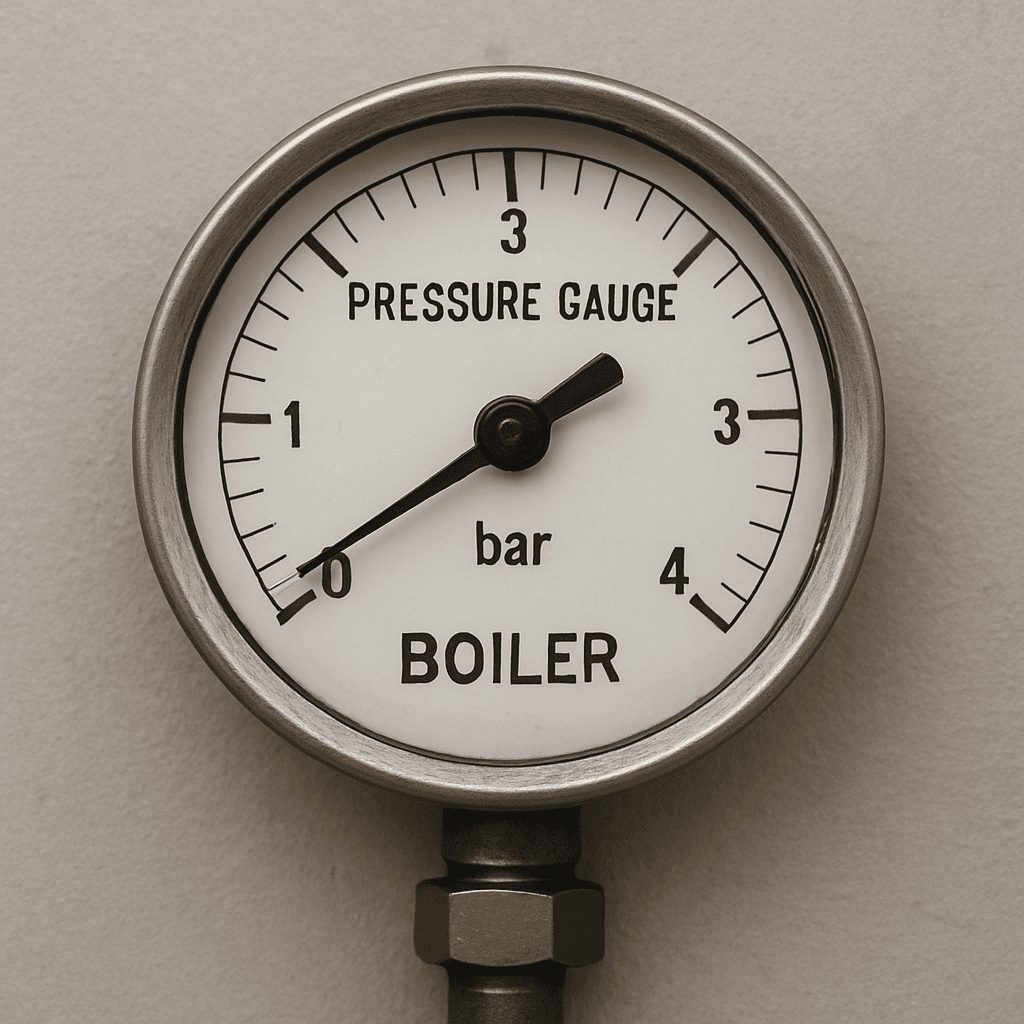
When radiators stop heating properly but the boiler appears to be working normally, it often points to a problem within the heating system rather than the boiler itself. This situation can be confusing, as the boiler may still fire up, show no error codes, and seem to operate as expected.
Understanding why this happens helps narrow down the cause and avoids unnecessary boiler repairs or replacement.
Why the boiler can seem fine while radiators lose heat
A boiler’s role is to heat water and circulate it around the system. As long as it can do this, it may appear to be working correctly.
Radiators, however, rely on:
- Stable system pressure
- Consistent water circulation
- Balanced flow through the pipework
If any of these are affected, radiators may heat unevenly or remain cold, even though the boiler continues to run.
Loss of pressure caused by small leaks
One of the most common reasons for poor radiator performance is gradual pressure loss within the system.
Small leaks can:
- Reduce circulation efficiency
- Allow air to enter the system
- Cause radiators to cool, especially at the top
Because these leaks are often hidden, the connection between pressure loss and heating performance is not always obvious.
You can read more about how concealed leaks behave in our signs of a central heating leak
Leaks hidden behind walls or under floors
Central heating pipework is often concealed within walls, ceilings, or floors. Leaks in these areas may not show visible signs straight away.
Instead, you may notice:
- Radiators taking longer to heat up
- Cold spots forming
- Some radiators staying cold while others work
These symptoms are often mistaken for balancing issues or faulty valves.
Air entering the system
Leaks allow air to enter the system as well as letting water escape.
Air in the pipework:
- Disrupts circulation
- Causes uneven heating
- Leads to frequent bleeding of radiators
If radiators repeatedly fill with air after bleeding, there is usually an underlying issue within the system.
Sludge buildup and restricted flow
When oxygen enters the system, corrosion can increase. Over time, this leads to sludge forming in radiators and pipework.
Sludge restricts flow, meaning:
- Heat does not reach all radiators evenly
- Some rooms remain cold
- The system becomes less efficient
In these cases, the boiler may still heat water normally, which can mask the real problem.
Why bleeding radiators is only a temporary fix
Bleeding radiators removes trapped air and can improve heating performance in the short term.
However, if air continues to enter the system, the issue will return. Repeated bleeding without addressing the cause can:
- Lower system pressure further
- Introduce more oxygen
- Increase corrosion over time
This is why bleeding alone rarely resolves the underlying issue.
Signs the problem needs investigation
It is worth investigating further if:
- Radiators lose heat while the boiler is running
- System pressure drops regularly
- Radiators need frequent bleeding
- Some radiators never fully heat up
These signs usually indicate a problem within the pipework rather than the boiler itself.
The takeaway
When radiators lose heat but the boiler seems fine, the issue is often hidden within the heating system rather than the appliance itself. Small leaks, air ingress, or restricted flow can all affect performance without obvious visible signs.
Identifying the cause early helps prevent further damage and ensures the correct problem is resolved.
If your heating system is not performing as it should, our central heating leak detection service can pinpoint the cause accurately and with minimal disruption.