

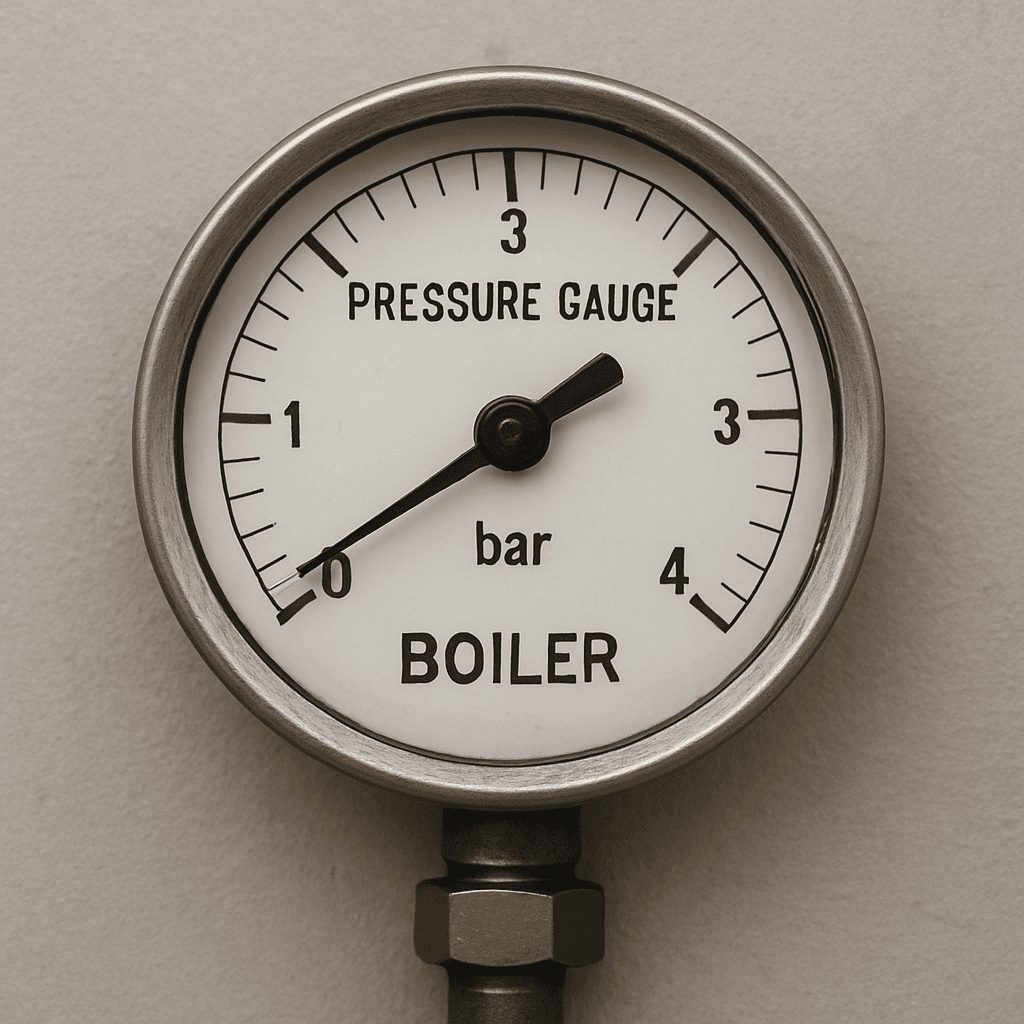
When pressure keeps dropping in a sealed central heating system, it usually indicates that something within the system is not functioning correctly. Because sealed systems are designed to retain the same water, any ongoing pressure loss points to an underlying fault that needs attention.
This can be frustrating, as the system may appear to work normally for short periods after topping up, only for the pressure to fall again.
Why sealed systems should not lose pressure
A sealed central heating system circulates the same water continuously. Once filled to the correct level, pressure should remain stable, with only small changes as the system heats and cools.
Regular or noticeable pressure drops are not normal and usually indicate water escaping or pressure being released somewhere in the system.
Small leaks in heating pipework
One of the most common causes of pressure loss is a small leak within the system.
These leaks often:
- Occur at joints or connections
- Develop behind walls or under floors
- Evaporate before leaving visible signs
Even a slow leak can lead to consistent pressure loss over time.
Leaks from radiators or valves
Radiator valves and connections are common weak points. Small seepages can go unnoticed, especially if they dry quickly or are hidden behind furniture.
Signs may include:
- Light staining near valves
- Corrosion on fittings
- Occasional dampness that disappears
These leaks are often missed during quick visual checks.
Pressure relief valve releasing water
If system pressure rises too high while the heating is on, the pressure relief valve may discharge water to protect the system.
This can happen due to:
- Expansion vessel faults
- Incorrect system pressure
- Valve wear
Water released in this way reduces pressure once the system cools.
Expansion vessel issues
The expansion vessel absorbs changes in pressure as water heats and expands. If it fails or loses charge, pressure fluctuations become more extreme.
This often results in:
- Pressure rising when heating is on
- Pressure dropping as the system cools
- A regular need to top up
Although not always a leak in the traditional sense, it still leads to pressure loss.
Air entering the system
Leaks can allow air into the system as well as letting water escape. Air pockets disrupt circulation and often lead to repeated bleeding of radiators.
Each time air is released, more water is lost, contributing to further pressure drops.
Why topping up is not a long-term solution
Topping up restores pressure temporarily, but it does not resolve the underlying issue.
Repeated topping up can:
- Introduce oxygen into the system
- Accelerate corrosion
- Increase sludge formation
Over time, this can lead to more serious heating problems.
When pressure loss should be investigated
It is worth investigating further if:
- Pressure drops weekly or more often
- The boiler locks out due to low pressure
- Radiators lose heat alongside pressure loss
- There are no visible leaks
These signs usually indicate an issue that will not resolve on its own.
The takeaway
Pressure dropping in a sealed central heating system is not normal. It usually points to a leak, a component fault, or pressure being released somewhere in the system.
Identifying the cause early helps protect the system, prevent further damage, and avoid more costly repairs.
For a full breakdown of causes and pressure behaviour, see our central heating leaks explained guide.
If your boiler pressure continues to drop, our central heating leak detection service can locate the cause accurately and without unnecessary disruption.