

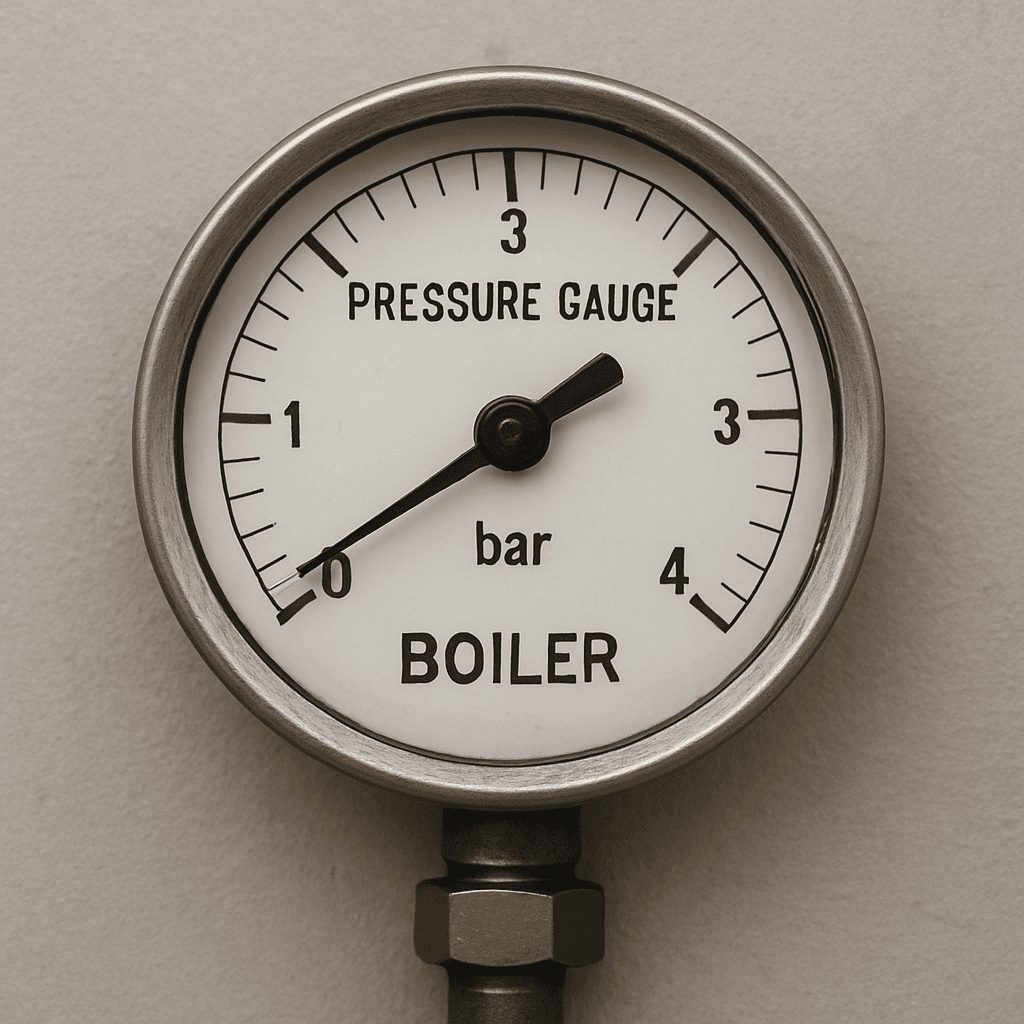
If your boiler pressure keeps dropping, your central heating system is not holding water correctly. In a sealed system, pressure should remain stable. When it doesn’t, the cause needs to be identified and resolved properly.
In most cases, this is due to water escaping somewhere within the heating circuit. The difficulty is that these leaks are often hidden beneath floors or inside walls, meaning the problem continues without being clearly visible.
At The Leak Hunter, this is exactly what we diagnose and resolve every day. The focus is not guesswork or replacing parts. The focus is confirming exactly where the system is losing pressure and fixing it properly.
If the cause is not obvious, our Central Heating Leak Detection service is designed to locate hidden leaks accurately and non-invasively before any repair work begins.
Why Central Heating Pressure Should Stay Stable
Modern central heating systems are sealed. Once filled, the same water circulates continuously through the boiler, radiators, and pipework.
Pressure rises slightly when the system heats up and falls slightly as it cools. These changes are small and controlled. Outside of this, pressure should remain consistent without regular topping up.
Pressure loss means the central heating system is losing water or failing to maintain pressure correctly.
What Pressure Loss Actually Means
In real systems, repeated pressure loss almost always means water is leaving the system.
This may come from a visible issue such as a valve or fitting, but far more often it originates from hidden pipework beneath floors or within walls.
Most central heating leaks are hidden and will not show visible water.
Because the pipework is concealed, water is often absorbed into surrounding materials or disperses before becoming visible. This is why pressure loss is usually the first and only clear sign.
Air vs Leak: Why the Difference Matters
It is common to assume that pressure loss is caused by air, but air and leaks behave very differently.
Air can cause cold spots in radiators and reduced performance. Once the system is bled and topped up, pressure should stabilise.
If pressure continues to drop after bleeding, the issue is not air. It means water is being lost from the system.
If you are topping up regularly, you are not removing air — you are compensating for water loss.
Leak or Component Fault?
Not all pressure loss is caused by a pipe leak, but the symptoms are often very similar.
A pressure relief valve (PRV) may release water externally without it being obvious. An expansion vessel fault can also cause unstable pressure as the system heats and cools.
However, these issues still result in water leaving the system or pressure not being maintained correctly. Without proper testing, it is not possible to distinguish between a hidden leak and a component fault.
This is where accurate diagnosis matters. We confirm the exact cause before any repairs or part replacements are carried out.
What System Behaviour Tells Us
The way your system behaves over time gives clear diagnostic clues.
A gradual pressure drop over days or weeks typically indicates a small, hidden leak. These are commonly found beneath floors or inside walls.
If pressure drops overnight or when the heating is off, this often means the system is losing water as it cools and stabilises.
If pressure temporarily stabilises after topping up but then drops again, this confirms the system is not holding water.
These patterns allow us to diagnose the issue accurately and avoid unnecessary disruption.
Why Topping Up the System Is Not a Fix
Topping up restores pressure temporarily, but it does not resolve the underlying issue.
Each time fresh water is added, oxygen enters the system. This increases internal corrosion and contributes to sludge build-up over time.
More importantly, it allows the leak or fault to continue. A system that needs regular topping up is already indicating a problem that requires proper diagnosis.
What Happens If You Ignore It
Ignoring pressure loss allows the problem to continue and often makes it worse.
- Ongoing water loss reduces system efficiency
- Oxygen entering the system increases corrosion
- Sludge build-up affects radiators and pipework
- Heating performance becomes inconsistent
- Hidden leaks can eventually lead to visible damage
Addressing the issue early allows for a controlled repair and avoids unnecessary disruption.
When Leak Detection Is Required
Leak detection becomes necessary when the system is clearly not holding pressure and no visible cause can be found.
- Pressure drops repeatedly over time
- You need to top up the system regularly
- No visible leaks can be found
- Radiators appear normal but pressure is unstable
At this stage, guessing or replacing parts rarely resolves the issue. The priority is to confirm exactly where the problem lies.
How We Diagnose Central Heating Leaks
At The Leak Hunter, we use a structured, non-invasive approach to identify the exact source of pressure loss.
This includes thermal imaging, acoustic detection, tracer gas testing, and controlled pressure testing to isolate sections of the system.
This process allows us to locate leaks or confirm component faults without unnecessary damage to your property.
Learn more about our process here: how we find central heating leaks without damage.
Resolving the Problem Properly
Central heating leaks do not resolve on their own. Pressure loss is always a symptom of a fault within the system.
The correct approach is to diagnose the issue accurately first, then carry out a targeted repair. This avoids unnecessary disruption, repeat failures, and ongoing costs.
The Leak Hunter provides a precise, non-invasive solution to finding and fixing central heating leaks, ensuring the problem is resolved properly and with minimal disruption.


