

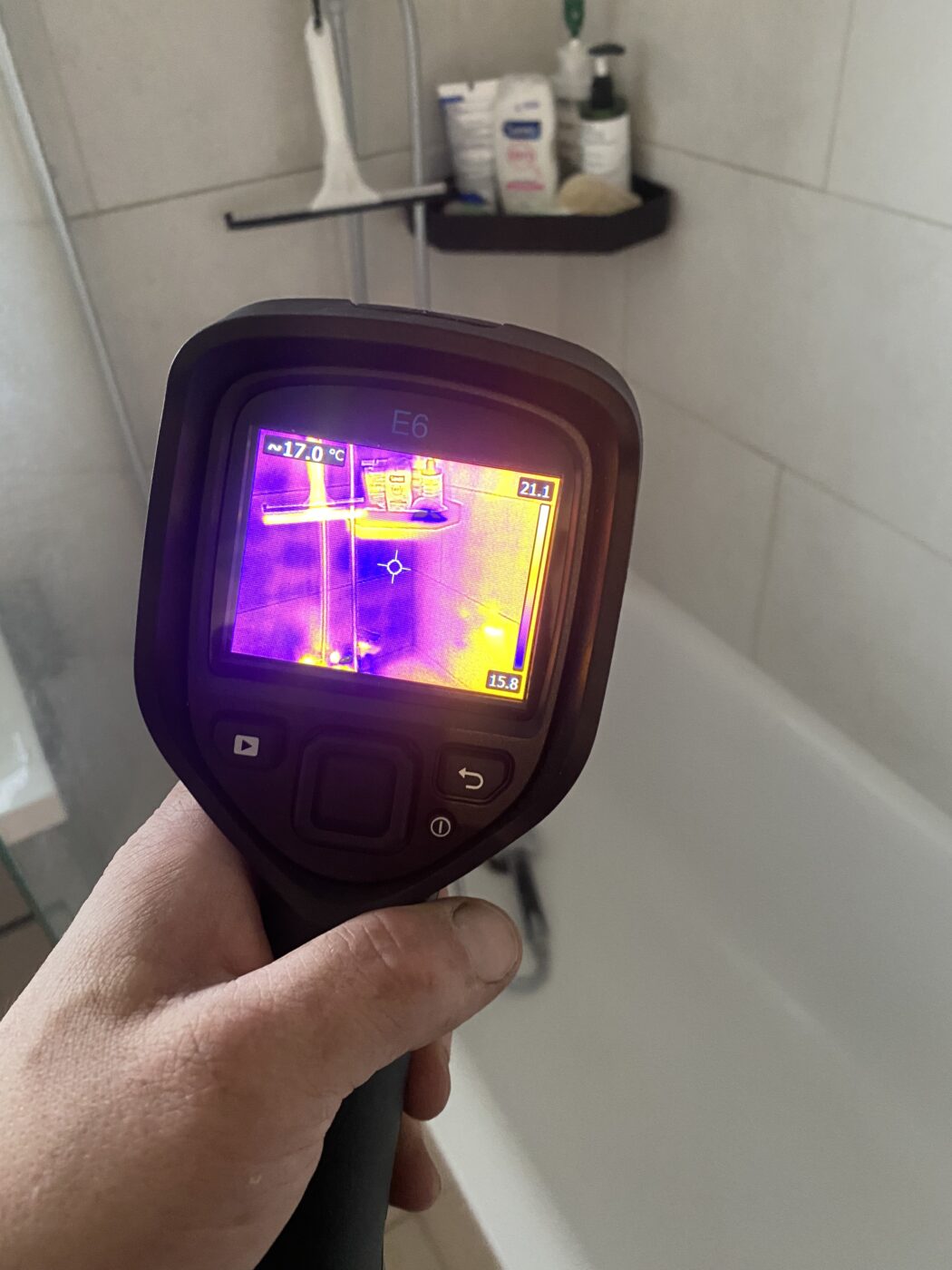
A hidden water leak is a leak that develops out of sight within a property. This can include pipework behind walls, beneath floors, within ceilings, or inside structural voids where the source cannot be seen directly.
In most properties we investigate, the leak itself is not visible and the signs appear in a different location to the actual source.
If you’re dealing with unexplained damp or damage, our Water Leak Detection service focuses on confirming whether the issue is caused by a hidden leak and identifying the exact source accurately before any access is made.
The key is understanding how hidden leaks behave and why they are often missed.
What Makes a Leak “Hidden”
A leak is considered hidden when it occurs in an area that cannot be inspected visually. Unlike a visible plumbing issue, there is no direct indication of where the water is escaping.
This includes leaks within pipework that runs behind finished surfaces or beneath flooring, where the only evidence is the effect the water has on surrounding materials.
The absence of a visible source is what makes hidden leaks difficult to identify without testing.
How Hidden Leaks Behave Inside a Property
Water does not remain at the point where it escapes. Once a leak develops, it can travel through building materials, follow structural paths, or spread across surfaces before becoming visible.
In many cases, moisture appears some distance from the actual leak. It may move along pipe routes, collect within voids, or soak into materials such as plaster, insulation, or flooring.
The visible damage is often a result of where the water settles, not where the leak is located.
Why Hidden Water Leaks Are Often Missed
Hidden leaks tend to develop slowly and may not produce immediate or obvious signs. In many cases, the system continues to function while water escapes in small amounts over time.
Because the leak is concealed, it may only be noticed once damage becomes visible or conditions change within the property.
By the time visible symptoms appear, the leak may have been present for some time.
Why the Source Cannot Be Identified by Sight Alone
Visible signs such as damp patches, staining, or damage do not reliably indicate the location of the leak. Water movement within a building can be unpredictable and influenced by materials, structure, and gravity.
This means that opening up the area where damage appears does not always lead to the source of the problem.
Without proper detection, it is not possible to confirm where the leak is actually coming from.
How Hidden Leaks Are Located
Locating a hidden leak requires specialist detection methods that can identify changes in sound, temperature, or moisture within building materials.
These methods allow the source of the leak to be traced without removing large sections of walls or flooring. By building a clear picture of how water is behaving, the exact location can be confirmed before any access is made.
The aim is always to identify the precise source first, so any repair work is targeted and controlled.
What to Do Next
If you suspect a hidden water leak, the next step is to confirm whether water is escaping and identify the exact source before any surfaces are opened.
Our Water Leak Detection service focuses on locating hidden leaks accurately using non-destructive methods, so the issue can be resolved without unnecessary damage to your property.


