

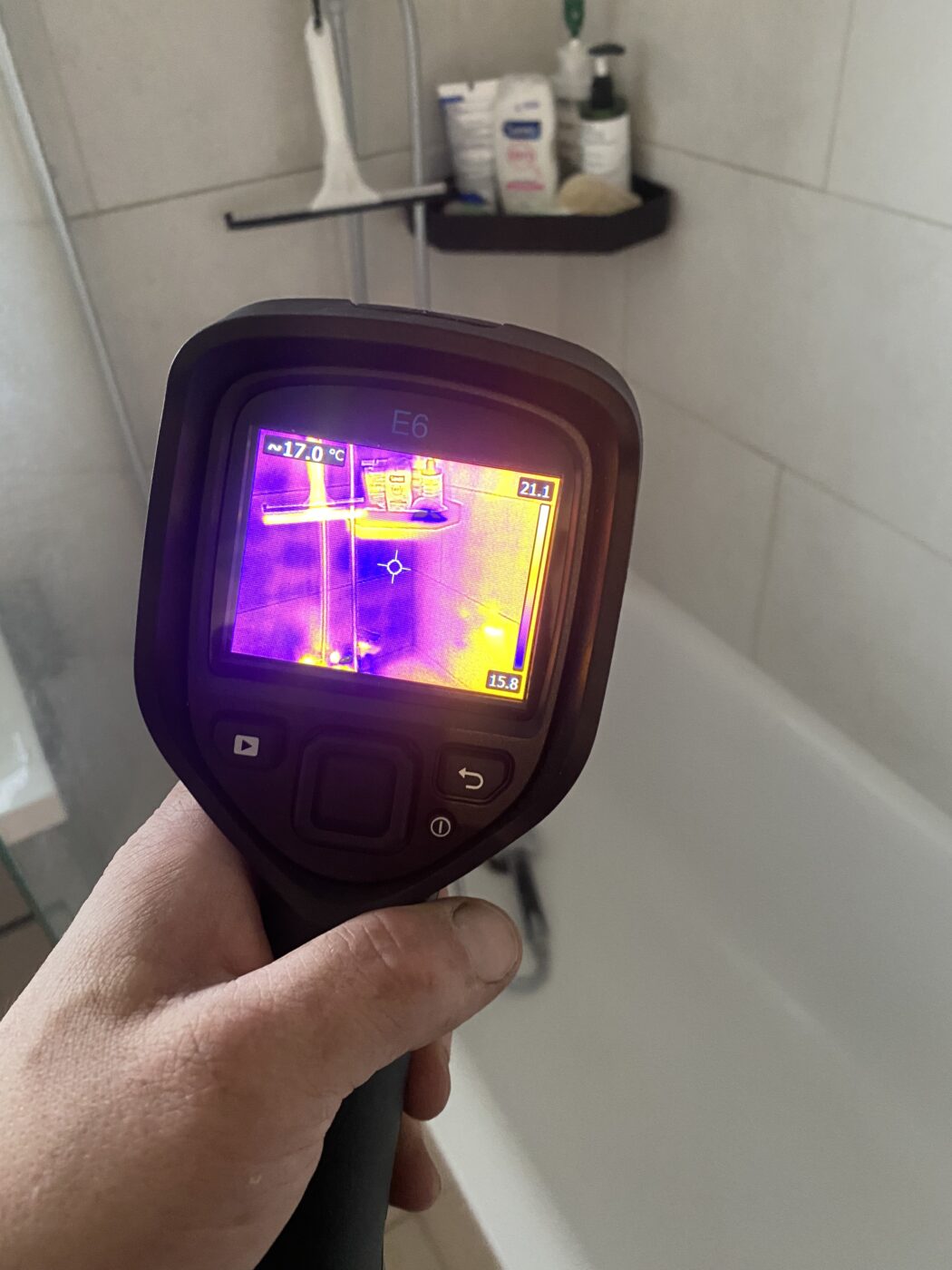
Water leaks can occur in many different locations, and the source is not always obvious. Pipework runs through walls, beneath floors, and within ceilings, which means leaks often develop out of sight.
In most cases we investigate, the visible signs of a leak appear in a different location to where the water is actually escaping.
If you’re unsure where the problem is coming from, our Water Leak Detection service focuses on identifying the exact source accurately before any access is made.
Understanding where leaks commonly occur explains why they are difficult to trace without proper detection.
Leaks Within Walls
Pipework is often routed behind internal walls, particularly in kitchens, bathrooms, and utility areas. Leaks in these locations are rarely visible at the source.
Water can spread within wall cavities or travel downwards, leading to damp patches or staining that appears some distance away.
The visible damage is where water settles, not where it escapes.
Leaks Beneath Floors
Leaks beneath floors are one of the most common issues we locate and resolve. Pipework may run below floorboards, within screed, or through concrete slabs.
Because the pipe is concealed, water can spread beneath the surface before any signs become visible. This can lead to warped flooring, soft areas underfoot, or damage appearing away from the source.
Leaks Within Ceilings
Ceiling leaks often originate from pipework in upper floors or loft spaces. Water may travel along joists or structural elements before appearing as staining or damp patches below.
In some cases, the leak can be several metres away from where the damage becomes visible.
Leaks Around Bathrooms and Kitchens
Bathrooms and kitchens contain a high concentration of pipework, fittings, and joints. These areas are more prone to developing concealed leaks.
Leaks may occur behind units, beneath baths, or within boxed-in pipework, making them difficult to identify without proper investigation.
Leaks in Hidden Voids and Structural Spaces
Many buildings include voids such as ceiling spaces, service ducts, and boxed-in sections where pipework is concealed.
Leaks in these areas can continue unnoticed, as water may collect or spread without immediately affecting visible surfaces.
These leaks are often only discovered once secondary damage appears.
Why the Source Is Not Always Obvious
Water movement is influenced by gravity, building materials, and the path of least resistance. It rarely stays at the point where it escapes.
This is why damp, staining, or visible damage does not reliably indicate the true source of a leak.
Without proper detection, the exact source cannot be confirmed.
How the Exact Location Is Confirmed
We use specialist detection methods to trace how water is moving and identify the precise point where it is escaping.
We confirm the exact source before any access is made.
This allows us to confirm the source before any surfaces are opened, so access is limited to the exact area that requires repair.
This is how we remove guesswork and solve the problem correctly.
What to Do Next
If you suspect a water leak but cannot identify the source, the next step is to confirm the exact location before any access is made.
Our Water Leak Detection service identifies leaks accurately using non-destructive methods, so the issue can be resolved with controlled access, a clear repair plan, and no unnecessary disruption.


