

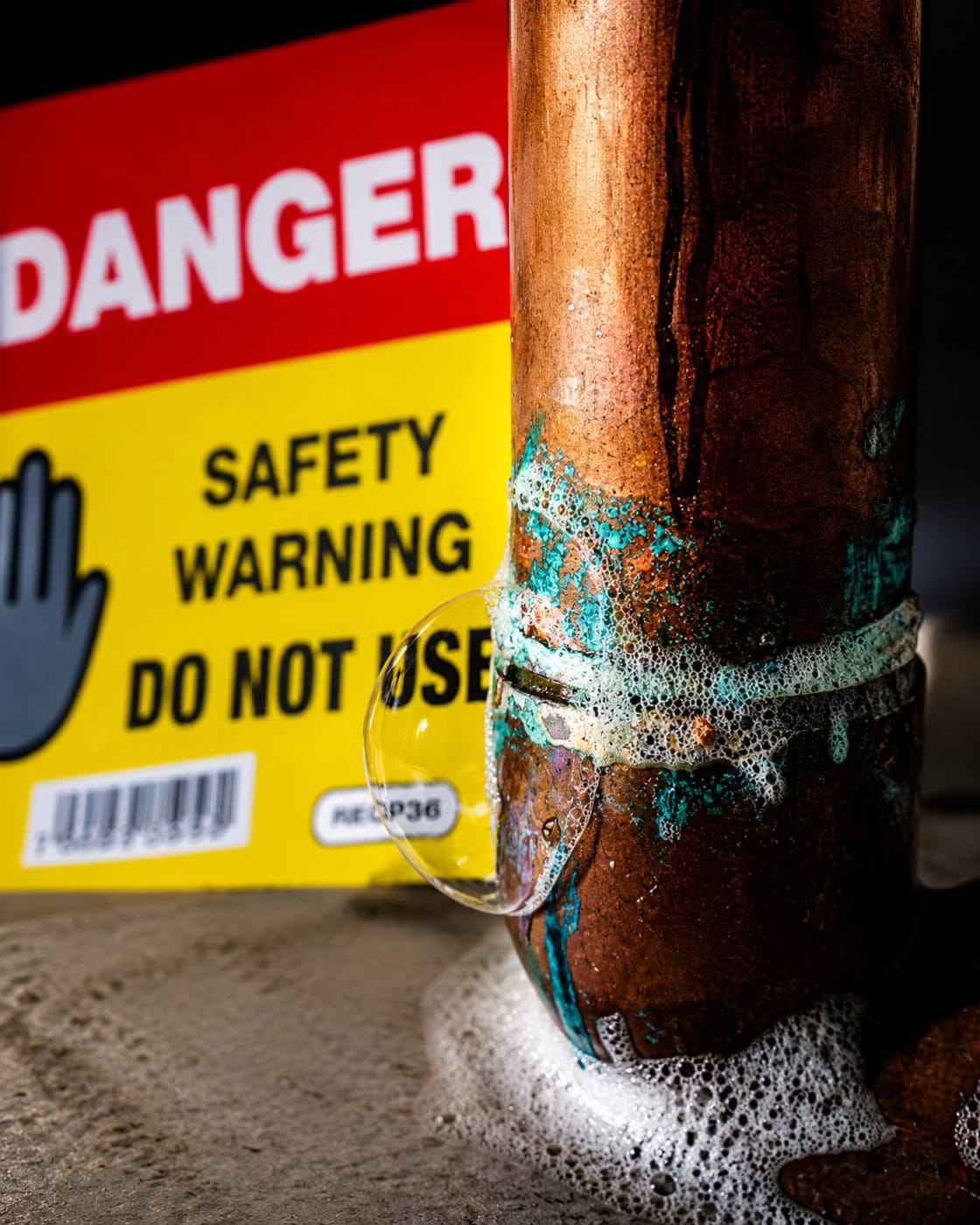
When a gas leak is confirmed, one of the first questions is where the problem is likely to be. In most cases, the leak is not spread across the entire system but occurs at a specific point within the pipework.
The issue is usually localised.
In the majority of properties we inspect, gas leaks are found at a particular connection, fitting, or isolated section of pipe rather than across the full pipe run.
Our Gas Leak Detection service focuses on tracing the exact source after the system has been made safe. Identifying where leaks typically occur explains why most can be repaired without full pipe replacement.
Why Gas Leaks Are Usually Localised
Gas pipework is made up of multiple joints, fittings, and connections. Each of these points represents a potential location for failure over time.
Issues develop at individual points.
Movement, wear, or installation factors can cause a single joint or section to fail, rather than the entire pipe run.
This is why accurate tracing is essential. Without locating the exact point of failure, the condition of the rest of the pipework remains unknown.
Common Leak Points
While every system is different, there are several areas where gas leaks are more commonly found.
Connections around the meter and incoming pipework are frequent sources of faults, particularly where fittings have been disturbed or altered.
Joints and fittings along internal pipe runs are another common location. These are often concealed beneath floors, behind walls, or within voids.
Appliance connections can also develop faults over time, especially where there has been movement or repeated use.
In some cases, isolated sections of pipework may deteriorate or become damaged, resulting in a localised leak rather than a system-wide issue.
Why Gas Leaks Are Often Hidden
Much of the gas pipework within a property is not fully visible. It runs beneath floors, inside walls, and through enclosed spaces.
The leak cannot usually be seen.
When a leak develops in these areas, there may be no visible signs. This is why pressure loss is often the first indication that something is wrong.
Without proper tracing, the leak location cannot be confirmed by inspection alone.
What This Means for Repair
Because most gas leaks are localised, it is usually possible to repair the affected section once the source has been identified.
We repair the fault, not the entire system.
This avoids replacing pipework that is still in good condition and reduces disruption within the property.
In most cases, once the leak is traced accurately, a targeted repair is the correct solution rather than a full pipe re-run.
How The Leak Hunter Identifies the Exact Location
The Leak Hunter specialises in tracing gas leaks after the system has been made safe. We work methodically along the pipe route to identify the precise point of failure and confirm whether the issue is localised or more widespread.
We confirm the exact source before recommending any repair.
In most properties we attend, this allows us to repair the leak directly without replacing the full pipe run.
All gas work is carried out by Gas Safe registered engineers. We provide a 12-month warranty, and The Leak Hunter is a WaterSafe member, maintaining high standards across all plumbing and heating work.
If requested, we can provide a detailed trace and access report suitable for insurers.


