

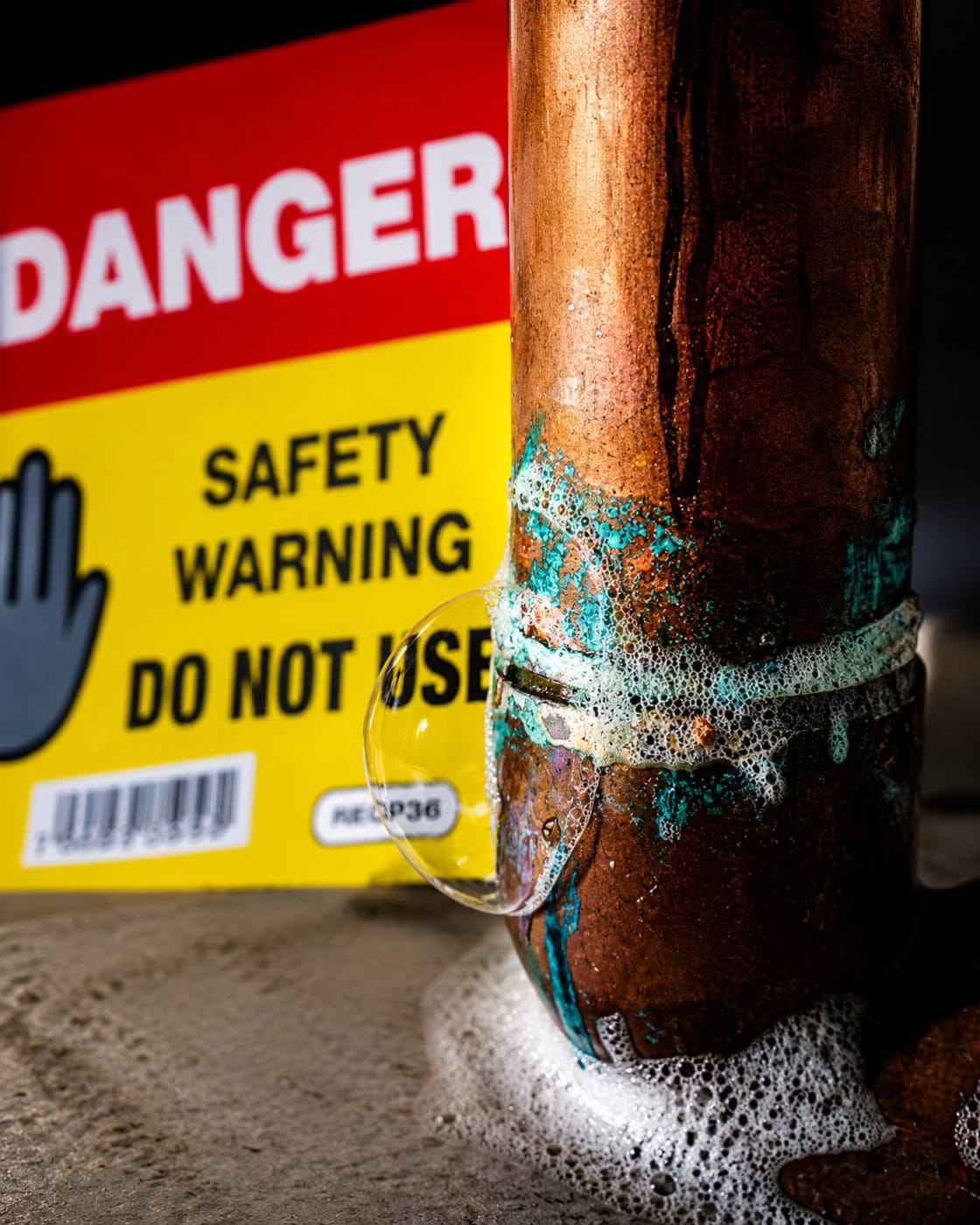
Once the gas supply has been turned off, the immediate danger has been controlled, but the leak itself has not been resolved. At this stage, the problem moves from emergency response to confirmed diagnosis and repair.
The gas is off, but the fault remains.
Gas leaks after isolation are no longer about recognising a smell or reacting to danger. They are about identifying exactly where the leak exists within the pipework so it can be repaired properly.
If your supply has already been turned off or capped, our Gas Leak Detection service focuses on tracing the confirmed leak, identifying the exact source, and carrying out the correct repair without unnecessary pipe replacement.
Understanding what this stage actually means helps explain why accurate tracing matters so much.
What Isolation Actually Means
Isolation means the gas supply has been turned off to make the system safe. This may have been done by the emergency gas service, a Gas Safe engineer, or after a smart meter installation.
The system is safe, but not repaired.
Isolation stops the risk, but it does not identify or fix the point where gas is escaping.
Why the Leak Is Still a Problem
Once the gas has been turned off, appliances will stop working and the system cannot be returned to service until the leak has been traced and repaired. The issue is no longer active use of gas, but the condition of the pipework itself.
The pipework still contains the fault.
This is why the next stage is not guesswork or broad replacement. It is controlled investigation.
Why a Confirmed Leak Does Not Mean a Full Pipe Re-Run
A confirmed gas leak does not automatically mean the entire pipe run has failed. In most properties, the leak is localised to a particular joint, fitting, or section of pipework.
Most gas leaks are localised.
Without tracing the exact source, it is impossible to know whether the issue needs a direct repair or whether more extensive work is genuinely necessary.
Why Tracing Matters After Isolation
After isolation, the priority is accuracy. The leak has already been confirmed, so the next question is where it is and what condition the surrounding pipework is in.
We trace the fault before recommending repair.
This is what allows the repair to be targeted, proportionate, and based on evidence rather than assumption.
Tracing replaces uncertainty with a confirmed diagnosis.
Where Gas Leaks Are Commonly Found
Gas leaks are often found at localised points within the system, such as joints, fittings, appliance connections, or isolated sections of concealed pipework. They are not usually spread across the full installation.
The leak is usually at a specific point.
This is why accurate tracing often makes repair possible without replacing large sections of otherwise sound pipework.
What Happens Once the Leak Is Traced
Once the leak has been identified, the affected section can be assessed and repaired. The system is then retested to confirm it is holding gas correctly before any reinstatement or return to service is considered.
We verify the repair before the system is returned to use.
This ensures the problem has been resolved properly rather than temporarily bypassed.
Why This Stage Needs a Specialist Approach
Post-isolation gas leak work is not about first response. It is about controlled diagnosis, accurate tracing, and the correct repair carried out by Gas Safe registered engineers.
The issue now is precision, not emergency response.
This is the stage where the right diagnosis can prevent unnecessary disruption, avoid needless pipe re-runs, and get the system restored safely.
What to Do Next
If your gas supply has already been turned off or capped, the next step is to trace the leak and confirm its exact location before any repair decisions are made.
Our Gas Leak Detection service identifies confirmed gas leaks after isolation, traces the exact source, and carries out targeted repairs so the system can be restored safely without unnecessary pipe replacement.


