

If your floorboards have recently started creaking more than they used to, it is natural to assume the house is simply getting older. In many homes, that is exactly the cause. Timber floors naturally expand, contract and move over time, and a few creaks are perfectly normal.
However, if the creaking has appeared suddenly, is becoming noticeably worse, or is accompanied by other signs such as damp patches, staining, musty smells or unexplained moisture, it is worth considering whether hidden water is affecting the timber beneath the floor.
The important point is that creaking floorboards alone rarely indicate a leak, but when combined with other symptoms they can form part of the bigger picture.
Can a hidden leak cause floorboards to creak?
Yes, it can, although it is not one of the most common causes.
If water escapes beneath a suspended timber floor, the surrounding timber can absorb moisture. As the moisture content changes, the boards, joists and fixings may expand, move or rub differently against one another, creating new noises that were not there before.
The creaking itself is not the leak. It is simply a possible consequence of moisture changing how the floor structure behaves.
What are the more common causes?
Before assuming there is a hidden leak, it is worth remembering that most creaking floorboards are caused by completely unrelated issues.
- Natural movement as timber expands and contracts with the seasons.
- Loose floorboards or fixings.
- General ageing of the property.
- Small amounts of movement within the floor structure.
- Changes caused by central heating drying the timber.
These situations are far more common than leaks and should always be considered first.
When should a leak become a possibility?
A hidden leak becomes more likely when the creaking is accompanied by other unexplained changes within the property.
For example:
- A damp patch appears nearby.
- The floor begins feeling damp or spongy.
- You notice a musty smell beneath the floor.
- There is unexplained staining to nearby walls or ceilings.
- Your water bill has increased unexpectedly.
- Your water meter continues moving when no water is being used.
When several of these symptoms appear together, investigating for a hidden leak becomes much more worthwhile than considering the creaking in isolation.
Why guessing is not the answer
Replacing floorboards or tightening loose fixings will not solve the problem if hidden moisture is affecting the structure beneath them. Equally, assuming every creaking floor indicates a leak can lead to unnecessary concern.
The objective is to establish whether moisture is actually present before deciding what repairs are needed.
How The Leak Hunter investigates hidden moisture
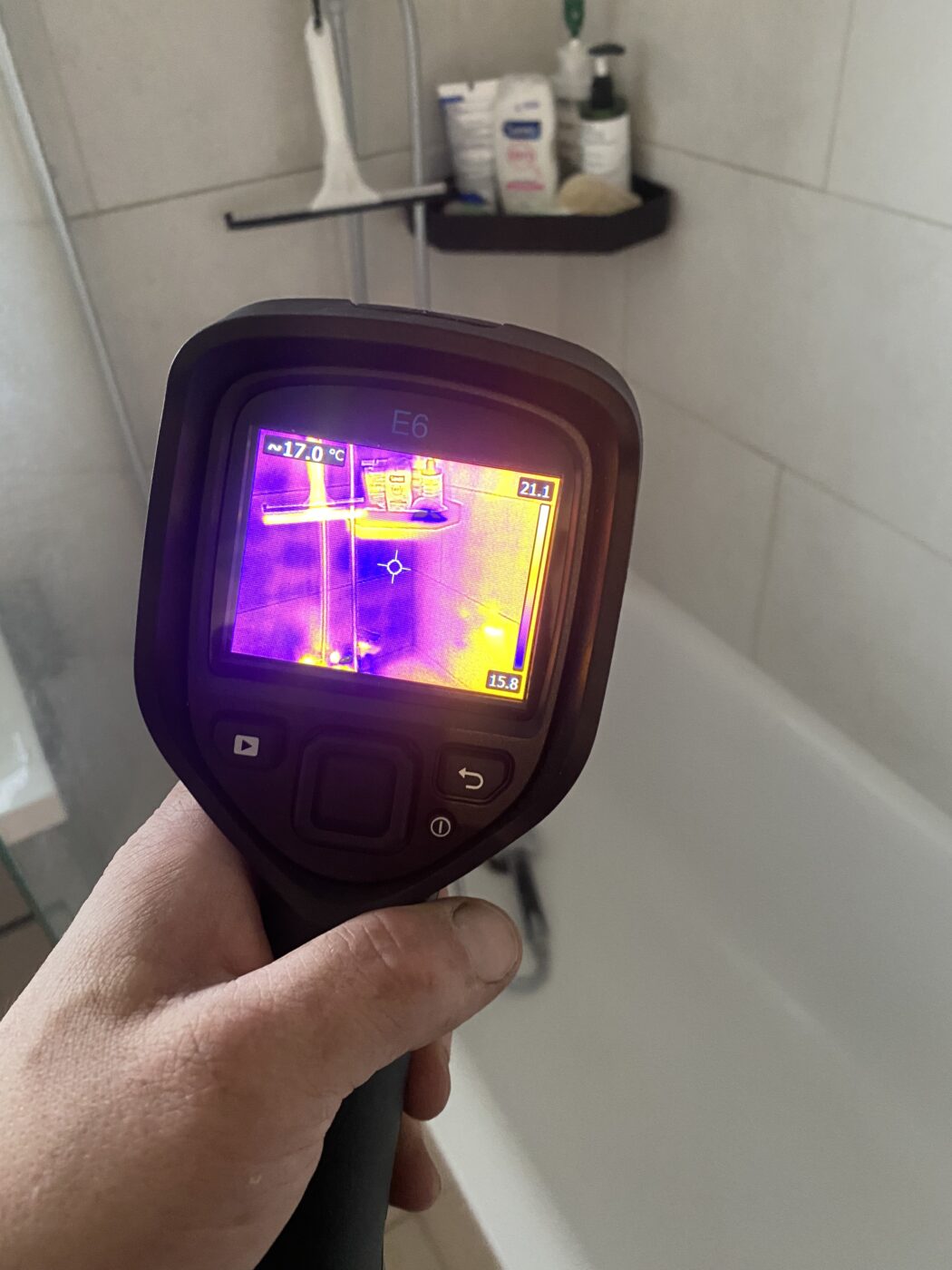
The Leak Hunter investigates hidden leaks using non-invasive leak detection methods designed to identify concealed moisture without unnecessary disruption. Rather than relying on creaking floorboards alone, we assess the wider symptoms and determine whether a hidden leak is contributing to the problem.
If hidden moisture is suspected, our investigation focuses on locating the source accurately before any repairs begin. If you’re noticing several unusual symptoms rather than creaking floorboards alone, our guide to the signs of a leak explains what else to look out for.
When should you investigate?
If your floorboards have always creaked slightly, there is usually no immediate reason to suspect a leak. However, if the creaking has changed significantly and is accompanied by dampness, staining, musty smells or other unexplained symptoms, it is sensible to investigate before more obvious damage develops.
Final thoughts
Creaking floorboards rarely mean there is a hidden leak on their own. However, when they form part of a wider pattern of unexplained moisture-related symptoms, they can help point towards an underlying issue that deserves further investigation.
If you are concerned that hidden moisture could be affecting your property, learn more about our Leak Detection service and how we accurately locate concealed leaks with minimal disruption.
Frequently asked questions
Do creaking floorboards usually mean there is a leak?
No. Most creaking floorboards are caused by normal movement, ageing timber or loose fixings. Hidden leaks are a much less common cause.
When should I be concerned?
If the creaking has become noticeably worse and is accompanied by dampness, musty smells or other signs of moisture, it is worth investigating further.
Can you confirm whether a leak is causing the problem?
Yes. Specialist leak detection methods can determine whether hidden moisture is present and identify its source if a leak is found.