

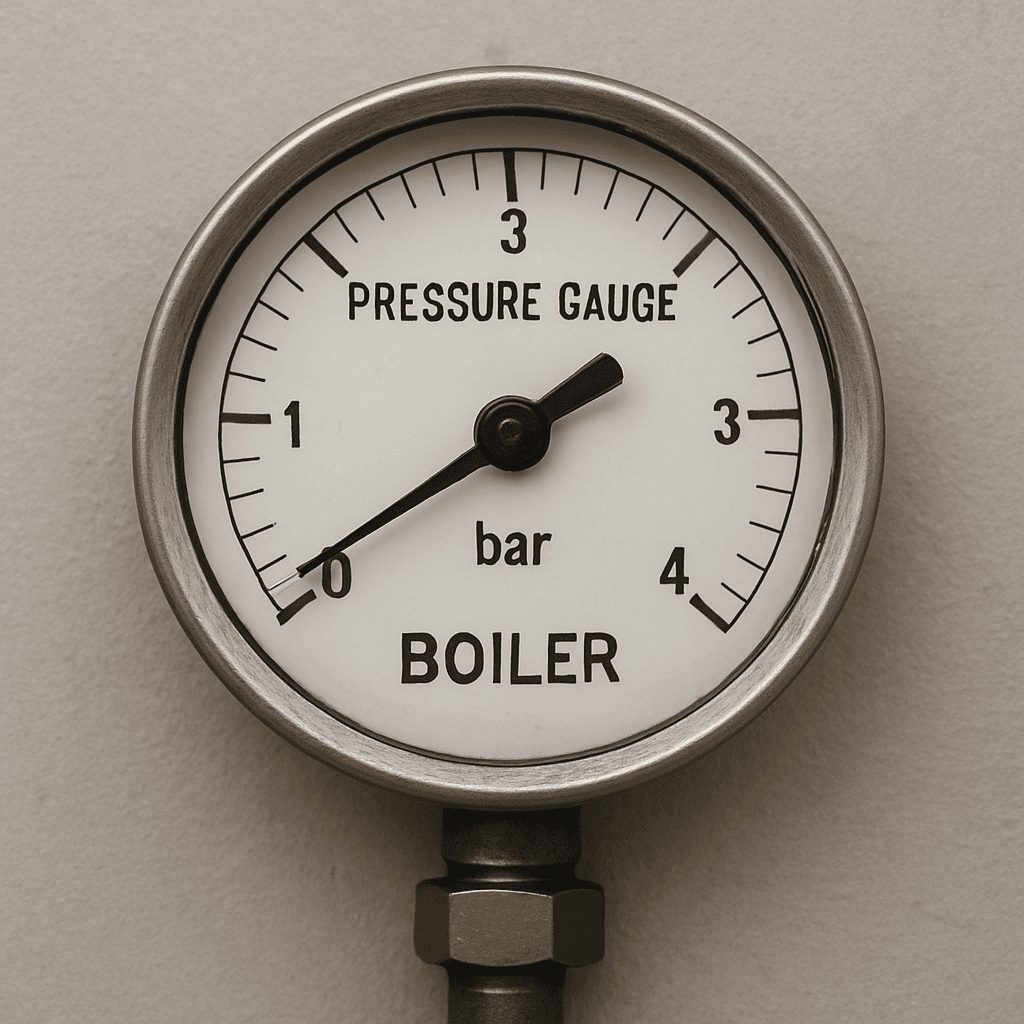
If you’ve bled your radiators but your boiler pressure still keeps dropping, it means the issue hasn’t been resolved.
Bleeding removes air — it does not stop water loss.
This is exactly the type of issue our Central Heating Leak Detection service is designed to diagnose properly.
What This Usually Means
If pressure continues to drop after bleeding, it usually means water is still leaving the system somewhere.
The problem isn’t air — it’s loss.
A stable heating system should not require repeated bleeding and topping up to function properly.
Why This Happens
Air builds up because pressure drops. When water leaves the system, air is drawn in to replace it.
What typically happens is:
Water escapes slowly from the system
Pressure drops as a result
Air enters and collects in radiators
The system improves temporarily after bleeding, then declines again
To understand the wider pattern, see our signs of a central heating leak page.
The symptom returns because the cause remains.
How to Tell If This Is the Problem
- Pressure drops after bleeding
- The system needs regular topping up
- Radiators repeatedly fill with air
- The issue becomes more frequent over time
What Most People Get Wrong
Many people believe bleeding has “fixed” the system because performance improves immediately afterwards.
In reality, it only resets the symptom temporarily.
How the Problem Is Actually Solved
The system needs to be assessed to identify where water is being lost and why the pressure cannot stabilise.
The aim is to stop the loss, not manage the symptoms.
What to Do Next
If pressure keeps dropping after bleeding, it’s important to investigate early rather than continuing to manage the symptoms.
Identifying the cause early helps prevent further instability and avoids ongoing disruption within the system.