

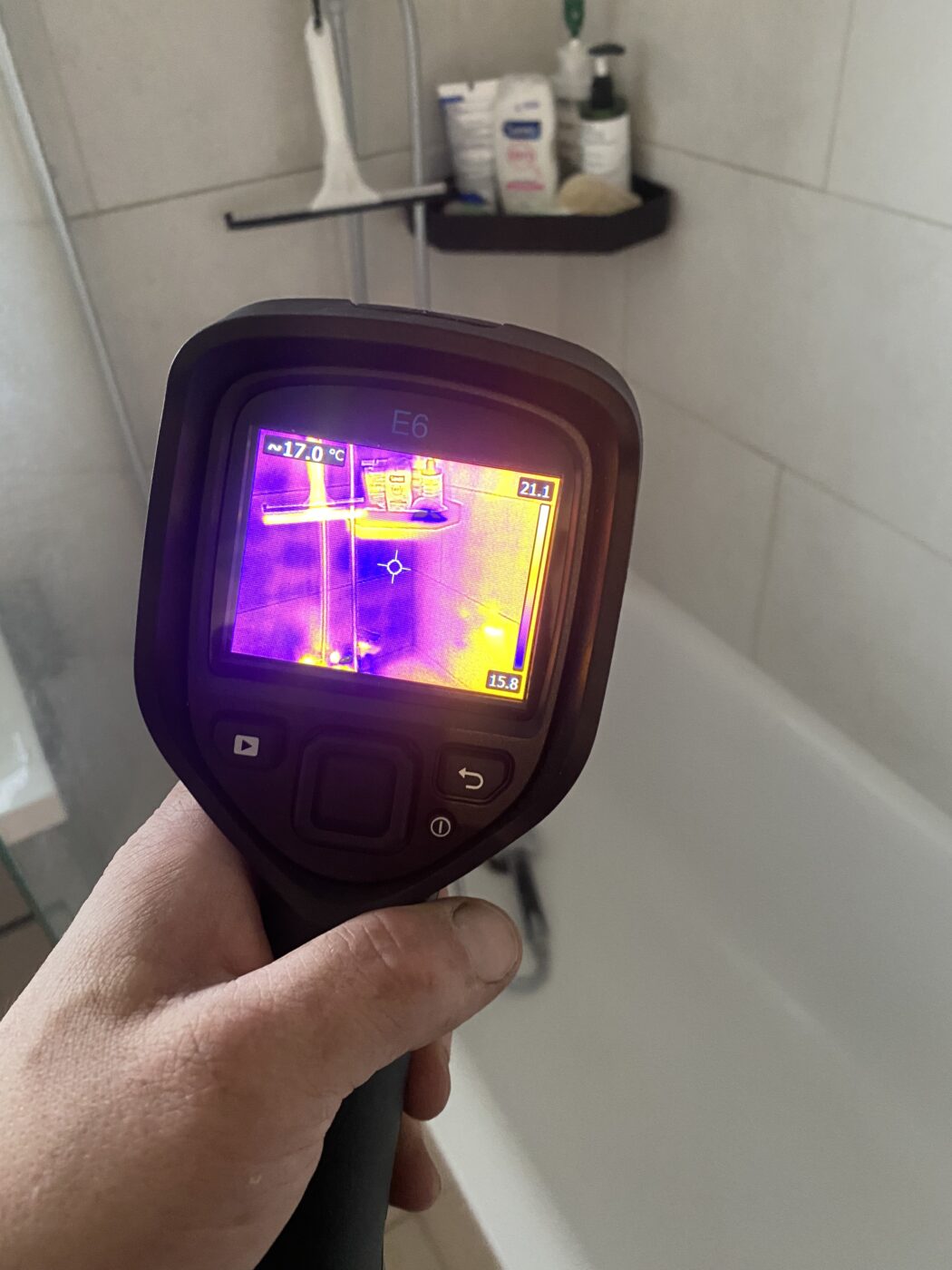
If you’ve noticed a leak that seems to get worse the more water you use, it’s usually a sign of a pressure-related problem within your plumbing system. The more demand you put on the system, the more obvious the issue becomes.
This type of leak often starts subtly, then becomes harder to ignore as usage increases. That pattern is one of the biggest clues to what’s actually happening.
Why the leak gets worse with usage
Every time you use water — whether it’s taps, showers, or appliances — pressure builds within the pipework. If there is a weakness somewhere in the system, that pressure will force water through it.
The more water you use, the more pressure is applied, and the more visible the leak becomes.
When water use stops, the pressure drops, and the leak may slow down or disappear completely.
What this usually points to
This type of behaviour often indicates:
- A small crack or split in pipework
- A loose or worn connection
- A joint that is no longer fully sealed
Because the issue is tied to pressure, it may not show at all during periods of low or no usage.
Why this can be misleading
It’s easy to assume the problem is only happening where you can see water. In reality, the visible signs may be some distance away from the actual source.
Water can travel through walls, floors, or along pipe routes before becoming noticeable.
This is where many homeowners end up focusing on the wrong area.
Common signs to watch for
If the leak worsens with water use, you may notice:
- Water appearing more quickly when multiple taps are used
- Damp areas that grow after heavy usage
- Moisture that reduces when water is not being used
- Changes in how quickly the leak shows up
These patterns are key to identifying a pressure-related issue.
Why it shouldn’t be ignored
Because the leak is linked to usage, it can gradually worsen over time. Increased pressure can expand small faults, making the leak more severe.
This can lead to:
- Damage to internal structures
- Flooring and wall deterioration
- Long-term moisture build-up in hidden areas
What starts as a minor issue can escalate if left unresolved.
What the correct next step is
The key is to locate the source of the leak while the system is under pressure. This allows the issue to be identified based on how it behaves during use.
This is where How We Find Water Leaks becomes essential.
It ensures the problem is traced accurately without unnecessary disruption.
What happens once the leak is found
Once the source is identified, the repair can be targeted. This may involve fixing a connection, replacing a section of pipe, or securing fittings properly.
The important part is that the repair is based on confirmed findings.
You can read more about this stage in What Happens After a Water Leak Is Found.
How The Leak Hunter can help
The Leak Hunter specialises in identifying water leaks that change behaviour under pressure. By tracing the exact source, we ensure repairs are accurate and unnecessary disruption is avoided.
Learn more about our service here: Water Leak Detection.
Frequently asked questions
Why does the leak get worse when I use more water?
Because increased usage raises pressure in the system, forcing more water through any weak points.
Does this mean the leak is getting worse?
Not always immediately, but pressure-related leaks can worsen over time if left untreated.
Do you only cover my area?
If you’re outside these areas, don’t worry — our team covers most of the South East, providing trusted leak detection services throughout London, Kent, Sussex, and Surrey.
If your leak worsens the more you use water, the pattern itself is the key to finding it. Identifying the source properly is what ensures the issue is resolved efficiently and doesn’t continue to develop.
Find out more about Water Leak Detection.