

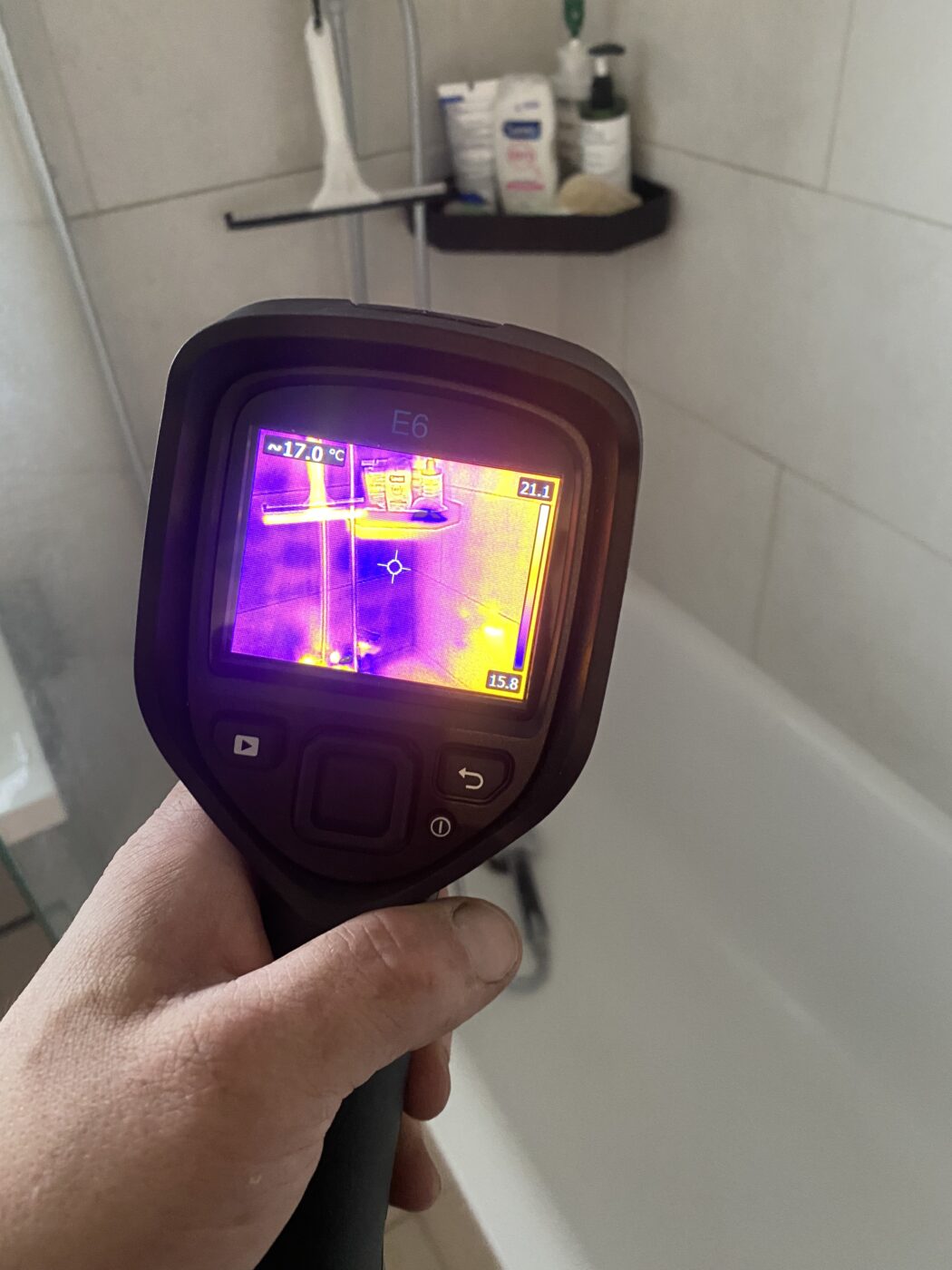
When you discover a water leak, it’s natural to want to fix it quickly. For many homeowners, that means trying to deal with it themselves first — especially if the issue looks small or manageable.
Sometimes that works. But when it doesn’t, the situation can become more complicated than it needed to be.
Why DIY fixes can seem like the right choice
If the leak appears minor, it can feel unnecessary to involve professional detection straight away. A visible pipe, a damp patch, or a loose fitting might seem straightforward to deal with.
This is where many homeowners decide to act quickly and resolve it themselves.
What can go wrong
The main risk is not the repair itself — it’s not knowing whether you are fixing the actual source of the problem.
If the visible issue is not the origin of the leak, a DIY fix may:
- Only stop the symptom temporarily
- Miss the real source entirely
- Allow the leak to continue behind the scenes
This is how problems appear to be fixed, only to return later.
Why leaks are often misjudged
Water does not always appear where it starts. It can travel through structures and surface in a different location.
This means the area you repair may not be where the leak actually is.
If you are unsure how leaks behave, Where Water Leaks Occur explains why the visible area is not always the source.
How DIY repairs can make things worse
In some cases, attempting to fix the wrong area can:
- Delay identifying the real problem
- Allow moisture to spread further
- Lead to more disruption when the issue is eventually found
What could have been a targeted repair can become a wider issue simply because the source wasn’t confirmed first.
When DIY might be appropriate
If the source is clearly visible and confirmed — such as a known faulty fitting — a straightforward repair may be possible.
The key difference is certainty. If there is any doubt about where the leak is coming from, guessing can lead to the wrong outcome.
What the correct approach is
The safest approach is to identify the source before attempting repairs.
This ensures the work carried out is based on confirmed findings, not assumptions.
This is where How We Find Water Leaks becomes essential.
It allows the leak to be traced accurately without unnecessary disruption.
What happens once the leak is properly identified
Once the source is confirmed, the repair can be carried out correctly the first time. This avoids repeat issues and keeps the situation under control.
You can read more about this stage in What Happens After a Water Leak Is Found.
How The Leak Hunter can help
The Leak Hunter specialises in identifying leaks before any repair work begins. By locating the exact source, we ensure the right fix is applied and unnecessary disruption is avoided.
Learn more about our service here: Water Leak Detection.
Frequently asked questions
Is it risky to try and fix a leak myself?
It depends on whether the source is confirmed. If not, there is a risk of fixing the wrong area.
Why do leaks sometimes come back after being repaired?
Because the original source may not have been identified correctly.
Do you only cover my area?
If you’re outside these areas, don’t worry — our team covers most of the South East, providing trusted leak detection services throughout London, Kent, Sussex, and Surrey.
If you try to fix a water leak without knowing exactly where it is, the biggest risk is not the repair — it’s missing the real problem. Identifying the source properly is what ensures the issue is resolved the first time.
Find out more about Water Leak Detection.