

Finding out you have a leak on your supply pipe is one thing — but the real concern for most homeowners is what happens to the property around it. If the pipe runs under your driveway, patio, or garden, it’s natural to assume everything will need to be dug up.
In reality, that’s not always the case.
The level of disruption depends on how accurately the leak is located, how the pipe is laid, and what sits above it. With the right approach, repairs are often far more controlled than expected.
Why supply pipe leaks often affect outdoor areas
The supply pipe runs underground from your water meter to your home. Depending on your property, that route may pass under:
Driveways
Patios
Paths
Gardens or lawns
So when a leak develops, it’s common for access to be needed outside rather than inside the property.
If you want to understand where these leaks typically occur along the pipe route, see where mains water leaks occur.
Does a leak always mean large-scale digging?
No — and this is one of the biggest misconceptions.
Without accurate detection, repairs can become disruptive because the location isn’t clear. That’s when larger areas get opened up unnecessarily.
But when the leak is precisely located:
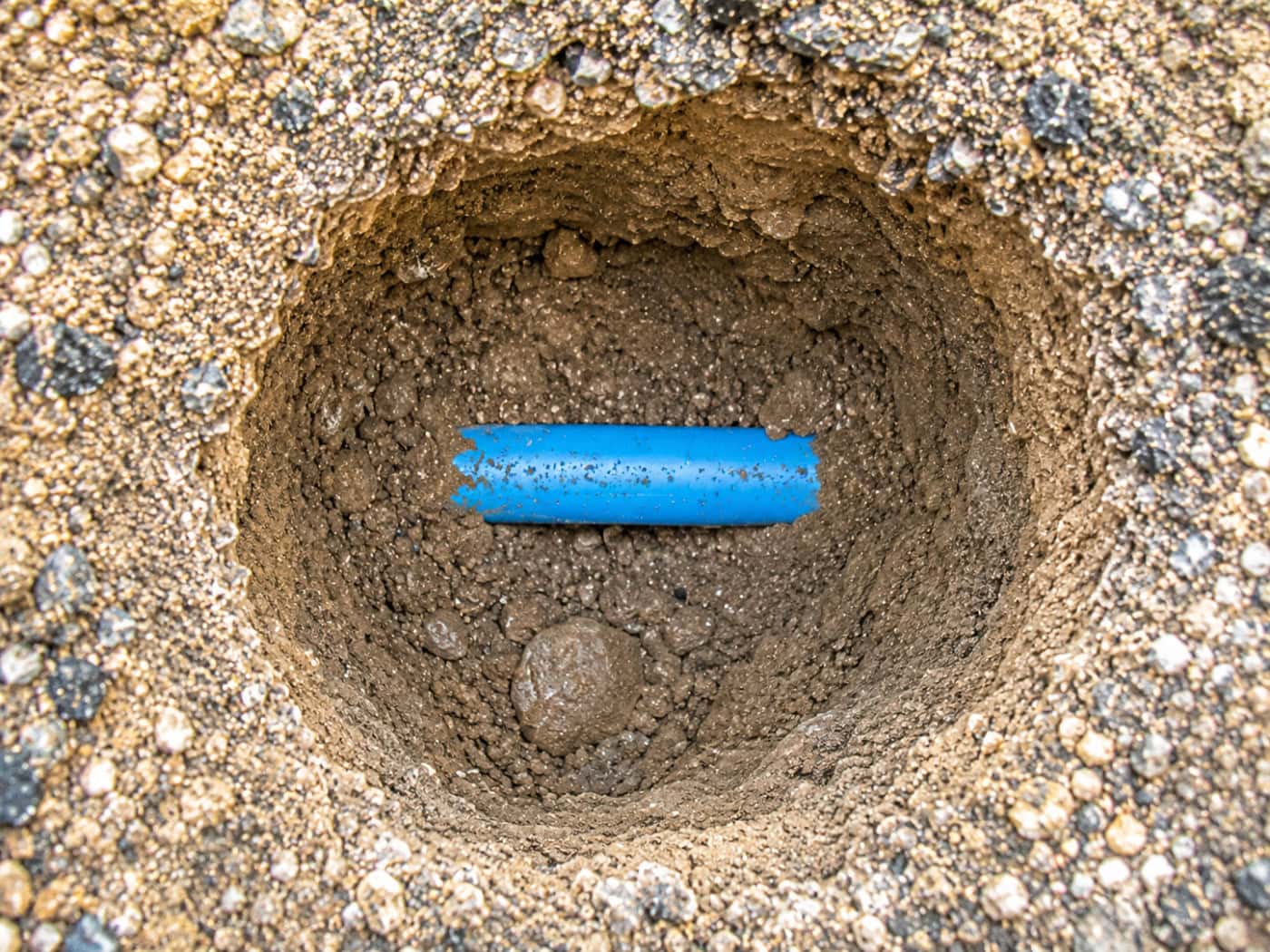
Only a small section needs to be accessed
Excavation can be targeted to a specific point
Surrounding areas can often be left untouched
This is why detection comes before any repair decision.
What determines how much of your property is affected
The extent of disruption depends on a few key factors:
The exact location of the leak
The depth of the pipe
The type of surface above it (soil, paving, concrete)
How accessible the area is
A leak under a lawn is usually straightforward to access. A leak under a driveway or patio may require more controlled work, but still doesn’t mean widespread excavation.
How accurate detection reduces disruption
The difference between guesswork and precision is significant.
At The Leak Hunter, we use specialist methods to pinpoint the exact leak location before any excavation begins.
This allows us to:
Minimise the size of the area opened up
Avoid unnecessary damage to surrounding surfaces
Plan the repair with clarity
If you want to see how this process works, visit how we find mains water leaks.
What the repair usually involves
Once the leak is located, the repair is typically straightforward.
This may involve:
Opening a small section of ground or surface
Accessing the pipe at the exact leak point
Repairing or replacing that section
Restoring the area afterwards
The goal is always to keep the work as contained as possible.
You can read more about this stage here: what happens after a mains water leak is found.
When more extensive work might be needed
There are situations where a wider approach is necessary.
This can happen if:
The pipe is in poor condition along its length
There are multiple weak points
The route makes localised repair impractical
In these cases, replacement or rerouting may be the better long-term solution — but this is based on evidence, not assumption.
What homeowners often worry about
It’s common to worry about damage to driveways, paving, or landscaping.
In most cases, these concerns are based on worst-case scenarios rather than typical outcomes.
With proper detection and planning:
Work is kept controlled
Surfaces are restored after repair
Disruption is limited to the affected area
Final thoughts
A supply pipe leak outside your home doesn’t automatically mean your driveway or garden will be dug up extensively.
The outcome depends on how accurately the leak is located and how the repair is planned.
With the right approach, most repairs are targeted, controlled, and far less disruptive than expected.
To understand how we manage this process from detection through to repair, visit mains water leak detection.
Frequently asked questions
Do you only cover my area?
If you’re outside these areas, don’t worry — our team covers most of the South East, providing trusted leak detection services throughout London, Kent, Sussex, and Surrey.
Will my driveway need to be removed?
Not necessarily. In many cases, only a small section needs to be accessed once the leak is precisely located.
Can repairs be done without damaging my garden?
Yes. Where possible, work is kept localised to minimise disruption to surrounding areas.
What if the pipe runs under a hard surface?
Access may be required, but it is usually controlled and limited to the specific area where the leak is located.