

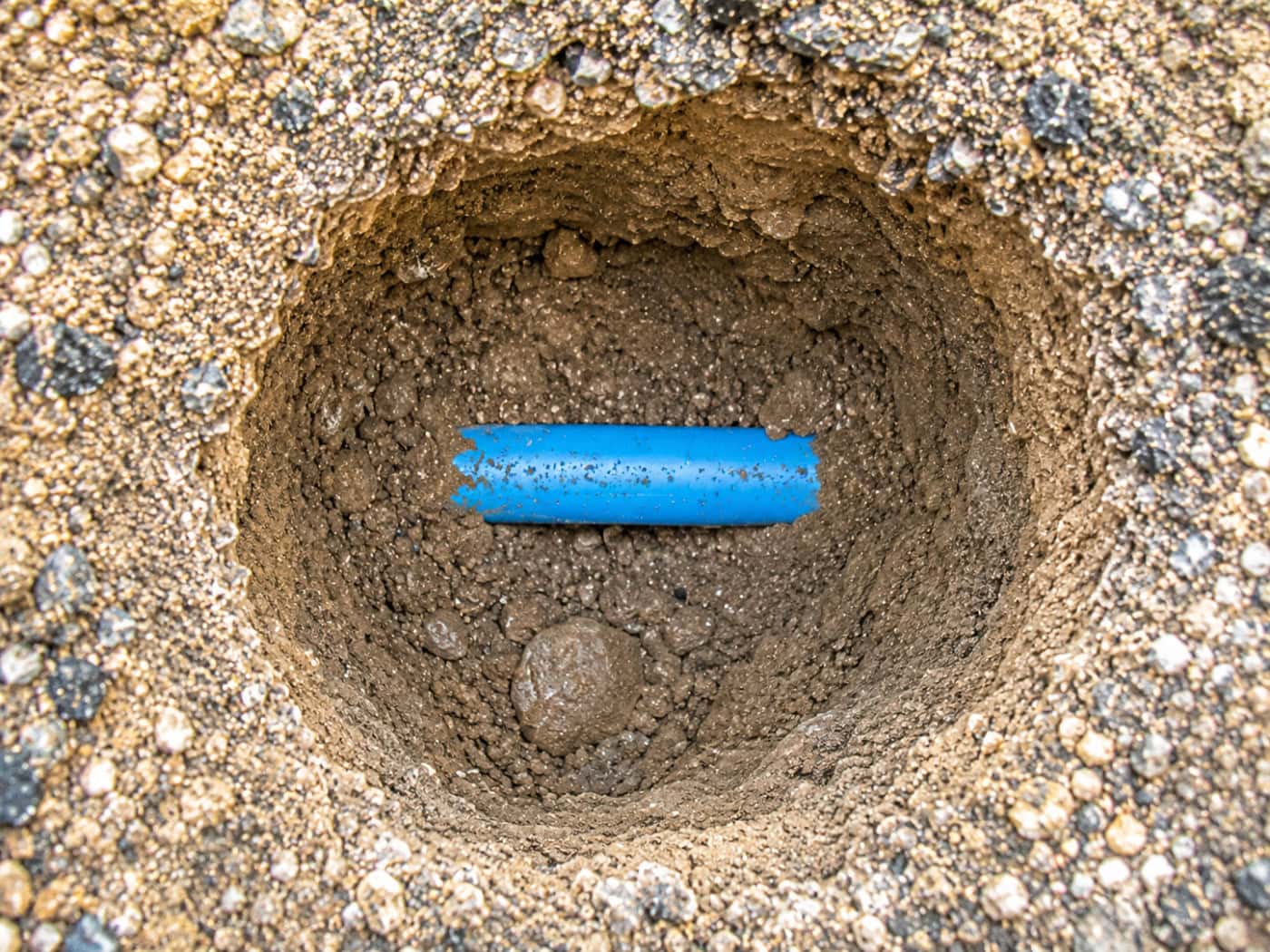
Once a mains water leak has been found underground, the uncertainty is over — but many homeowners are left wondering what actually happens next.
The idea of repairing something you can’t see, buried beneath your property, can feel unclear. Will it involve major digging? How long will it take? What exactly needs to be done?
The reality is that once the leak has been accurately located, the repair process is usually far more controlled and predictable than expected.
What “leak found underground” really means
When a leak is confirmed underground, it means the exact location on the supply pipe has been identified using specialist detection methods.
This is a critical step because it removes guesswork.
It means:
- The exact point of water loss is known
- Unnecessary excavation is avoided
- The repair can be planned precisely
If you want to understand how these leaks are located before repair begins, see how we find mains water leaks.
Step 1: Planning access to the pipe
Before any work begins, the repair is planned around the confirmed leak location.
This involves deciding:
- How to access the pipe with minimal disruption
- What surface sits above the leak (soil, paving, driveway)
- The safest and most efficient way to carry out the repair
The goal is always to keep access as targeted and controlled as possible.
Step 2: Exposing the affected section
Once the plan is in place, the next step is to expose the section of pipe where the leak is located.
This typically involves:
- Opening a small, localised area above the pipe
- Carefully accessing the pipe at the exact point of failure
- Avoiding unnecessary disturbance to surrounding areas
Because the leak has already been pinpointed, excavation is usually limited to a specific spot rather than a large area.
Step 3: Repairing or replacing the pipe section
With the pipe exposed, the repair can be carried out.
This may involve:
- Fixing a small, isolated section of pipe
- Replacing a short length of damaged pipe
- In some cases, installing a new section if the pipe condition requires it
The Leak Hunter will carry out the most effective repair based on the condition of the pipe — not assumptions.
Step 4: Testing the system
After the repair is completed, the system is tested to ensure the leak has been fully resolved.
This includes:
- Checking for continued water loss
- Confirming stable water flow
- Ensuring no additional weak points are present
This step is essential to confirm that the problem has been properly fixed.
Step 5: Restoring the area
Once the repair is confirmed, the final step is reinstating the area.
This may involve:
- Refilling and compacting the ground
- Restoring paving, driveway sections, or garden areas
- Leaving the site in a tidy, controlled condition
The aim is always to return your property as close as possible to its original state.
How long does the repair process take?
In many cases, once the leak has been located, the repair itself can be completed relatively quickly.
The exact timeframe depends on:
- The location of the pipe
- The type of surface above it
- The extent of the damage
However, most repairs are completed within a short, manageable timeframe when properly planned.
Why proper detection makes all the difference
The entire process depends on one key factor: accurate detection.
Without it, repairs become trial-and-error. With it, the work is precise, controlled, and efficient.
That’s why the first step — confirming the exact location — is the most important part of the entire process.
If you want to understand where these leaks typically occur along the supply route, see where mains water leaks occur.
Final thoughts
A mains water leak found underground may sound complex, but once located, the repair process is structured and straightforward.
The key is moving from uncertainty to precision.
With accurate detection and a controlled repair approach, the issue can be resolved efficiently with minimal disruption to your property.
To see how we manage this process from detection through to repair, visit mains water leak detection.
Frequently asked questions
Do you only cover my area?
If you’re outside these areas, don’t worry — our team covers most of the South East, providing trusted leak detection services throughout London, Kent, Sussex, and Surrey.
Will the repair involve digging?
Yes, but it is usually localised to the exact area where the leak is located, rather than large-scale excavation.
How disruptive is the process?
In most cases, disruption is limited to a small, controlled area thanks to accurate detection.
Can the leak come back after repair?
If the pipe is in good condition and the repair is carried out correctly, the issue should be fully resolved.