

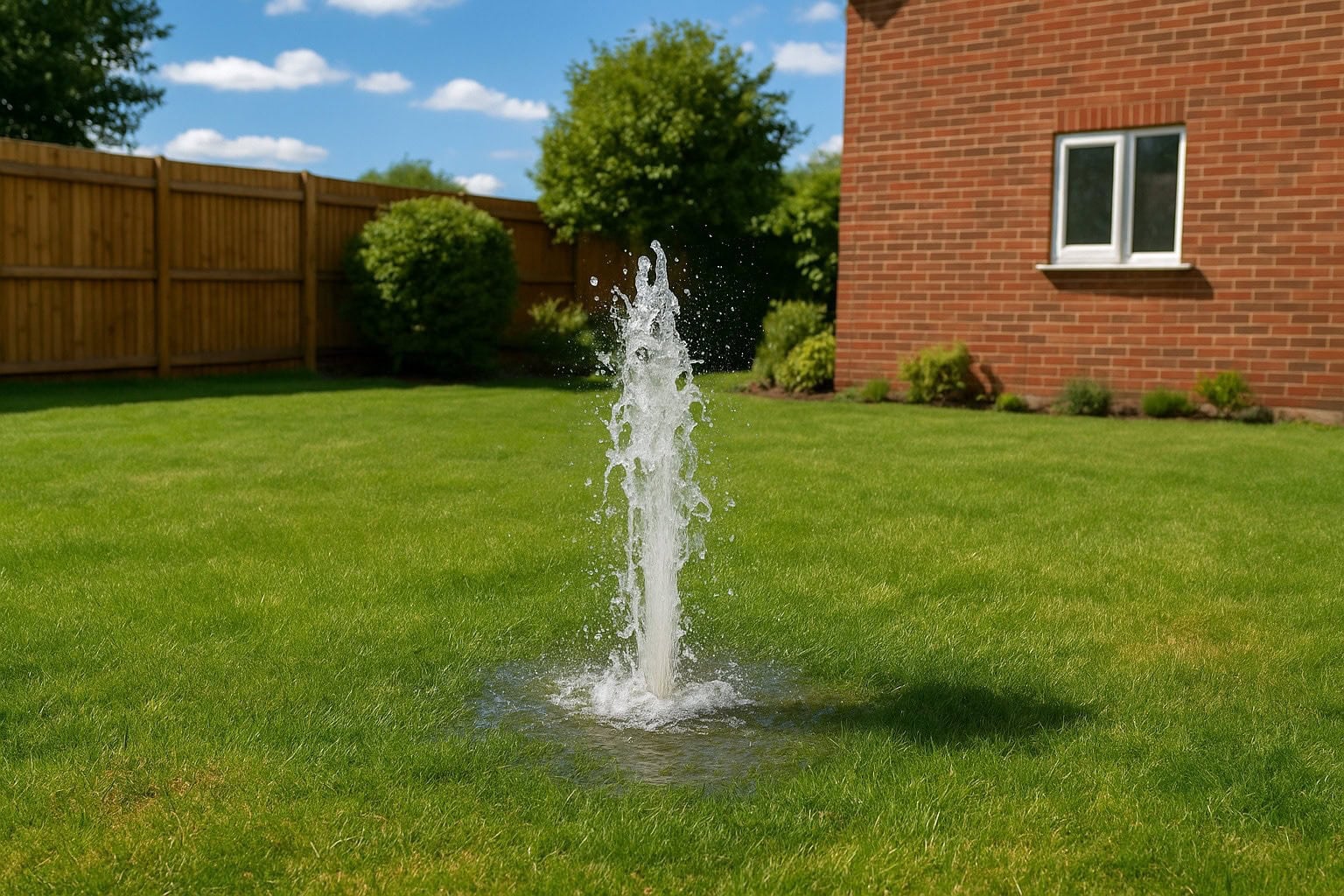
If your driveway stays damp even during dry weather, it’s easy to assume it’s just poor drainage or leftover moisture. But when the same area never seems to dry out, especially without rain, it often points to something happening below the surface.
This is one of the most common signs of a potential underground leak.
The key question is whether this is just a surface issue — or something that needs proper investigation.
Why a driveway might stay wet without rain
Driveways are exposed to the elements, so moisture is normal after rainfall. But in dry conditions, they should gradually dry out.
If one area remains consistently damp:
- Water may be rising from below rather than falling from above
- The ground underneath may be saturated
- A hidden leak could be feeding the moisture continuously
This is where the situation moves beyond simple surface water.
If you want to understand how underground leaks behave, see underground leaks explained.
Why the same spot keeps appearing wet
When the same area of your driveway stays damp, it usually means the water source is consistent.
This could indicate:
- A leak in buried pipework beneath the driveway
- Water tracking through the ground and surfacing in one location
- A low point where moisture collects over time
The important detail is consistency — it’s not random, and it’s not temporary.
Why this shouldn’t be ignored
A permanently damp driveway may not seem urgent, but it can lead to more serious issues if left unresolved.
Over time, this can cause:
- Gradual weakening of the ground beneath the surface
- Movement or sinking in sections of the driveway
- More complex and disruptive repairs later on
What looks like a cosmetic issue can develop into a structural one.
How The Leak Hunter approaches this
The Leak Hunter will determine whether the damp area is being caused by an underground leak and identify the exact source without unnecessary excavation.
This removes guesswork and ensures the problem is understood before any repair begins.
To see how this process works, visit how we find underground leaks.
Why surface signs don’t tell the full story
One of the most common mistakes is assuming the visible damp area marks the exact location of the problem.
In reality:
- Water can travel through the ground before appearing
- The source may sit deeper or further away
- The surface is only showing the symptom, not the cause
This is why digging based on appearance alone rarely solves the issue.
What happens once the cause is confirmed
Once the source of the moisture is identified, the repair can be planned in a controlled and targeted way.
This may involve:
- Accessing the pipe at the correct location
- Repairing or replacing the affected section
- Restoring the driveway surface once the work is complete
You can read more about this stage here: what happens after an underground leak is found.
Final thoughts
If your driveway is constantly wet even in dry weather, it’s worth taking seriously.
The issue may not be surface-level — it could be a sign of something happening below ground.
The Leak Hunter will confirm the cause, locate the source accurately, and carry out the right repair — ensuring the problem is resolved without unnecessary disruption.
To see how we investigate and resolve underground leaks, visit underground leak detection.
Frequently asked questions
Do you only cover my area?
If you’re outside these areas, don’t worry — our team covers most of the South East, providing trusted leak detection services throughout London, Kent, Sussex, and Surrey.
Is a wet driveway always a leak?
Not always, but persistent damp in dry weather is a strong indicator that something may be wrong below the surface.
Can the leak be under the driveway itself?
Yes. Underground pipework often runs beneath driveways and can develop hidden leaks.
Will this damage my driveway over time?
It can. Ongoing moisture can weaken the ground and lead to movement or sinking if not addressed.