

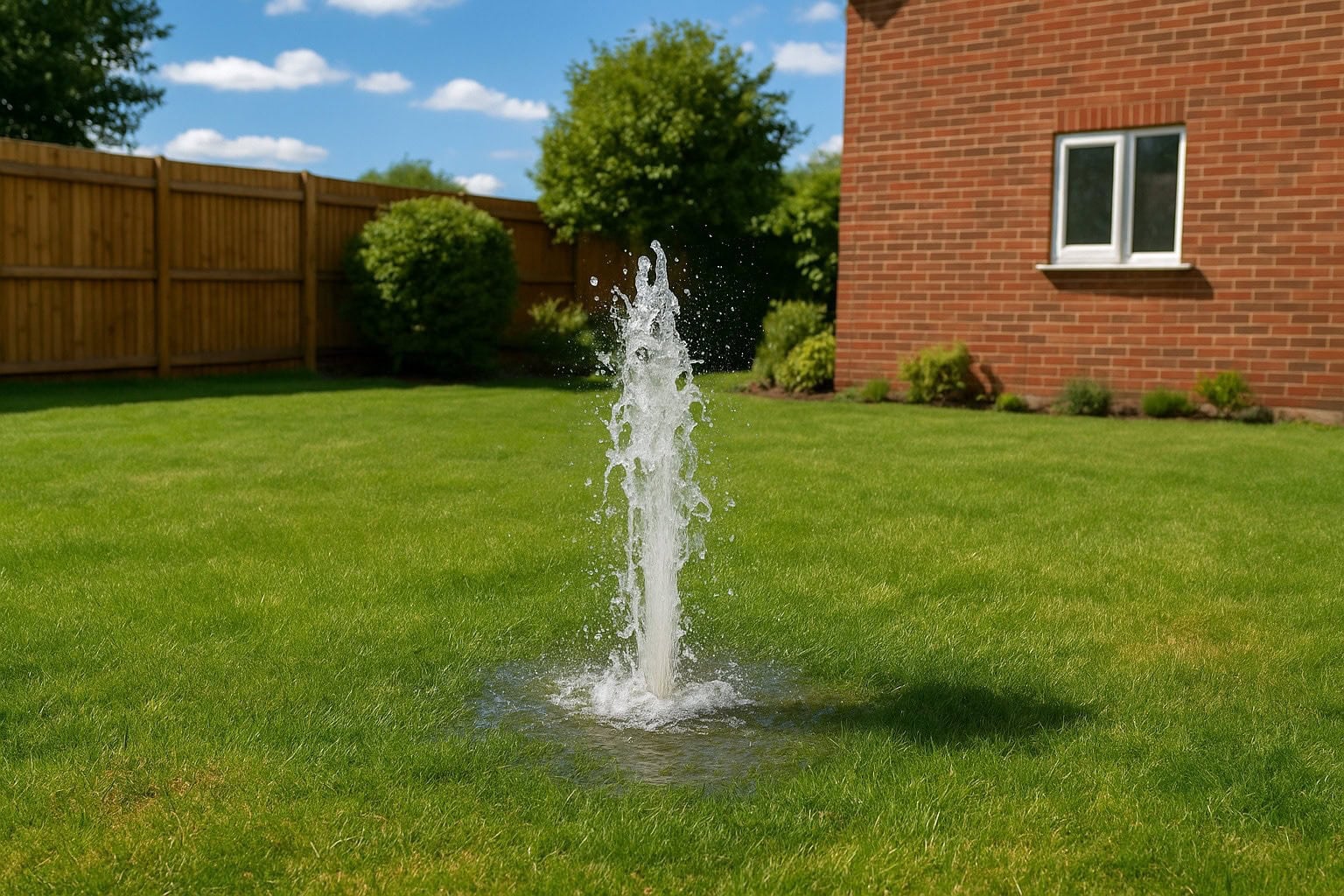
If one area of your lawn looks noticeably greener, thicker, or faster-growing than the rest, it might seem like a positive sign. But when this difference appears suddenly or stays consistent in one spot, it can indicate something unusual beneath the surface.
In some cases, this is an early sign of a hidden underground leak.
The key is understanding why one patch is behaving differently from the rest of your garden.
Why grass grows unevenly in certain areas
Grass growth is heavily influenced by moisture levels in the soil.
If one area is receiving more water than the surrounding ground:
- Grass will grow faster and appear greener
- The soil will remain consistently moist
- The difference becomes more noticeable over time
This can happen naturally — but when it’s localised and persistent, it often suggests an artificial water source.
If you want to understand how underground leaks affect soil conditions, see underground leaks explained.
Why this can point to an underground leak
When a pipe leaks below ground, water seeps into the surrounding soil.
This creates a constant source of moisture that:
- Feeds plant growth in that specific area
- Keeps the soil damp even in dry weather
- Creates a visible contrast with the rest of the lawn
Because the leak is hidden, the grass often becomes the first visible sign.
Why the location matters
The affected patch of grass is usually consistent in size and location.
This often indicates:
- A fixed source of moisture beneath that area
- A pipe or joint allowing water to escape
- A long-term issue rather than a temporary condition
The more defined the patch, the more likely it is to be linked to something below ground.
What homeowners often assume
It’s common to assume the difference in growth is due to:
- Better sunlight or soil quality
- Fertiliser or previous treatment
- Natural variation in the lawn
While these can affect growth, they usually don’t create a sharply defined, persistent patch.
Consistent overgrowth in one area is often a sign that something else is feeding it.
Why it’s important to investigate early
At first, faster-growing grass may not seem like a problem.
However, over time, the underlying issue can lead to:
- Increasing water loss
- Softening ground conditions beneath the surface
- More noticeable surface disruption if left untreated
What starts as a subtle difference can develop into a larger issue.
How The Leak Hunter approaches this
The Leak Hunter will assess whether the unusual grass growth is being caused by an underground leak and locate the exact source without unnecessary digging.
This ensures the issue is properly understood before any repair is carried out.
To see how this works, visit how we find underground leaks.
What happens once the source is identified
Once the cause is confirmed, the repair can be planned in a targeted way.
This may involve:
- Accessing the pipe at the correct location
- Repairing or replacing the affected section
- Restoring the lawn once the work is complete
You can read more about this stage here: what happens after an underground leak is found.
Final thoughts
If one patch of grass is growing faster than the rest, it’s worth taking a closer look.
The difference may not just be cosmetic — it could be a sign of a hidden underground issue.
The Leak Hunter will confirm the cause, locate the source accurately, and carry out the right repair — ensuring the problem is resolved without unnecessary disruption.
To see how we investigate and resolve underground leaks, visit underground leak detection.
Frequently asked questions
Do you only cover my area?
If you’re outside these areas, don’t worry — our team covers most of the South East, providing trusted leak detection services throughout London, Kent, Sussex, and Surrey.
Can grass growth really indicate a leak?
Yes. Excess moisture from a leak can cause grass to grow faster and appear greener in one area.
Could this just be natural variation?
It’s possible, but consistent and localised overgrowth is often worth investigating.
Will the grass return to normal after repair?
In most cases, yes. Once moisture levels stabilise, growth will even out over time.