

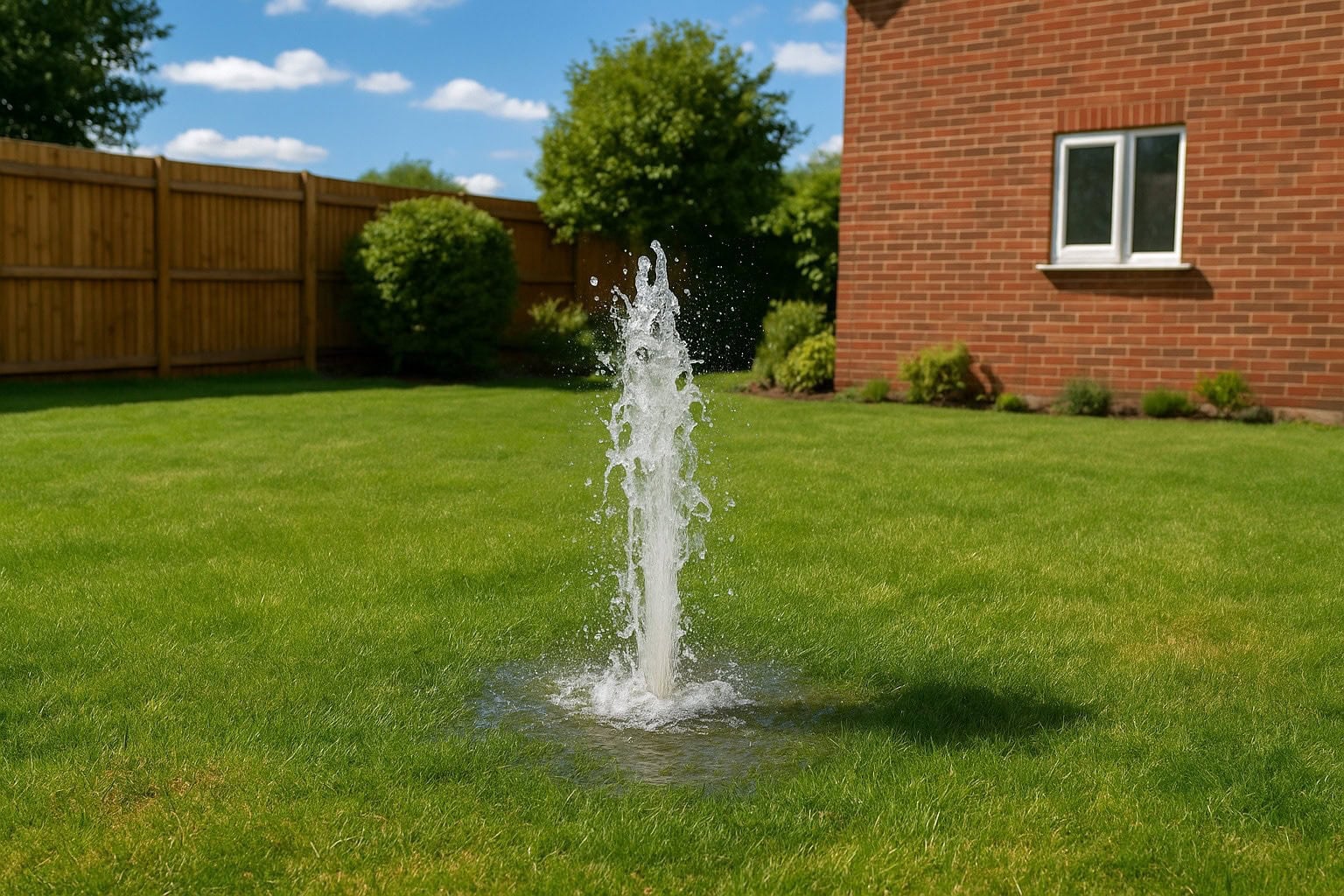
If one part of your garden keeps becoming soggy while the rest remains dry, it can feel odd and difficult to explain. You might expect water to affect the whole area evenly — but instead, it keeps returning to the same spot.
This kind of pattern is often a strong indicator that something below the surface is feeding that specific area.
The key is understanding why it’s always happening in the same place.
Why soggy patches tend to stay localised
When moisture consistently appears in one area, it usually means there is a fixed source rather than a temporary condition.
This can happen when:
- Water is entering the ground at a specific point
- The soil in that area is receiving more moisture than the surroundings
- The ground allows water to collect or settle in one location
Consistency is one of the biggest clues that something isn’t random.
If you want to understand how underground leaks behave, see underground leaks explained.
Why it’s not usually just drainage
Poor drainage can cause damp conditions, but it typically affects wider areas or behaves differently over time.
A single soggy patch that keeps returning often suggests:
- A continuous source of water beneath that spot
- A leak feeding moisture into one section of the ground
- Water travelling through the soil and settling there repeatedly
The pattern is what separates this from normal drainage issues.
What homeowners often assume
It’s common to assume the problem is due to:
- Low ground or natural pooling
- Recent rainfall or watering
- Differences in soil type
While these can influence moisture, they usually don’t create a consistent, repeating patch in the exact same location over time.
Why the visible spot may not be the source
The area that feels soggy isn’t always directly above the cause.
In reality:
- Water can move through the ground before settling
- The source may be slightly offset or deeper
- The visible patch is where moisture collects, not necessarily where it starts
This is why guessing the source based on surface appearance can be misleading.
Why this shouldn’t be ignored
A consistently soggy patch may seem minor, but it can lead to:
- Worsening ground conditions over time
- Expansion of the affected area
- More disruptive repairs if the underlying cause continues
Early investigation often prevents more extensive issues later.
How The Leak Hunter approaches this
The Leak Hunter will confirm whether the soggy area is being caused by an underground leak and pinpoint the exact source without unnecessary digging.
This ensures the issue is clearly understood before any repair work begins.
To see how this process works, visit how we find underground leaks.
What happens once the cause is identified
Once the source is confirmed, the repair can be planned in a controlled and targeted way.
This may involve:
- Accessing the pipe at the correct location
- Repairing or replacing the affected section
- Restoring the garden once the work is complete
You can read more about this stage here: what happens after an underground leak is found.
Final thoughts
If your garden only becomes soggy in one area, it’s worth looking beyond surface explanations.
The pattern is often the biggest clue that something is happening below ground.
The Leak Hunter will confirm the cause, locate the source accurately, and carry out the right repair — ensuring the problem is resolved without unnecessary disruption.
To see how we investigate and resolve underground leaks, visit underground leak detection.
Frequently asked questions
Do you only cover my area?
If you’re outside these areas, don’t worry — our team covers most of the South East, providing trusted leak detection services throughout London, Kent, Sussex, and Surrey.
Why is it always the same spot?
This usually indicates a consistent source of moisture beneath that area.
Could this just be natural drainage?
It’s possible, but repeated patterns in the same location are often worth investigating.
Will the area get worse over time?
It can. Continuous moisture can affect a larger section of ground if not addressed.