

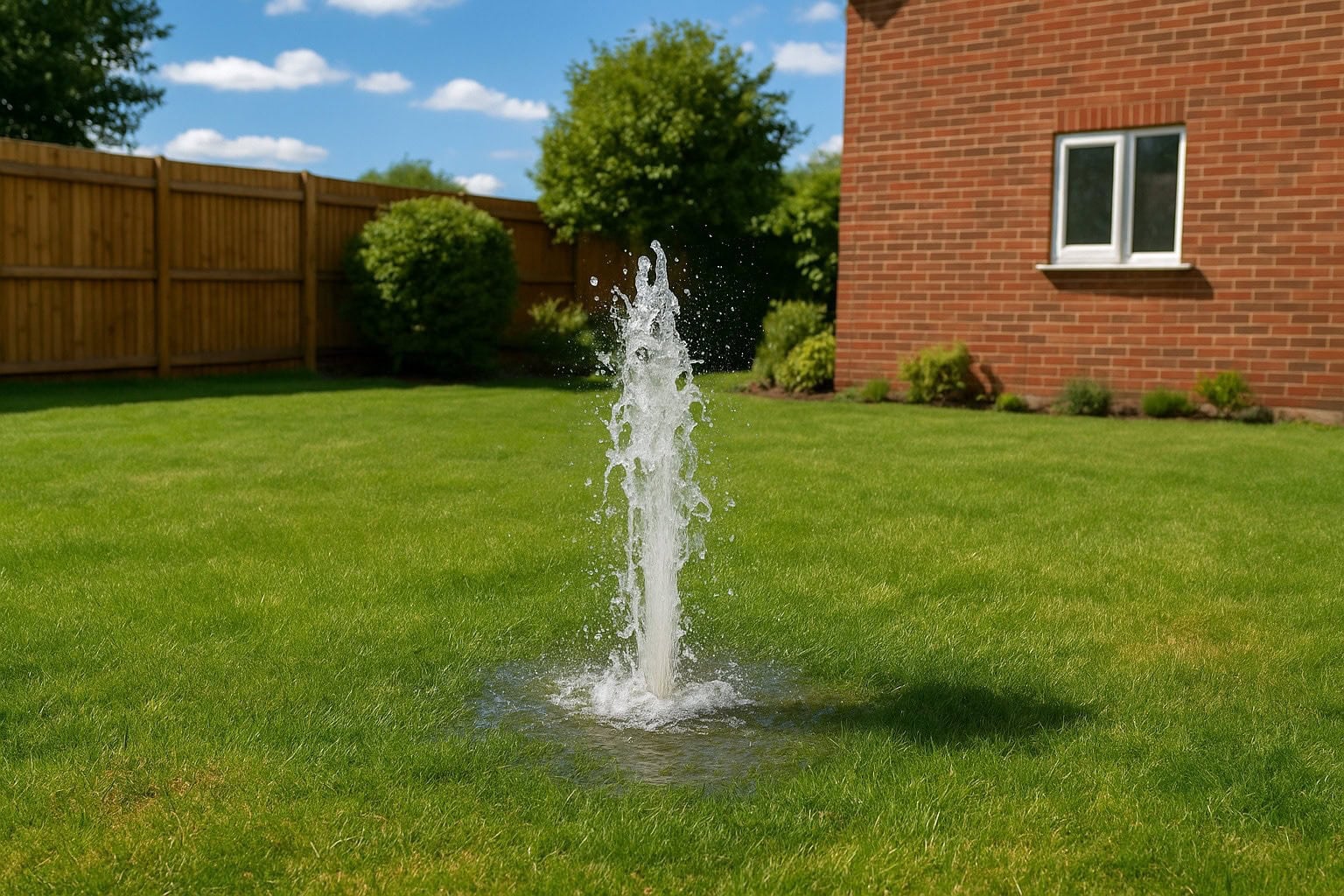
If water appears in the same outdoor area and then disappears again, it can be confusing to interpret. One day the ground is damp or wet, and the next it seems completely normal.
This kind of pattern often leads to uncertainty — is it just temporary, or is something still going on beneath the surface?
In many cases, this stop-start behaviour can still point to an underlying underground leak.
Why water can come and go in the same spot
Underground leaks don’t always behave in a constant, visible way.
This can happen when:
- Water flow fluctuates due to pressure changes
- The ground absorbs and then releases moisture over time
- Conditions allow water to surface intermittently rather than continuously
This creates a pattern where the issue appears inconsistent, even though the cause may still be present.
If you want to understand how underground leaks behave, see underground leaks explained.
Why it can seem like the problem has gone away
When the visible water disappears, it’s natural to assume the issue has resolved itself.
However:
- The water may have simply drained or been absorbed temporarily
- The leak may still be active below the surface
- Conditions may no longer allow water to reach the surface visibly
The absence of visible water doesn’t always mean the absence of a problem.
What makes this different from normal conditions
Outdoor moisture can vary naturally, but there are key differences when a leak may be involved.
A potential underground issue is more likely when:
- The same area is repeatedly affected
- The pattern happens without clear weather changes
- The issue returns over time rather than resolving permanently
The repetition is often the strongest indicator.
Why this pattern shouldn’t be ignored
Because the issue isn’t constant, it’s easy to delay investigation.
However, over time, this can lead to:
- Gradual worsening of the underlying problem
- Increasing ground saturation when conditions allow
- More complex repairs if left too long
Intermittent signs are often early warnings rather than false alarms.
How The Leak Hunter approaches this
The Leak Hunter will assess whether the repeating pattern is linked to an underground leak and pinpoint the exact source without unnecessary digging.
This ensures the issue is properly understood before any repair work begins.
To see how this works, visit how we find underground leaks.
Why the visible pattern doesn’t show the full picture
The appearance and disappearance of water is only part of what’s happening.
In reality:
- The source may remain constant even if the surface changes
- Water movement through the ground can vary over time
- The visible signs depend on conditions, not just the leak itself
This is why proper investigation is essential.
What happens once the cause is confirmed
Once the source is identified, the repair can be planned in a controlled and targeted way.
This may involve:
- Accessing the pipe at the correct location
- Repairing or replacing the affected section
- Restoring the area once the work is complete
You can read more about this stage here: what happens after an underground leak is found.
Final thoughts
If water appears and disappears in the same area, it’s worth paying attention to the pattern rather than the moment.
The issue may not be constant — but it may still be active.
The Leak Hunter will confirm the cause, locate the source accurately, and carry out the right repair — ensuring the problem is resolved without unnecessary disruption.
To see how we investigate and resolve underground leaks, visit underground leak detection.
Frequently asked questions
Do you only cover my area?
If you’re outside these areas, don’t worry — our team covers most of the South East, providing trusted leak detection services throughout London, Kent, Sussex, and Surrey.
Can a leak be intermittent?
Yes. Some leaks fluctuate depending on pressure and ground conditions.
Does disappearing water mean the issue is fixed?
Not necessarily. The underlying cause may still be present below ground.
Should I investigate even if it goes away?
If the issue returns or follows a pattern, it’s best to confirm the cause early.