

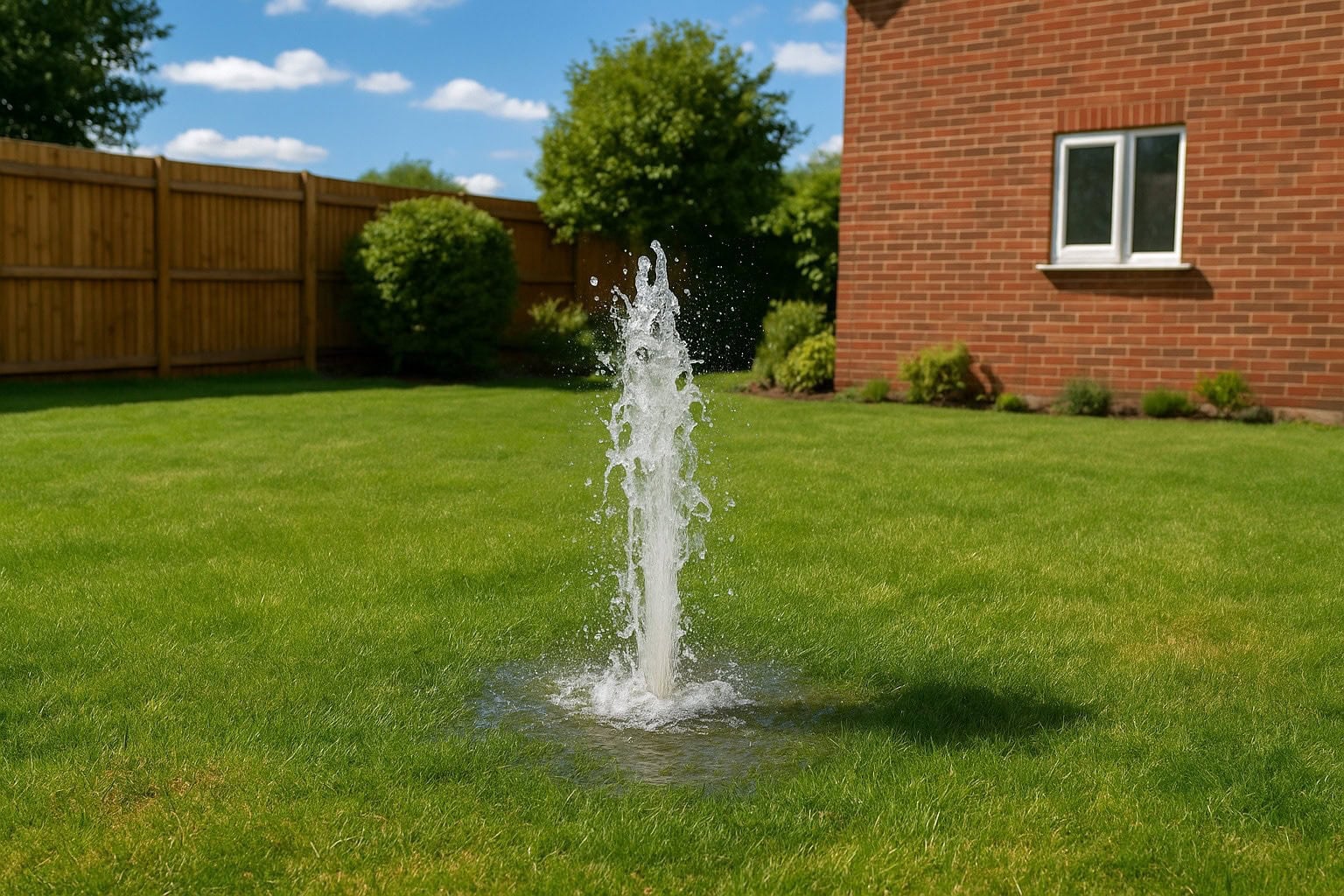
If you’ve noticed more insects gathering around one specific damp area outside your property, it can feel like a minor nuisance at first. However, when the activity is concentrated in one spot and persists over time, it can point to a change in conditions below the surface.
Insects are often drawn to moisture — so when their behaviour changes, it can indicate something else has changed too.
Why insects are attracted to damp areas
Many insects rely on moisture for survival.
This means they are naturally drawn to areas where:
- The ground remains consistently damp
- Water is present below the surface
- Conditions support breeding or feeding
This makes them useful indicators of underlying moisture.
If you want to understand how underground leaks affect ground conditions, see underground leaks explained.
Why the activity is often localised
If insects are gathering in one specific area, it usually means conditions there are different from the surrounding ground.
This can suggest:
- A consistent source of moisture in that location
- Ground conditions that remain damp over time
- Water feeding the area below the surface
The concentration is often the key clue.
What homeowners often assume
It’s common to assume increased insect activity is caused by:
- Seasonal changes
- Nearby plants or organic material
- Normal garden conditions
While these can attract insects, they don’t always explain a sudden or persistent concentration in one spot.
Why this can indicate more than just surface moisture
When insect activity remains focused in one damp area, it may indicate that moisture is not temporary.
This can mean:
- The ground is consistently damp below the surface
- Water is being supplied continuously
- The conditions are stable enough to sustain activity over time
This is where it moves beyond a simple surface issue.
Why this shouldn’t be ignored
While insects themselves may not be the main concern, they can indicate conditions that are developing below ground.
Over time, this can lead to:
- Increasing moisture in the surrounding area
- More visible ground changes appearing
- More complex issues if the underlying cause continues
The activity is often a symptom rather than the cause.
How The Leak Hunter approaches this
The Leak Hunter will determine whether the damp area is being influenced by an underground leak and pinpoint the exact source without unnecessary excavation.
This ensures the issue is clearly understood before any repair work begins.
To see how this works, visit how we find underground leaks.
Why insect activity doesn’t show the full picture
The presence of insects reflects the conditions — not the cause.
In reality:
- The source of moisture may sit deeper underground
- Water may be spreading through the soil unevenly
- The visible activity is a response to those conditions
This is why proper investigation is important.
What happens once the cause is confirmed
Once the source is identified, the repair can be planned in a controlled and targeted way.
This may involve:
- Accessing the pipe at the correct location
- Repairing or replacing the affected section
- Restoring the area once the work is complete
You can read more about this stage here: what happens after an underground leak is found.
Final thoughts
If you’re seeing increased insect activity around one damp area, it’s worth considering what’s attracting them.
The issue may not just be environmental — it could be a sign of excess moisture below ground.
The Leak Hunter will confirm the cause, locate the source accurately, and carry out the right repair — ensuring the problem is resolved without unnecessary disruption.
To learn more about how we diagnose and resolve these issues, visit underground leak detection.
Frequently asked questions
Do you only cover my area?
If you’re outside these areas, don’t worry — our team covers most of the South East, providing trusted leak detection services throughout London, Kent, Sussex, and Surrey.
Do insects always mean there’s a leak?
No, but concentrated activity in one damp area can indicate excess moisture.
Why are they only in one spot?
This usually suggests conditions in that area are different from the rest of the ground.
Should I treat the insects or investigate the cause?
Treating insects addresses the symptom, but confirming the cause helps resolve the issue properly.