

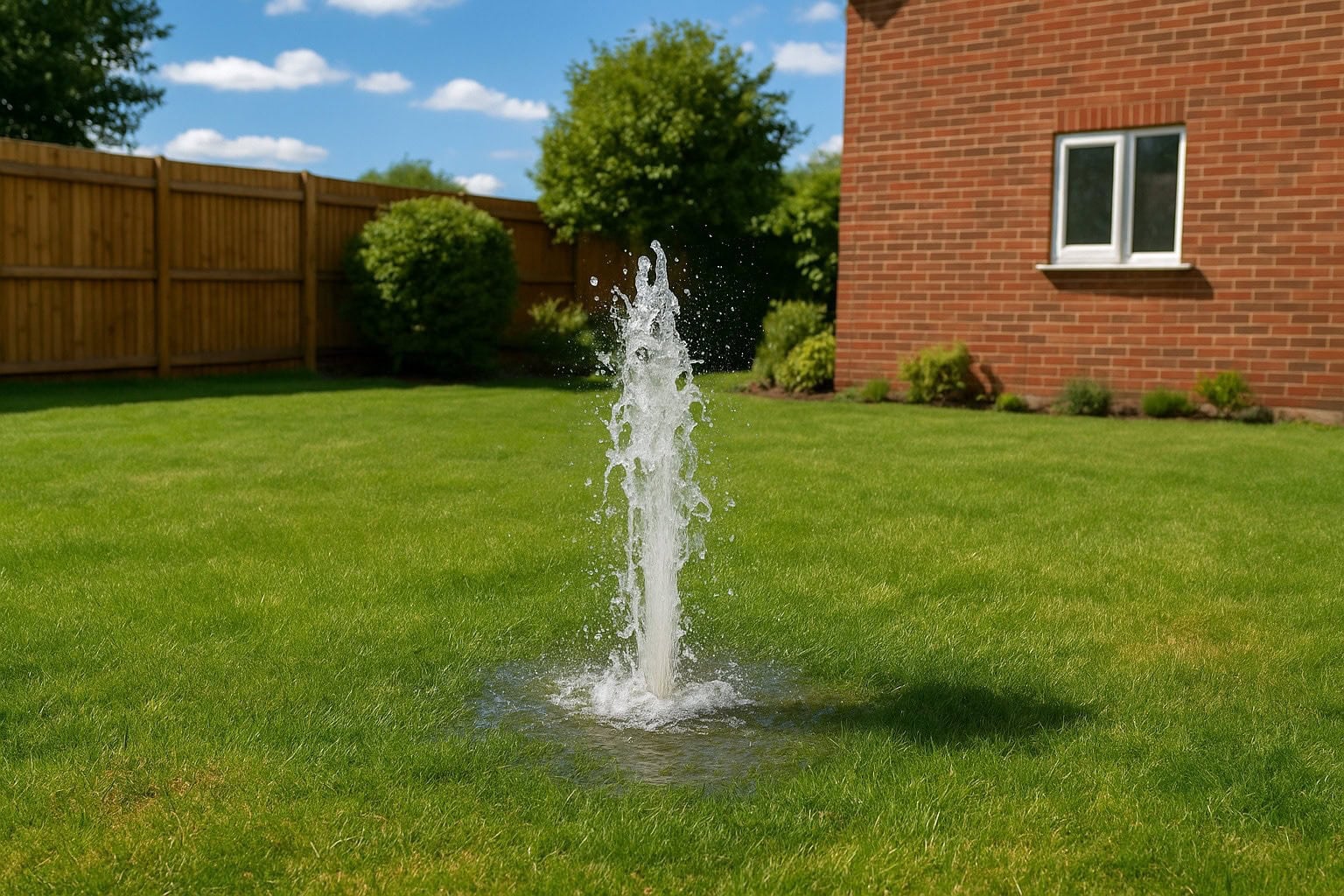
If you’re noticing signs that suggest a leak outside your property — but can’t actually see anything obvious — it can leave you unsure how to proceed. There’s no visible water, no clear damage, and nothing you can point to directly.
Yet something still feels off.
This type of situation is more common than it seems, especially with underground issues.
Why leaks aren’t always visible
Not all leaks show themselves clearly at the surface.
This is because:
- Water can remain below ground without surfacing
- The soil may absorb moisture without obvious signs
- The source may sit deeper or away from visible areas
This makes it difficult to confirm the issue through observation alone.
If you want to understand how underground leaks behave, see underground leaks explained.
What counts as a “sign” without visible water
Even without visible water, there are often subtle indicators that something isn’t right.
These can include:
- Changes in ground condition or stability
- Persistent damp areas without explanation
- Unusual patterns that repeat over time
The absence of visible water doesn’t mean there are no clues.
Why this situation creates uncertainty
When there’s no clear visual evidence, it’s easy to question whether there’s actually a problem.
Many homeowners think:
- It might not be serious enough to act on
- There’s nothing to confirm a leak
- It could resolve on its own
This uncertainty often leads to delays.
Why waiting doesn’t always resolve it
If the issue is being caused by something below ground, it may continue even if nothing changes visibly.
Over time, this can lead to:
- Gradual development of more obvious signs
- Expansion of affected areas
- More complex repairs if left too long
Early-stage issues often remain hidden until they progress.
What you can do next
When signs are present but not visible, the focus should be on confirmation rather than assumption.
This means:
- Understanding whether a leak is actually present
- Identifying the exact location of the issue
- Avoiding unnecessary disruption based on guesswork
Clarity is the key step forward.
How The Leak Hunter approaches this
The Leak Hunter will assess the situation, confirm whether an underground leak is present, and pinpoint the exact source without unnecessary excavation.
This allows you to move from uncertainty to a clear understanding of what’s happening.
To see how this works, visit how we find underground leaks.
Why surface checks aren’t enough
Surface inspection alone often doesn’t reveal the full picture.
In reality:
- The source may sit below the surface and out of view
- Water may not reach the surface visibly
- The signs you notice may be indirect rather than obvious
This is why proper detection is essential.
What happens once the issue is confirmed
Once the source is identified, the next step is planning the repair in a controlled and targeted way.
This may involve:
- Accessing the pipe at the correct location
- Repairing or replacing the affected section
- Restoring the area once the work is complete
You can read more about this stage here: what happens after an underground leak is found.
Final thoughts
If you suspect an outdoor leak but can’t see anything obvious, it’s worth focusing on the signs rather than the absence of visible evidence.
Hidden issues often present subtly before becoming clear.
The Leak Hunter will confirm the cause, locate the source accurately, and carry out the right repair — ensuring the problem is resolved without unnecessary disruption.
To learn more about how we diagnose and resolve these issues, visit underground leak detection.
Frequently asked questions
Do you only cover my area?
If you’re outside these areas, don’t worry — our team covers most of the South East, providing trusted leak detection services throughout London, Kent, Sussex, and Surrey.
Can there be a leak without visible water?
Yes. Underground leaks often remain hidden and may not show clear surface signs.
Should I act even if I’m not sure?
If signs are present and persistent, it’s worth confirming the cause.
Is investigation disruptive?
No. Modern detection methods are designed to minimise disruption while locating the issue accurately.