

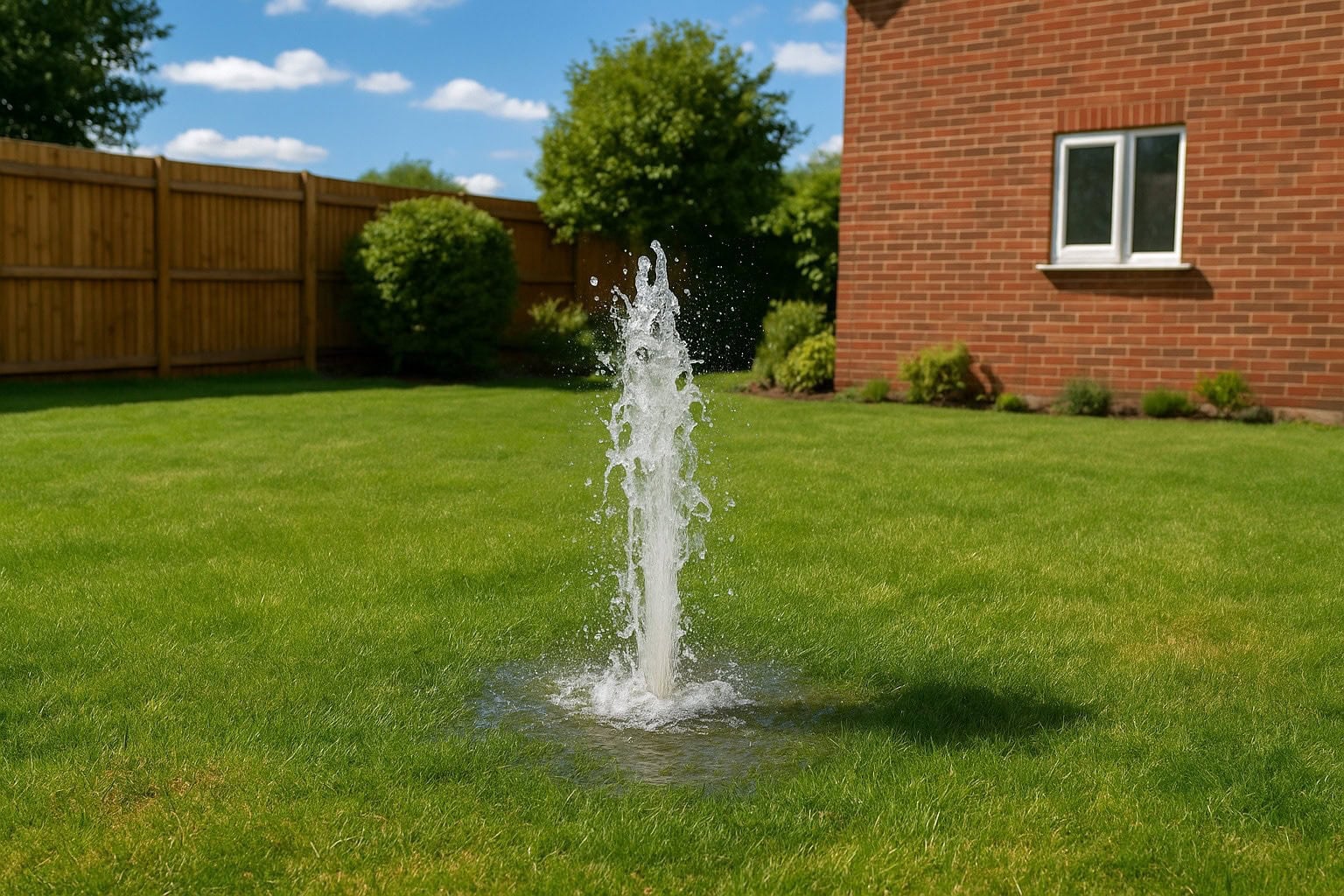
If you can hear the sound of water running outside — but there’s no visible source — it can be unsettling. It might sound like a faint hiss, a trickle, or even a steady flow beneath the surface.
With no taps running and nothing obvious above ground, the question becomes: where is that sound coming from?
In some cases, this type of noise can point to water moving below ground.
Why you might hear water with no visible source
Underground water movement doesn’t always stay silent.
You may hear it when:
- Water is flowing through soil or voids below the surface
- A pipe is allowing water to escape under pressure
- Sound travels through hard surfaces like paving or foundations
This can make the issue noticeable even before anything becomes visible.
If you want to understand how underground leaks behave, see underground leaks explained.
What the sound can tell you
The type of sound can sometimes give clues about what’s happening.
For example:
- A steady hiss may indicate pressurised water escaping
- A trickling sound may suggest water moving through soil
- A constant flow noise may indicate ongoing water loss
While not definitive, these sounds often point to movement rather than still water.
Why there may be no visible signs yet
One of the most confusing aspects is hearing water without seeing it.
This can happen because:
- The leak may be deep below the surface
- The ground may be absorbing the water
- Conditions may not allow water to rise visibly
In these cases, sound can be the first indicator.
What homeowners often assume
It’s common to think the sound is caused by:
- Nearby drainage systems
- Water movement from neighbouring properties
- Natural ground or environmental noise
While these are possible, persistent or localised sounds without explanation are worth investigating.
Why this shouldn’t be ignored
If water is moving below ground, it may indicate an ongoing issue.
Over time, this can lead to:
- Increasing water loss
- Gradual changes in ground conditions
- More visible signs developing later
Hearing it early can actually be an advantage.
How The Leak Hunter approaches this
The Leak Hunter will assess whether the sound is linked to an underground leak and pinpoint the exact source using non-invasive detection methods.
This ensures the issue is clearly understood before any repair work begins.
To see how this works, visit how we find underground leaks.
Why sound alone doesn’t show the full picture
The noise you hear is only part of what’s happening.
In reality:
- The source may be deeper or offset from where the sound is heard
- Sound can travel through ground and structures
- The loudest point may not be the source
This is why proper detection is essential.
What happens once the cause is confirmed
Once the source is identified, the repair can be planned in a controlled and targeted way.
This may involve:
- Accessing the pipe at the correct location
- Repairing or replacing the affected section
- Restoring the area once the work is complete
You can read more about this stage here: what happens after an underground leak is found.
Final thoughts
If you can hear water running outside but can’t see where it’s coming from, it’s worth investigating further.
The sound itself may be the earliest sign that something is happening below ground.
The Leak Hunter will confirm the cause, locate the source accurately, and carry out the right repair — ensuring the problem is resolved without unnecessary disruption.
To learn more about how we diagnose and resolve these issues, visit underground leak detection.
Frequently asked questions
Do you only cover my area?
If you’re outside these areas, don’t worry — our team covers most of the South East, providing trusted leak detection services throughout London, Kent, Sussex, and Surrey.
Can you hear an underground leak?
Yes. In some cases, water movement below ground can produce audible sounds.
Does sound always mean there’s a leak?
Not always, but persistent or unexplained noise is worth checking.
Should I investigate even without visible signs?
Yes. Early signs like sound can help identify issues before they develop further.