

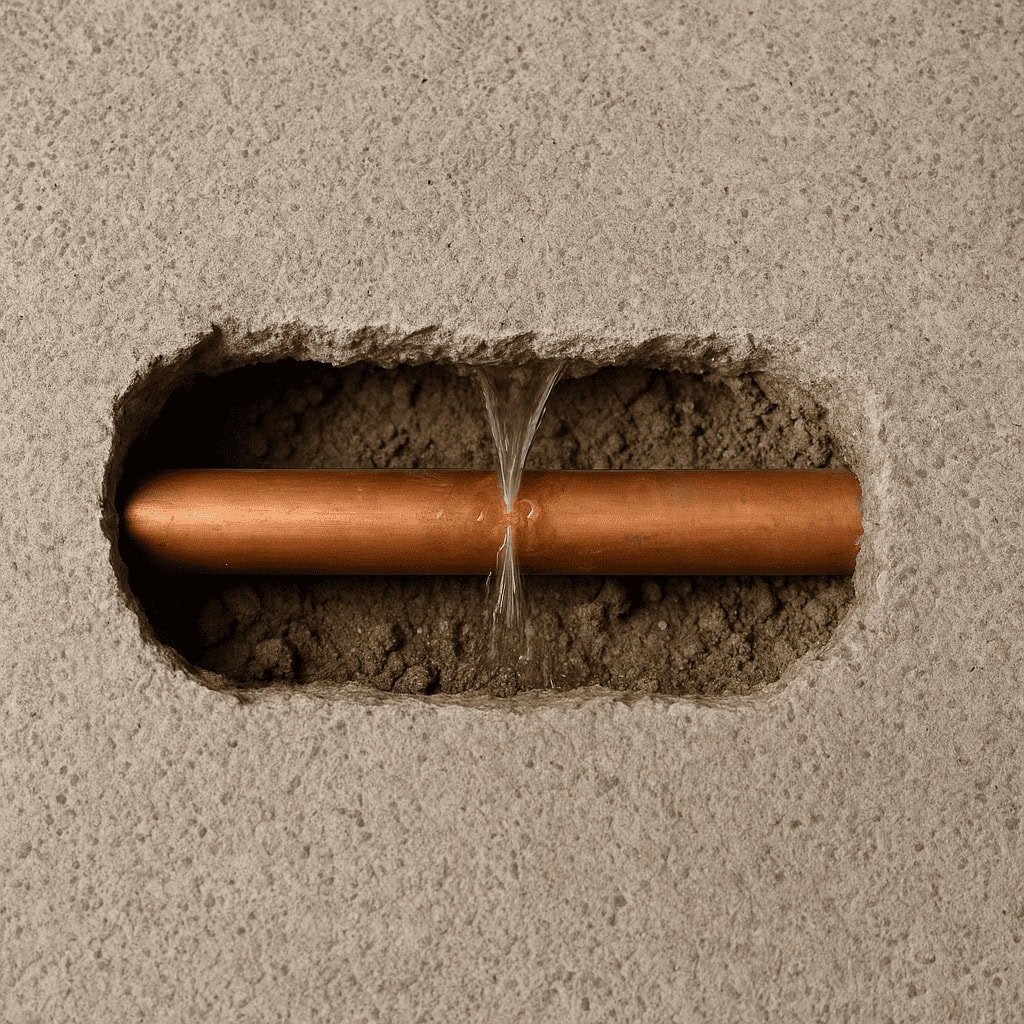
If you’ve noticed cracks appearing in your concrete floor — especially with damp edges around them — it can be difficult to know whether you’re looking at a normal floor crack or something more serious developing beneath the surface.
Many homeowners initially assume the crack itself is the problem. In reality, it’s often the moisture surrounding the crack that becomes the more important warning sign.
In properties with a solid concrete floor or screed, damp cracks can sometimes indicate a hidden issue developing beneath the slab rather than simple surface wear alone.
Why cracks can appear in concrete floors
Concrete floors naturally develop small cracks over time due to movement, settlement, temperature changes, and general ageing.
However, when moisture consistently appears around a crack, it may suggest conditions beneath the floor are also changing.
- Moisture may be affecting the ground beneath the slab
- Water pressure beneath the floor may be increasing locally
- The crack may provide an easier route for moisture to rise
- Conditions below the screed may no longer be stable
In these situations, the visible crack may only represent part of the underlying issue.
Why damp edges around the crack matter
The dampness around the crack is often more significant than the crack line itself.
This can indicate:
- Moisture is rising through the slab at that location
- Water beneath the floor is following the crack path
- A hidden leak may be affecting the surrounding area below
- The slab is allowing moisture to escape upwards
In many cases, the dampness helps identify where moisture is surfacing rather than where the original source actually sits.
Why the issue is often isolated to one area
Homeowners are often confused when only one crack appears damp while the rest of the floor seems normal.
This usually suggests the moisture is concentrated in a specific section beneath the slab rather than spread evenly underneath the entire property.
- A buried pipe may be leaking in one area
- Water may be collecting beneath a specific section of floor
- The crack may simply be the easiest exit point for moisture
The visible crack therefore becomes a symptom rather than the root cause itself.
What homeowners commonly assume
It’s very common to assume cracks are simply caused by:
- Natural settlement
- Minor structural movement
- Drying shrinkage within the concrete
- Temperature expansion and contraction
While these can all create cracks, they do not normally explain ongoing dampness consistently appearing around the edges.
Why damp cracks in concrete floors should not be ignored
Persistent moisture around a concrete floor crack can indicate water is continuing to build beneath the slab.
If the underlying cause remains unresolved, this can eventually lead to:
- Further moisture spread beneath the floor
- Additional cracking or floor deterioration
- Damp-related symptoms elsewhere in the property
- More disruptive repair work later on
Early investigation helps identify whether a hidden leak is contributing to the problem before the damage progresses further.
How The Leak Hunter investigates damp cracks beneath solid floors
The Leak Hunter specialises in locating hidden leaks beneath concrete floors using non-invasive leak detection methods designed specifically for beneath-slab pipework and buried leaks.
Rather than breaking into large sections of floor unnecessarily, we trace the exact source beneath the slab first, allowing repairs to be planned accurately and with minimal disruption.
You can learn more here: how we find concrete floor leaks.
Why the visible crack does not show the full problem
The visible crack is often only the point where moisture finally becomes noticeable.
In reality:
- The actual source may sit deeper below the slab
- Water may travel beneath the floor before surfacing
- The crack may simply provide a path for moisture to escape
This is why proper leak detection is essential before attempting cosmetic repairs to the floor surface itself.
What happens once the cause is confirmed
Once The Leak Hunter identifies the exact source beneath the floor, repairs can be planned accurately and in a controlled way.
This may involve:
- Opening only the necessary section of floor
- Repairing or replacing the affected pipework
- Pressure testing after repair
- Restoring the area once the issue has been resolved
Final thoughts
If you’ve noticed cracks in your concrete floor with damp edges around them, it’s important to look beyond the surface crack itself.
In solid floor properties, damp cracks can sometimes indicate hidden moisture or a beneath-slab leak developing below the surface.
The Leak Hunter will accurately locate the source, confirm the cause, and carry out the correct repair without unnecessary disruption or guesswork.
To learn more, visit concrete floor leak detection.
Frequently asked questions
Are cracks in concrete floors always caused by leaks?
No. Concrete can crack naturally over time, but dampness around the crack should be investigated properly.
Can water rise through cracks in a concrete floor?
Yes. Cracks can provide a route for moisture beneath the slab to reach the surface.
Should I seal the crack before investigating it?
It’s usually best to confirm the cause first. Sealing the surface without resolving the underlying issue may allow the problem to continue beneath the floor.
Do you only cover my area?
If you’re outside these areas, don’t worry — our team covers most of the South East, providing trusted leak detection services throughout London, Kent, Sussex, and Surrey.