

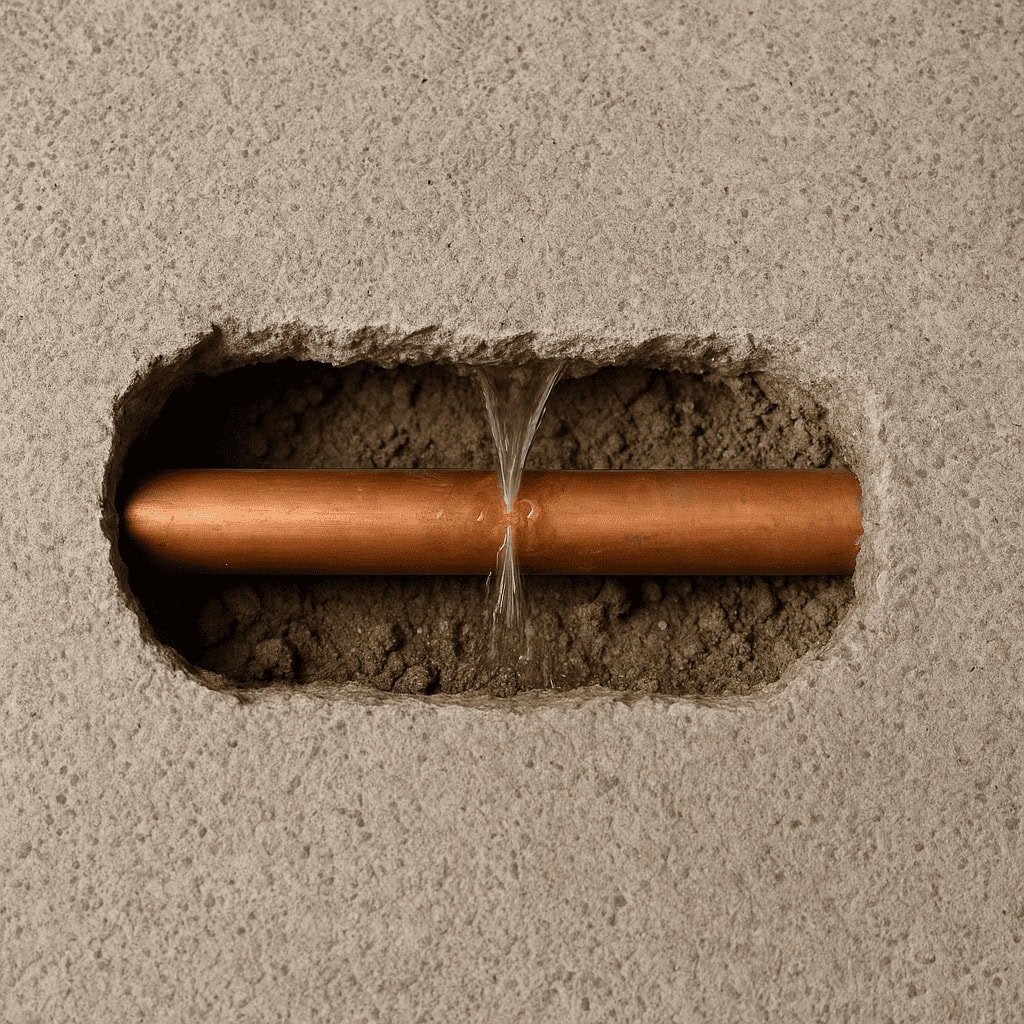
If one room in your home has a floor that feels damp while the rest of the property is completely dry, it can be confusing. There’s no obvious leak, no visible water — just a noticeable difference underfoot in one specific area.
In properties with a solid floor (typically a concrete slab or screed), this type of localised dampness often points to something happening beneath that section of the floor rather than a whole-house issue.
The key is understanding why only one area is affected.
Why dampness can be limited to one room
Concrete floors are not always affected evenly. If moisture appears in one room only, it usually means conditions beneath that area are different.
This can happen when:
- Water is present beneath a specific section of the slab
- Moisture is building up locally under the floor
- The structure allows dampness to surface in that room only
This creates a clear contrast between rooms and often indicates a localised issue rather than a property-wide problem.
What this could indicate beneath the floor
If one room feels damp while others remain dry, it may suggest:
- A localised source of moisture beneath the concrete floor
- Water escaping from pipework under that specific area
- Conditions beneath the slab changing in one location
- A hidden leak affecting a particular section of floor
In many cases, the affected room is simply the first place where the symptoms become noticeable.
Why there may be no visible signs
Even when the floor feels damp, there may be very little to see.
This can happen because:
- The moisture has not yet reached the surface visibly
- Floor coverings may conceal early signs
- The dampness is noticeable before staining or damage appears
- Water is still contained beneath the slab
This is why homeowners often notice a change in how the floor feels before they see any obvious evidence.
What homeowners often assume
It’s common to think the issue is caused by:
- Differences in room temperature
- Recent cleaning or spills
- Condensation in that room
- Natural variations in the flooring materials
While these can affect how a floor feels temporarily, they do not usually explain persistent dampness in one isolated room.
Why this shouldn’t be ignored
Localised dampness can indicate ongoing moisture beneath the floor.
If the underlying cause continues unresolved, this can eventually lead to:
- Increasing moisture beneath the slab
- Visible damp appearing later
- Damage to floor finishes
- More disruptive repairs if the issue worsens
Investigating the cause early helps prevent the problem from developing further.
How The Leak Hunter approaches this
The Leak Hunter specialises in locating hidden leaks beneath concrete floors using non-invasive leak detection methods designed for beneath-slab pipework and buried leaks.
Rather than guessing where the moisture is coming from, we accurately trace the source beneath the floor so repairs can be planned with minimal unnecessary disruption.
Learn more about the process here: how we find concrete floor leaks.
Why the affected room doesn’t tell the whole story
The room where you notice the dampness is not always where the problem begins.
In reality:
- The source may sit deeper beneath the slab
- Moisture may travel before becoming noticeable
- The affected room may simply be where symptoms appear first
This is why accurate leak detection is essential before any repair decisions are made.
What happens once the cause is confirmed
Once The Leak Hunter confirms the source, repairs can be planned accurately and with minimal disruption.
This may involve:
- Accessing only the required section of floor
- Repairing or replacing the affected pipework
- Pressure testing after repair
- Restoring the area once the issue has been resolved
Final thoughts
If one room floor feels damp while others remain dry, it’s worth investigating what may be happening beneath that specific area.
In properties with solid floors, localised dampness can indicate hidden moisture or a leak developing beneath the slab.
The Leak Hunter will accurately locate the source, confirm the cause, and carry out the correct repair without unnecessary disruption or guesswork.
To learn more, visit concrete floor leak detection.
Frequently asked questions
Why is only one room affected?
This often suggests a localised source of moisture beneath that particular section of floor rather than a whole-property issue.
Can damp be felt before it becomes visible?
Yes. Changes in moisture levels beneath a floor can sometimes be noticed underfoot before visible signs appear.
Should I investigate even if the dampness seems minor?
Yes. Small localised changes can sometimes indicate a developing issue beneath the floor that is easier to address when found early.
Do you only cover my area?
If you’re outside these areas, don’t worry — our team covers most of the South East, providing trusted leak detection services throughout London, Kent, Sussex, and Surrey.