

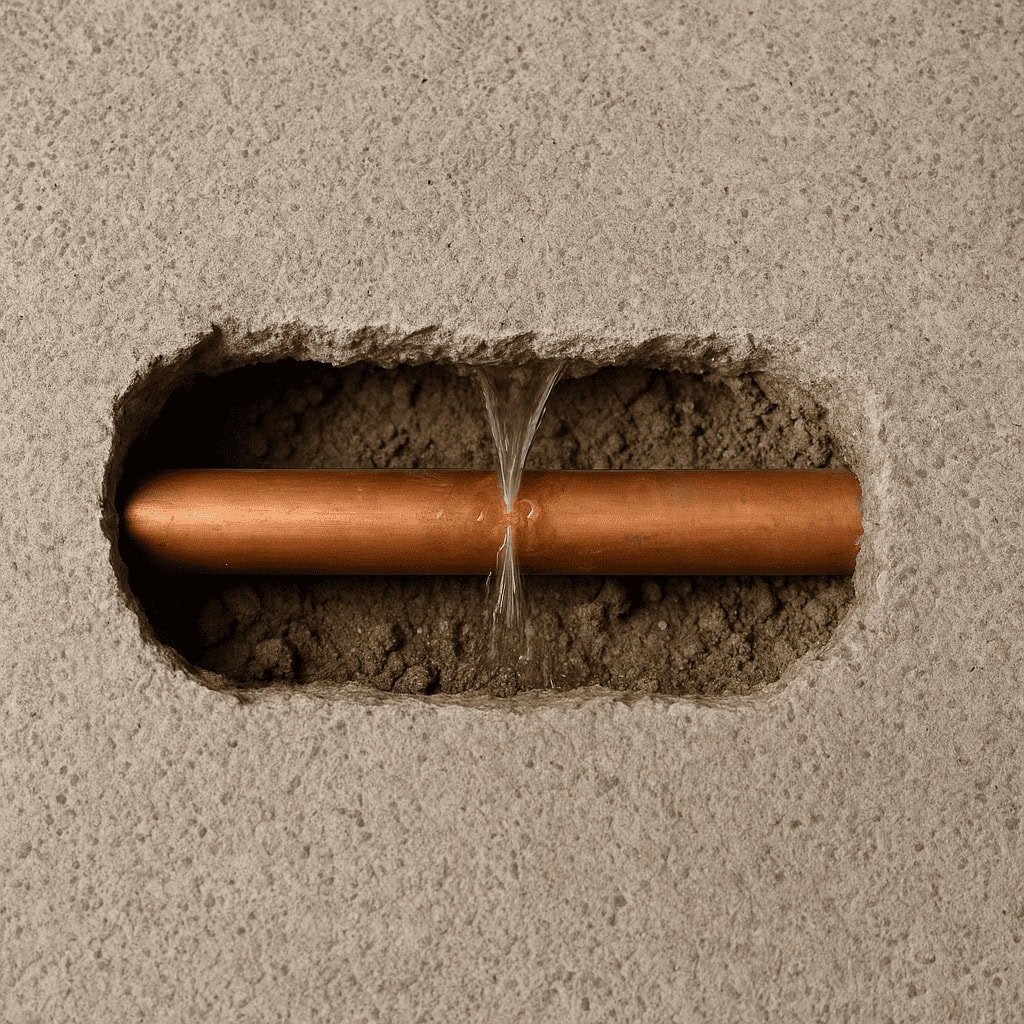
If you’ve noticed something unusual about your concrete floor but can’t see an obvious leak, it can be difficult to know what to do next. Perhaps the floor feels slightly damp, a small patch keeps returning, or something simply seems different even though there’s no visible water.
In properties built on a solid concrete floor or screed, leaks beneath the slab often develop out of sight. The first signs are not always obvious, making it difficult to know whether there’s really a problem or not.
The important step is confirming what’s happening rather than relying on assumptions.
Why you may notice signs without seeing a leak
Water escaping beneath a concrete floor does not always reach the surface straight away. Instead, it may remain below the slab while gradually affecting the surrounding ground and floor structure.
This can mean:
- The floor feels different without visible standing water.
- Small damp areas appear and disappear.
- Moisture remains hidden beneath the slab.
- Visible damage develops much later than the leak itself.
It’s common for the symptoms to appear long before the source becomes obvious.
What these early signs could indicate
Subtle changes do not always mean there’s a leak, but they shouldn’t automatically be dismissed either.
Depending on the circumstances, they could indicate:
- Moisture building beneath the concrete floor.
- A hidden leak below the slab.
- A problem that’s developing gradually rather than suddenly.
- Conditions that deserve further investigation.
Why many homeowners wait
Without obvious water or visible damage, it’s natural to keep an eye on the situation rather than investigate immediately.
Many homeowners think:
- It may simply dry out on its own.
- The signs aren’t serious enough yet.
- Nothing can be wrong because there’s no visible leak.
While that’s understandable, hidden leaks beneath concrete floors often remain concealed for some time before becoming obvious.
Why confirming the cause is important
Rather than guessing what’s happening, the next step is establishing whether hidden moisture is actually present.
Accurate investigation helps:
- Avoid unnecessary disruption.
- Confirm whether a leak is present.
- Identify the source before repairs begin.
- Prevent unnecessary exploratory work.
How The Leak Hunter investigates hidden floor leaks
The Leak Hunter uses specialist non-invasive leak detection equipment to determine whether moisture beneath a concrete floor is being caused by a hidden leak. Rather than relying solely on visible signs, we investigate beneath the surface to locate the source accurately before any repairs are carried out.
Learn more about our investigation process here: how we find concrete floor leaks.
Final thoughts
If something about your concrete floor doesn’t seem right, even though you can’t see an obvious leak, it’s worth paying attention to the changes you’re noticing.
Not every unusual symptom is caused by a leak, but hidden beneath-slab leaks often begin with subtle changes rather than obvious damage. Confirming the cause early can help prevent unnecessary disruption and provide peace of mind.
To learn more, visit our concrete floor leak detection page.
Frequently asked questions
Can there be a leak without visible water?
Yes. Leaks beneath concrete floors can remain hidden beneath the slab for some time before visible signs appear.
Should I wait until I can see a leak?
If unusual symptoms persist or become more noticeable, it’s usually better to establish the cause rather than waiting for obvious damage to develop.
How can you tell if there’s a leak beneath a concrete floor?
Specialist leak detection equipment can be used to investigate beneath the slab and accurately determine whether a hidden leak is present.