

You’ve been told there’s a leak, and you understand that trace and access work is needed to reach it. But then comes the concern — what if the leak is under something difficult to remove, like tiles, a fitted kitchen, or a solid floor?
This is a very common situation. Many leaks are located in places that aren’t easily accessible, which can make the next step feel more complicated than expected.
Why Leaks Often Occur in Hard-to-Reach Areas
Pipework is usually hidden within the structure of a property. It runs beneath floors, behind walls, and through areas that were never designed to be accessed regularly.
This means that when a leak develops, it is often located in a position where direct access isn’t straightforward.
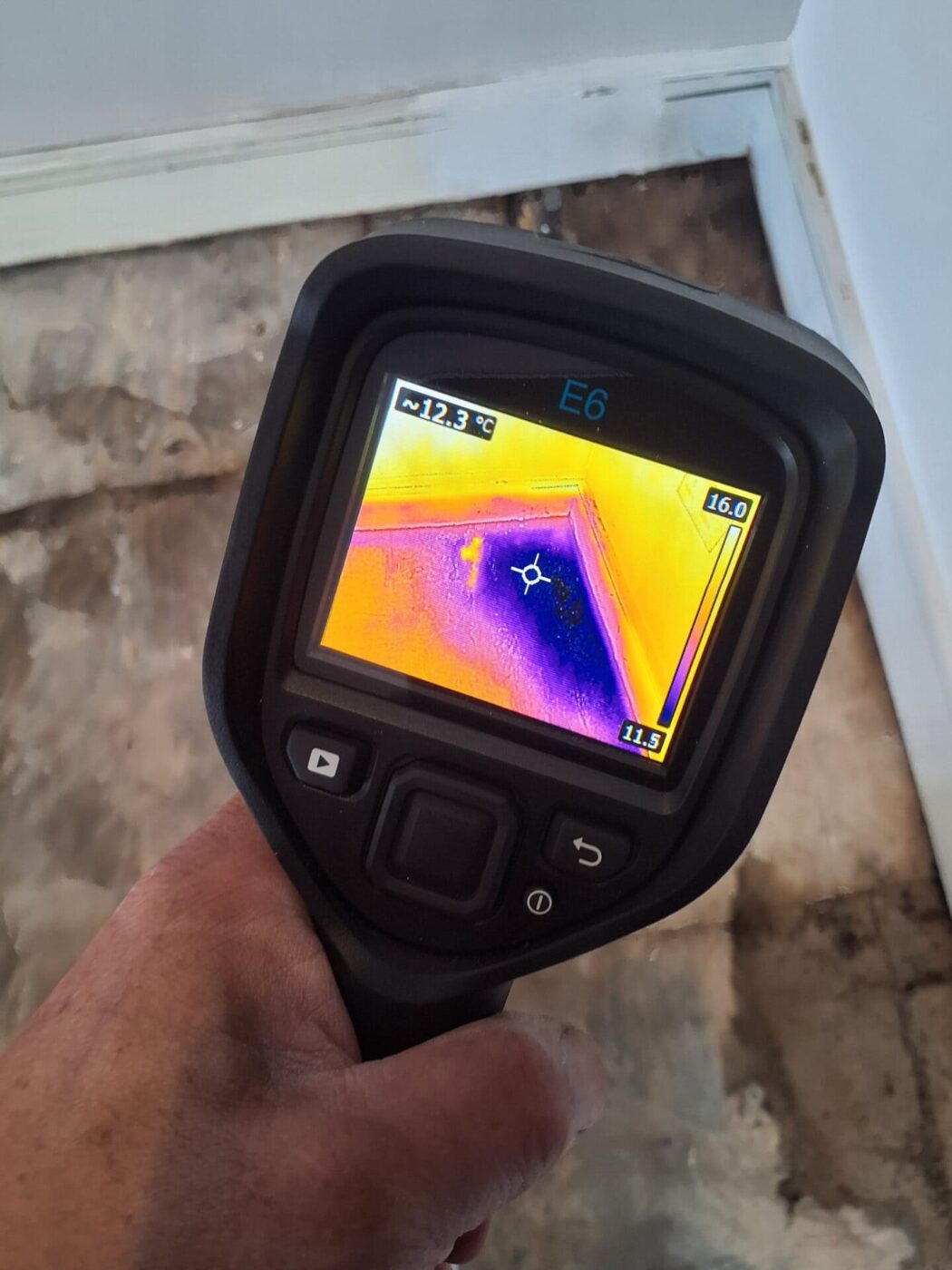
Modern leak detection allows us to locate these leaks accurately without causing damage, even when they are hidden in difficult locations.
What Happens Once the Location Is Confirmed
Once the leak has been identified, the next step is to create controlled access to that exact point. This is where trace and access work becomes important.
The key is precision. Because the location is already known, the focus is on reaching that specific point in the least disruptive way possible.
You can read more about this stage on our trace and access leak detection explained page.
What If the Leak Is Under Tiles or Flooring?
If the leak is beneath tiles, laminate, or other flooring, a small section may need to be carefully removed to access the pipe below.
Because the position is confirmed in advance, this is usually limited to a precise area rather than large sections of the floor.
What If It’s Behind Fitted Units or Kitchens?
Leaks behind fitted kitchens or built-in units can feel more complicated, but the same principle applies. The goal is to access the pipe at the most practical point, not to remove entire installations.
In many cases, access can be achieved from an adjacent area or by removing only a small, specific section rather than dismantling everything.
What About Concrete Floors or Solid Structures?
For leaks beneath concrete floors or screed, specialist methods are used to identify the exact point before any work is carried out. This ensures that only a localised section needs to be opened.
This controlled approach avoids large-scale breaking or unnecessary disruption.
Why Accurate Detection Makes All the Difference
Without accurate detection, accessing a leak in these situations would involve guesswork. Floors could be lifted in the wrong place, units removed unnecessarily, and disruption quickly increases.
By identifying the leak first, the access stage becomes targeted and efficient, even in difficult locations.
What Happens After Access Is Gained
Once the pipe or system is reached, the leak can be repaired or replaced. The system is then tested to ensure the issue has been fully resolved.
From there, the final stage involves reinstating the affected area so your home can be returned to normal.
You can learn more about the full process in our guide to what happens after a leak is found.
Difficult Access Doesn’t Mean Major Disruption
It’s easy to assume that a leak in a hard-to-reach area will lead to major work, but in most cases, the opposite is true when handled correctly.
With accurate detection and controlled trace and access, even challenging locations can be dealt with in a precise and manageable way.
At The Leak Hunter, we focus on reaching the leak efficiently while keeping disruption to a minimum, no matter where it is located.