

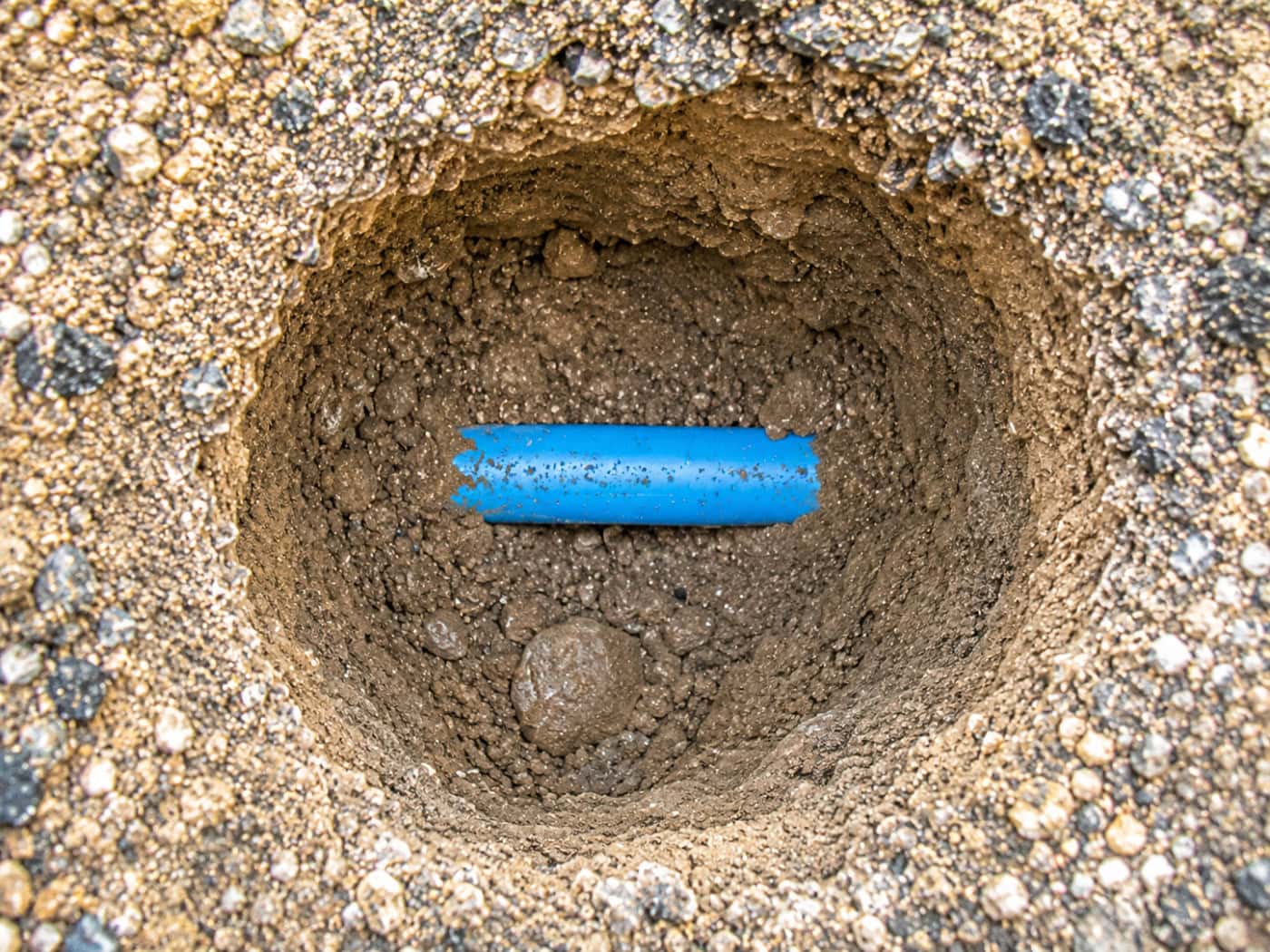
Once a hidden supply pipe leak has been confirmed, many homeowners quickly face another important decision:
Should the leak be traced and repaired, or should a completely new pipe be installed instead?
This is often where different opinions begin appearing.
Some homeowners are advised to repair the exact leak. Others are advised to install a completely new water supply pipe using methods such as moling.
The reality is that both approaches can be appropriate in different situations.
However, in many cases — particularly on more modern supply pipes — accurately tracing and repairing the leak can be a very sensible and cost-effective option before committing to full replacement.
What Is Trace and Repair?
Trace and repair focuses on accurately locating the exact point where water is escaping before carrying out a targeted repair.
Professional non-invasive leak detection may involve:
- acoustic leak tracing
- tracer gas testing
- pressure testing
- thermal investigation
- sectional isolation testing
- moisture investigation
Once the leak location has been narrowed down, the damaged section can then be repaired directly.
In many situations, this allows homeowners to resolve the problem without replacing the entire supply pipe unnecessarily.
What Is Moling?
Moling is one method used to install a completely new underground supply pipe without excavating the entire pipe route continuously.
Instead, specialist equipment creates a bore path underground so a new pipe can be installed between excavation points.
For some properties, this can reduce the amount of open trench excavation required compared to traditional digging methods.
However, it still involves installing an entirely new supply pipe rather than repairing the existing leak itself.
Why Many Modern Supply Pipe Leaks Are Suitable for Repair
One of the biggest misconceptions with supply pipe leaks is that the entire pipe must automatically be failing.
In reality, many modern supply pipes remain structurally sound overall.
Quite often, the leak itself may occur:
- at a joint
- at a fitting
- where movement has occurred
- where accidental damage has taken place
- at an isolated weak point
In these situations, targeted repair may be a very practical option.
For many homeowners, trace and repair can also mean:
- less disruption
- lower upfront costs
- faster resolution
- less disturbance to driveways, patios, or landscaping
- preserving otherwise sound existing pipework
This is one reason many homeowners choose to understand the exact condition of the existing supply pipe before immediately committing to replacement.
When Might Moling or Full Pipe Replacement Make More Sense?
There are situations where installing a completely new supply pipe may become the better long-term option.
This may apply where the existing pipework has:
- multiple failures
- significant age-related deterioration
- repeated repair history
- older lead or metallic pipe systems
- widespread weakness across the pipe route
In these situations, replacement may offer greater long-term reassurance.
However, that still does not always mean replacement must happen immediately as the first step.
Why Pipe Age and Material Matter
The age of the property can often provide useful clues about the type of supply pipe underground.
Older properties may still have:
- lead supply pipes
- older metallic systems
- aging connection joints
- pipework with previous repairs
These systems may be more likely to justify eventual replacement where deterioration is widespread.
More modern properties are commonly fitted with LDPE or MDPE plastic pipe systems.
These pipe types are generally much more resistant to corrosion and widespread deterioration.
As a result, leaks on modern plastic systems are often far more localised and may be very suitable for targeted repair.
What Are the Limitations of Moling or Full Replacement?
Installing a completely new supply pipe can absolutely be the right solution in some situations.
But homeowners are not always aware of the practical limitations involved.
Depending on the property, moling or replacement work may still involve:
- excavation points
- ground disturbance
- access restrictions
- routing limitations
- disruption to external areas
- reinstatement work afterwards
Some properties also have difficult supply routes beneath:
- extensions
- landscaping
- retaining walls
- mature gardens
- restricted access areas
For many homeowners, this is why understanding whether the existing leak can be repaired first is often an important part of the decision-making process.
Can You Repair the Leak First and Replace the Pipe Later?
Yes — and in many situations this can be a very sensible staged approach.
Where the leak appears isolated and the surrounding pipework remains in good condition, repairing the immediate fault may:
- stop ongoing water loss
- reduce immediate costs
- avoid unnecessary disruption
- buy time before larger decisions are made
- allow the pipe condition to be monitored over time
If future problems later develop, replacement can still remain an option afterwards.
For many homeowners, this balanced approach provides reassurance without immediately committing to major replacement works unnecessarily.
Why Accurate Leak Diagnosis Matters First
One of the biggest mistakes homeowners can make is deciding on major replacement work before the exact leak situation has been properly diagnosed.
Professional non-invasive leak detection helps establish:
- where the water is actually escaping
- whether the issue appears isolated
- whether the surrounding pipework appears compromised
- whether multiple leaks may exist
- whether targeted repair is realistically viable
Without accurate diagnosis, homeowners may risk unnecessary replacement work before fully understanding the condition of the existing pipe system.
Why Specialist Mains Water Leak Detection Matters
Professional non-invasive mains water leak detection focuses on accurately locating concealed supply pipe leaks before major repair or replacement decisions are made.
The Leak Hunter carries out specialist non-invasive mains water leak detection across concealed water systems and underground supply pipe infrastructure.
As a WaterSafe Register registered company, we investigate hidden supply pipe leaks using specialist diagnostic methods designed to identify the source accurately while minimising unnecessary disruption.
You can learn more about professional mains water leak detection and how concealed supply pipe leaks are professionally traced before repair decisions are made.
Frequently Asked Questions
Does a supply pipe leak always need a completely new pipe?
No. Many supply pipe leaks are isolated faults that can potentially be repaired successfully without replacing the entire pipe.
Are modern plastic supply pipes usually repairable?
In many situations, yes. Modern MDPE and LDPE pipe systems often remain structurally sound overall, with leaks occurring at isolated joints or fittings.
Are older lead supply pipes more likely to need replacement?
Older lead or aging metallic systems may be more likely to justify replacement where widespread deterioration or repeated failures are present.
Can repairing the leak first still allow replacement later?
Yes. Many homeowners choose to repair the immediate fault first and monitor the system before deciding whether future replacement is necessary.
Why is leak detection important before replacement decisions?
Accurate diagnosis helps establish whether the problem appears isolated or whether the wider condition of the supply pipe suggests replacement may eventually be more appropriate.