

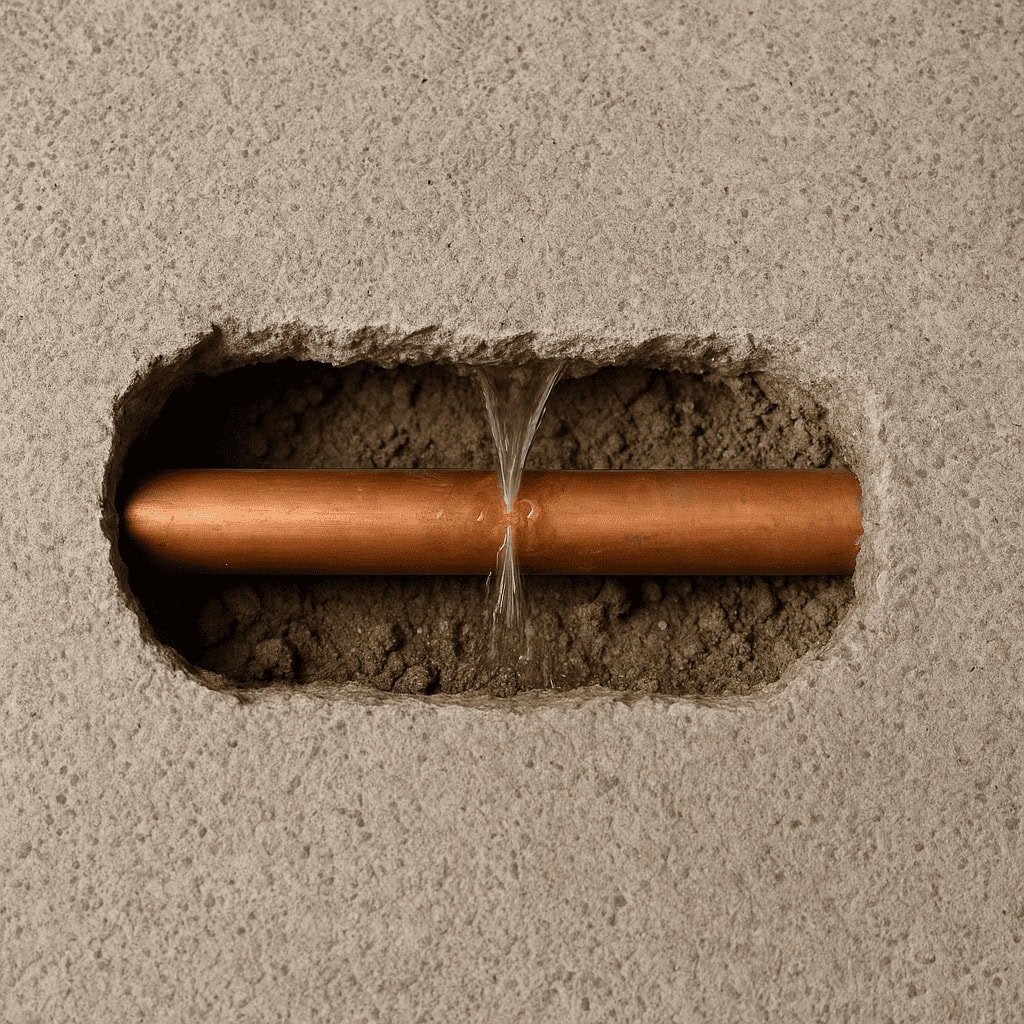
Damp Patch Appearing on a Concrete Floor: What Could Be Causing It?
If you’ve noticed a damp patch appearing on a concrete floor, it can be difficult to understand why. There’s no obvious spill, no visible leak, and yet moisture keeps forming in the same area.
In properties with a solid floor, typically a concrete slab or screed, this type of issue often points to something happening beneath the surface rather than above it. The key is identifying where that moisture is actually coming from and whether it’s continuing to develop. In many cases, this falls within concrete floor leak detection, where hidden issues beneath the slab are accurately identified.
Why Damp Patches Appear on Concrete Floors
Concrete floors are designed to be solid and stable. When moisture appears on top, it usually means water is moving upward from below the slab rather than sitting on the surface.
This can happen when water is present beneath the concrete, when moisture builds up under pressure below the floor, or when water finds a path through joints, edges, or porous sections of the slab.
The result is a visible damp patch, even though the source remains hidden underneath. To understand how these situations develop, see concrete floor leaks explained.
Why the Damp Patch Appears in One Area
In most cases, the dampness is localised rather than spread across the whole floor. This is an important clue.
It usually indicates a specific source beneath that section, rather than general moisture in the property. Water may be collecting, escaping, or rising at that point, which is why the patch keeps appearing in the same place.
The visible area often reflects where the moisture reaches the surface, not necessarily where it started.
What Homeowners Often Assume
It’s common to assume the damp patch is caused by surface issues such as cleaning water, condensation, or general humidity.
While these can create temporary moisture, they don’t usually cause a persistent or repeating patch in the same location. If the area dries and then returns, or never fully disappears, it suggests something more consistent beneath the floor.
Why This Shouldn’t Be Ignored
A damp patch may seem minor at first, but it can indicate ongoing moisture beneath the slab. Over time, this can spread and affect a larger area than what’s visible on the surface.
This can lead to increasing saturation below the floor, gradual changes to finishes above, and more involved repairs if the issue develops further.
Investigating early keeps the problem contained and avoids unnecessary escalation.
Why the Visible Damp Doesn’t Show the Full Picture
What you can see on the surface is only part of what’s happening. The actual source may sit deeper within the slab or below it entirely.
Water can spread beneath the floor before appearing, meaning the damp patch is often just the point where moisture escapes. This is why guessing the source based on the visible area alone is unreliable.
How The Leak Hunter Approaches This
At The Leak Hunter, we take ownership of identifying the exact cause. We determine whether the damp patch is linked to a leak beneath the concrete floor and pinpoint the source using non-invasive methods.
This ensures the issue is clearly understood before any repair work begins, avoiding unnecessary disruption and incorrect assumptions.
See how we do this here: how we find concrete floor leaks.
What Happens Once the Cause Is Confirmed
Once the source is identified, the next step is to resolve it in a controlled way. This may involve accessing the correct point in the floor, repairing the affected pipework, and restoring the surface once the issue is fixed.
You can learn more about this stage here: what happens after a concrete floor leak is found.
When You Should Take Action
If the damp patch is persistent, returning, or becoming more noticeable over time, it’s worth having it investigated properly. Waiting often allows the issue to spread beyond the visible area.
Even if there is no obvious damage yet, identifying the cause early gives you control over the situation and prevents more complex work later.
Speak to The Leak Hunter
The Leak Hunter will confirm the cause, locate the source accurately, and carry out the right repair. Every step is based on evidence, ensuring the problem is resolved without unnecessary disruption.
To learn more, visit concrete floor leak detection.
Frequently Asked Questions
Do you only cover my area?
If you’re outside these areas, don’t worry — our team covers most of the South East, providing trusted leak detection services throughout London, Kent, Sussex, and Surrey.
Can a damp patch appear without a visible leak?
Yes. Moisture can rise from below the floor without any visible pipework or surface source, especially in solid floor properties.
Is this always caused by a leak?
Not always, but a persistent or localised damp patch in the same area should always be investigated to rule out a hidden issue beneath the floor.
Will the floor need to be removed?
Not necessarily. Detection is carried out first to locate the exact source before any access is made, keeping disruption to a minimum.