

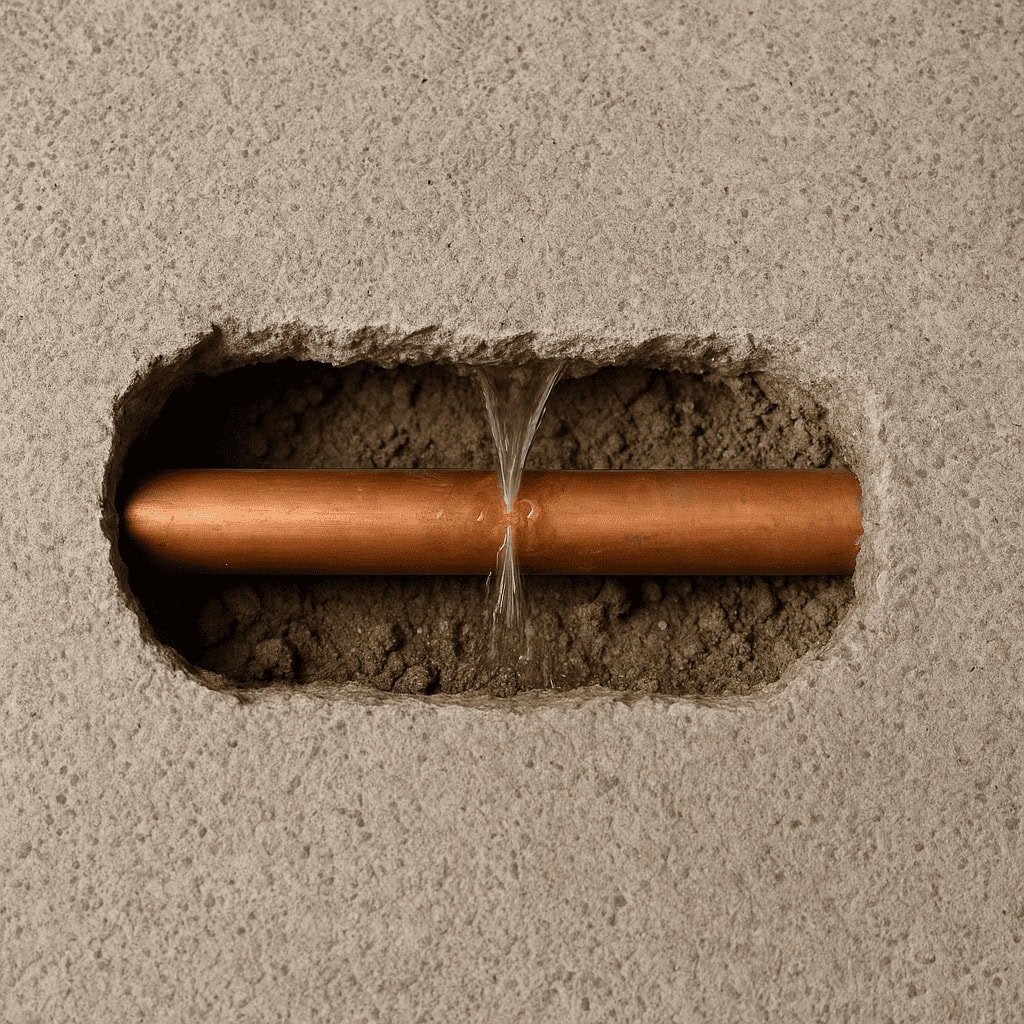
If you’ve noticed a damp patch on your concrete floor that appears, disappears, and then returns again, it can be difficult to know what to make of it. One day the floor looks dry, then the same area becomes damp again without any obvious spill, leak, or surface cause.
In properties with a solid concrete floor or screed, this kind of repeating pattern can sometimes point to moisture developing beneath the slab rather than a surface-level issue.
The important point is not just that the damp patch appears — it’s that it keeps coming back in the same place.
Why damp patches on concrete floors can come and go
Moisture beneath a concrete floor does not always behave in a constant or predictable way. It may build up, disperse, dry at the surface, and then return when conditions change again.
This can happen when:
- Moisture is present beneath the slab but only reaches the surface at certain times
- Water movement changes depending on pressure, usage, or ground conditions
- The concrete temporarily dries at the surface while moisture remains below
- A hidden leak continues beneath the floor even when the visible patch disappears
This creates a repeating pattern rather than a permanent visible damp area.
What a returning damp patch could indicate
If a damp patch keeps returning in the same location, it may suggest a localised source of moisture beneath that section of floor.
This could include:
- Water escaping from pipework beneath the concrete slab
- Moisture building up below one specific area of floor
- Water intermittently reaching the surface through the slab or screed
- A hidden beneath-slab leak affecting the same area repeatedly
The repetition is often more important than how severe the damp patch looks on any single day.
Why this issue is often misunderstood
Because the damp patch disappears at times, it’s easy to assume the problem has resolved itself.
Many homeowners think:
- It was a one-off issue
- The floor has dried out naturally
- The problem has gone away
- There is no leak because the patch is not always visible
However, recurring dampness usually means the underlying cause is still present. The surface may dry temporarily, but moisture can remain beneath the concrete floor.
Why this pattern should not be ignored
An intermittent damp patch can still indicate an active moisture problem beneath the floor.
If left unresolved, this can eventually lead to:
- Increasing moisture beneath the slab
- A damp patch that becomes more frequent or more persistent
- Damage to floor coverings or finishes
- More disruptive repairs if the leak worsens
The temporary disappearance can be misleading, especially if the same patch keeps returning.
How The Leak Hunter investigates recurring damp patches
The Leak Hunter specialises in locating hidden leaks beneath concrete floors using non-invasive leak detection methods designed for beneath-slab pipework and buried leaks.
Rather than guessing why the damp patch comes and goes, we trace the source beneath the floor and confirm whether a hidden leak is causing the recurring moisture.
Learn more here: how we find concrete floor leaks.
Why the surface pattern does not show the full problem
The appearance and disappearance of a damp patch only shows what is happening at the surface. It does not necessarily show what is happening beneath the slab.
In reality:
- The source may remain active beneath the concrete
- Moisture may rise and fall depending on conditions
- The surface may dry while the underlying issue continues
- The visible patch may reflect timing rather than resolution
This is why proper leak detection is important before assuming the issue has gone away.
What happens once the cause is confirmed
Once The Leak Hunter identifies the source, repairs can be planned accurately and with minimal unnecessary disruption.
This may involve:
- Accessing only the required section of floor
- Repairing or replacing the affected pipework
- Pressure testing after repair
- Restoring the surface once the issue has been resolved
Final thoughts
If a damp patch on your concrete floor keeps appearing and disappearing, focus on the repeating pattern rather than the temporary drying.
In solid floor properties, recurring damp patches can sometimes indicate hidden moisture or a beneath-slab leak developing below the concrete.
The Leak Hunter will accurately locate the source, confirm the cause, and carry out the correct repair without unnecessary disruption or guesswork.
To learn more, visit concrete floor leak detection.
Frequently asked questions
Why does a damp patch on concrete disappear and then return?
Moisture levels beneath the floor can fluctuate. The surface may dry temporarily while moisture remains below the slab, causing the patch to return later.
Does this mean the problem has fixed itself?
Not usually. If the same damp patch keeps returning, the underlying cause may still be present even when the surface looks dry.
Should I investigate if the damp patch is not constant?
Yes. Intermittent damp patches can still indicate a hidden issue beneath the floor, especially if the same area is repeatedly affected.
Do you only cover my area?
If you’re outside these areas, don’t worry — our team covers most of the South East, providing trusted leak detection services throughout London, Kent, Sussex, and Surrey.