

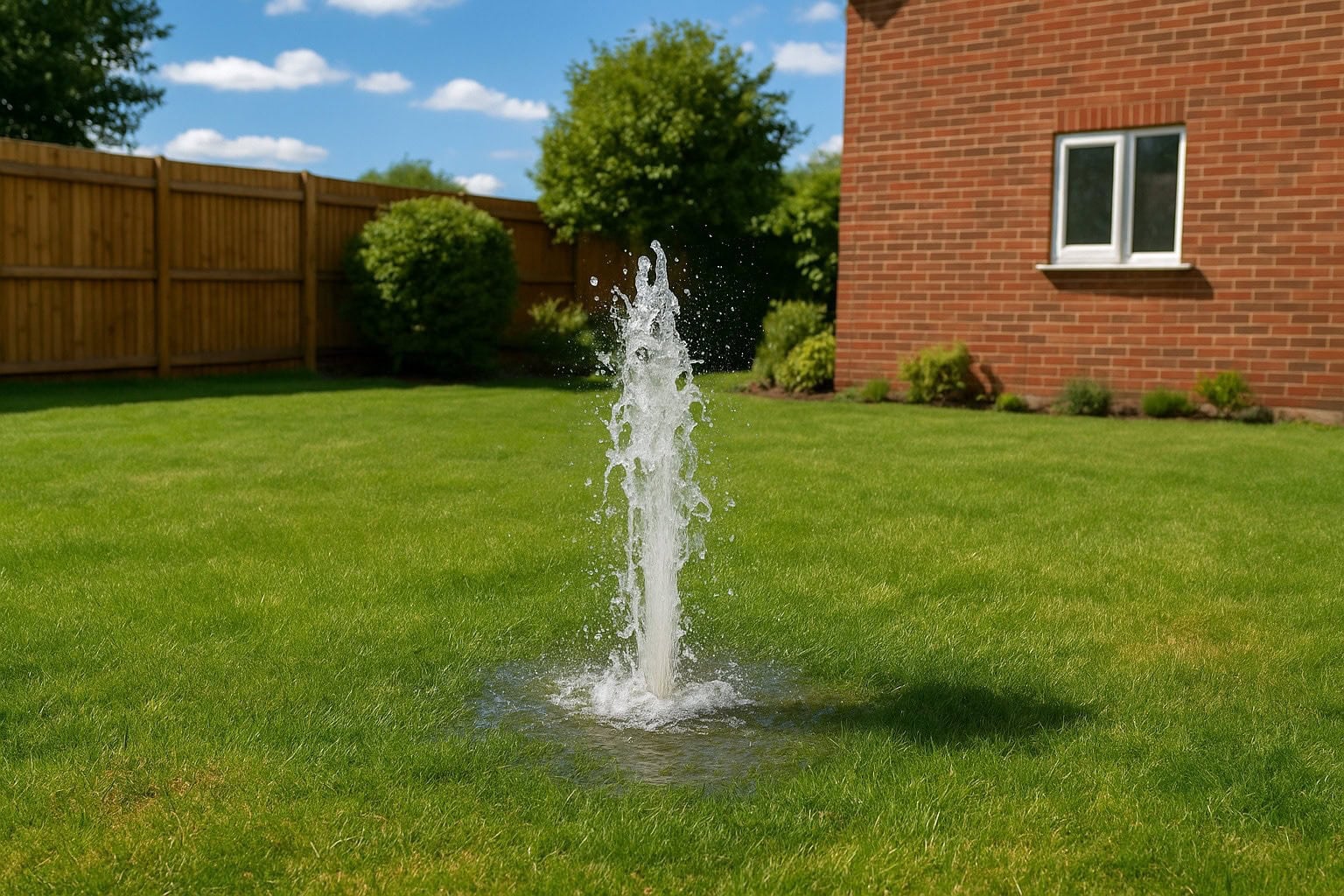
If your driveway only appears damp at certain times of day, it can be difficult to make sense of. You might check in the morning and see moisture, then later it looks completely dry — or the other way around.
This kind of pattern often leads to uncertainty because it doesn’t behave like normal surface water.
In some cases, this time-based change can be linked to what’s happening below ground.
Why dampness can appear at specific times
Surface moisture from weather tends to behave consistently — drying gradually as conditions improve.
If dampness appears at certain times:
- Water may be rising under varying pressure conditions
- The ground may release moisture differently throughout the day
- External factors like usage patterns can influence what becomes visible
This creates a cycle rather than a constant condition.
If you want to understand how underground leaks behave, see underground leaks explained.
What “pressure-related” actually means
Water flow below ground is not always constant in how it presents at the surface.
Changes in pressure or demand can:
- Increase or reduce how much water escapes into the soil
- Change how water moves through the ground
- Cause moisture to become visible only at certain times
This can make the issue feel unpredictable.
Why the pattern is a key indicator
The most important detail is not just the dampness — it’s when it appears.
This suggests:
- The issue is influenced by changing conditions rather than weather alone
- The moisture source may not be purely surface-based
- There could be an underlying cause that fluctuates over time
Patterns like this are often overlooked but can be significant.
What homeowners often assume
It’s common to think the issue is caused by:
- Morning dew or temperature changes
- Shading affecting drying times
- Residual moisture from previous weather
While these can influence appearance, they don’t usually create consistent, repeating time-based dampness in one location.
Why this shouldn’t be ignored
Because the driveway dries out part of the time, it’s easy to assume there’s no ongoing issue.
However, over time, this can lead to:
- Increasing moisture beneath the surface
- Gradual weakening of the ground below
- More visible and persistent issues developing later
Intermittent signs can still indicate a developing problem.
How The Leak Hunter approaches this
The Leak Hunter will assess whether the time-based dampness is linked to an underground leak and pinpoint the exact source without unnecessary excavation.
This ensures the issue is properly understood before any repair work begins.
To see how this works, visit how we find underground leaks.
Why the visible timing doesn’t show the full picture
The times when dampness appears are only part of what’s happening.
In reality:
- The source may be constant even if visibility changes
- Water movement through the ground can vary throughout the day
- The surface reflects conditions, not just the cause
This is why proper investigation is essential.
What happens once the cause is confirmed
Once the source is identified, the repair can be planned in a controlled and targeted way.
This may involve:
- Accessing the pipe at the correct location
- Repairing or replacing the affected section
- Restoring the driveway once the work is complete
You can read more about this stage here: what happens after an underground leak is found.
Final thoughts
If your driveway is only damp at certain times of day, it’s worth paying attention to the pattern.
The timing itself can be a clue that something is happening below the surface.
The Leak Hunter will confirm the cause, locate the source accurately, and carry out the right repair — ensuring the problem is resolved efficiently.
To see how we investigate and resolve underground leaks, visit underground leak detection.
Frequently asked questions
Do you only cover my area?
If you’re outside these areas, don’t worry — our team covers most of the South East, providing trusted leak detection services throughout London, Kent, Sussex, and Surrey.
Is this just due to temperature changes?
It can be in some cases, but consistent patterns in one area may indicate something more.
Can underground issues vary throughout the day?
Yes. Changes in pressure and conditions can affect how moisture appears at the surface.
Should I monitor it before acting?
Patterns are useful, but if the issue repeats, it’s best to confirm the cause.