

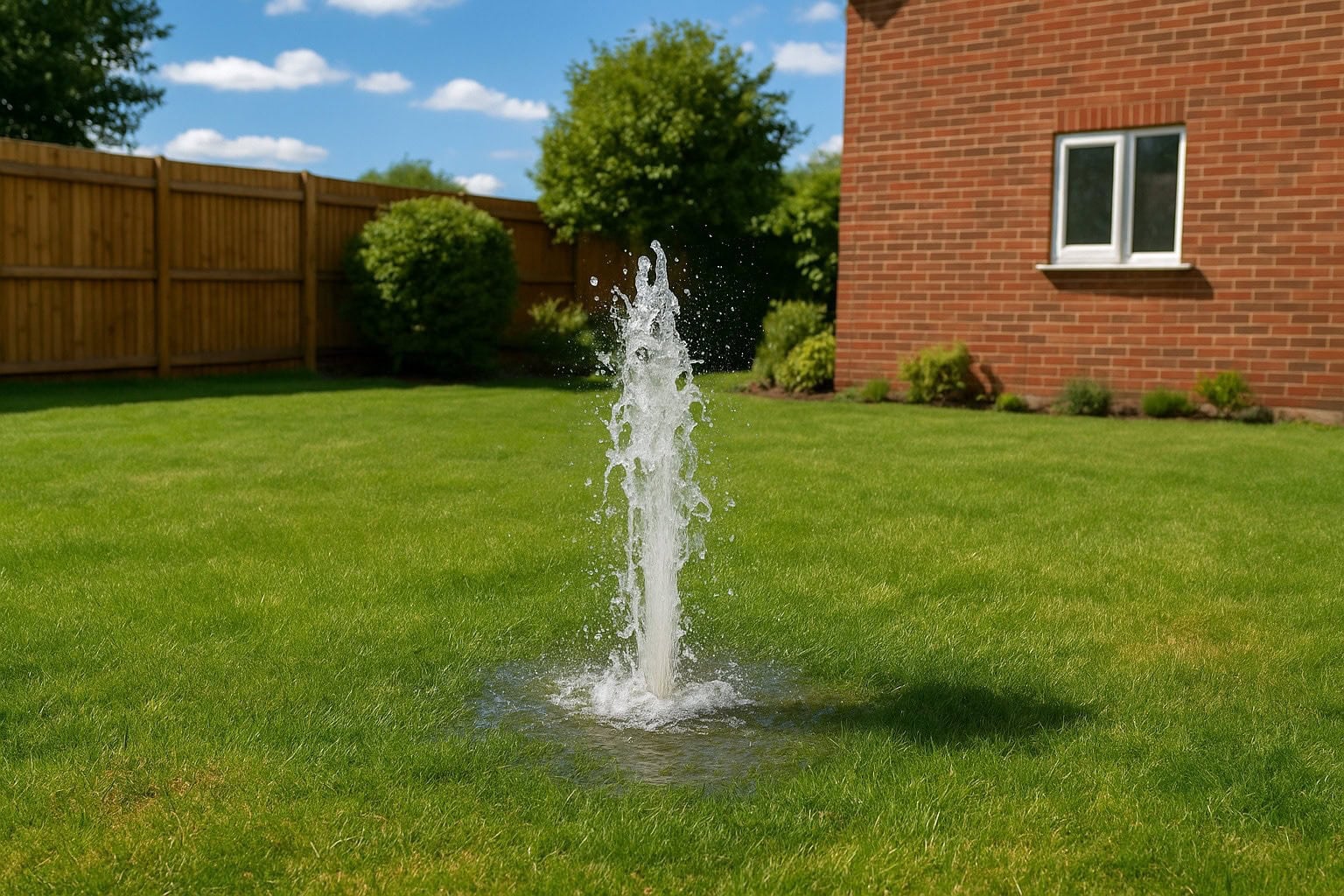
If your garden is usually dry but occasionally floods without warning, it can be difficult to understand what’s happening. One moment everything seems normal — then suddenly, there’s water where it shouldn’t be.
This kind of unpredictable behaviour often points to something more complex happening below the surface.
The key is understanding why the issue appears suddenly rather than remaining constant.
Why flooding can happen intermittently
Not all underground issues produce constant visible signs. In some cases, water only becomes visible under certain conditions.
This can happen when:
- Water builds up below ground before reaching the surface
- Pressure changes force water upward at certain times
- The ground can only absorb so much before excess appears
This creates a pattern where everything seems fine — until it suddenly isn’t.
If you want to understand how underground leaks behave, see underground leaks explained.
Why the garden appears normal most of the time
Between visible flooding events, the ground may absorb or redistribute the moisture.
This means:
- The surface returns to normal temporarily
- The underlying issue remains hidden
- The cycle repeats when conditions change again
This can make the problem feel inconsistent and difficult to track.
What homeowners often assume
It’s common to assume the flooding is caused by:
- Sudden weather changes
- Drainage systems becoming overwhelmed
- One-off surface water issues
While these can contribute, they don’t usually explain repeated flooding in the same area without consistent triggers.
Why this pattern matters
The key detail is the cycle — dry conditions followed by sudden flooding.
This suggests:
- There may be an ongoing source of water below ground
- The ground is reacting to changing conditions
- The issue is developing rather than random
This kind of pattern is often an early warning sign.
Why this shouldn’t be ignored
Intermittent flooding may seem manageable at first, but it can lead to:
- Increasing disruption when flooding occurs
- Worsening ground conditions over time
- More complex repairs if the cause continues
Addressing the issue early often prevents escalation.
How The Leak Hunter approaches this
The Leak Hunter will assess whether the sudden flooding is linked to an underground leak and pinpoint the exact source without unnecessary digging.
This allows the issue to be clearly understood before any repair work begins.
To see how this works, visit how we find underground leaks.
Why the visible flooding doesn’t show the full picture
The flooding you see is only part of what’s happening.
In reality:
- Water may be building up below the surface before appearing
- The source may sit deeper or further away
- The surface only reflects the point where water escapes
This is why proper investigation is essential.
What happens once the cause is confirmed
Once the source is identified, the repair can be planned in a controlled and targeted way.
This may involve:
- Accessing the pipe at the correct location
- Repairing or replacing the affected section
- Restoring the garden once the work is complete
You can read more about this stage here: what happens after an underground leak is found.
Final thoughts
If your garden is dry most of the time but suddenly floods, it’s worth looking beyond surface explanations.
The pattern itself is often the biggest clue that something is happening below ground.
The Leak Hunter will confirm the cause, locate the source accurately, and carry out the right repair — ensuring the problem is resolved without unnecessary disruption.
To see how we investigate and resolve underground leaks, visit underground leak detection.
Frequently asked questions
Do you only cover my area?
If you’re outside these areas, don’t worry — our team covers most of the South East, providing trusted leak detection services throughout London, Kent, Sussex, and Surrey.
Why does the flooding only happen sometimes?
This can be due to changes in pressure or ground saturation levels affecting how water surfaces.
Does this mean the problem isn’t serious?
Not necessarily. Intermittent issues can still indicate an underlying problem.
Should I investigate even if it dries out?
Yes. Repeated patterns are often a sign that something below ground needs attention.