

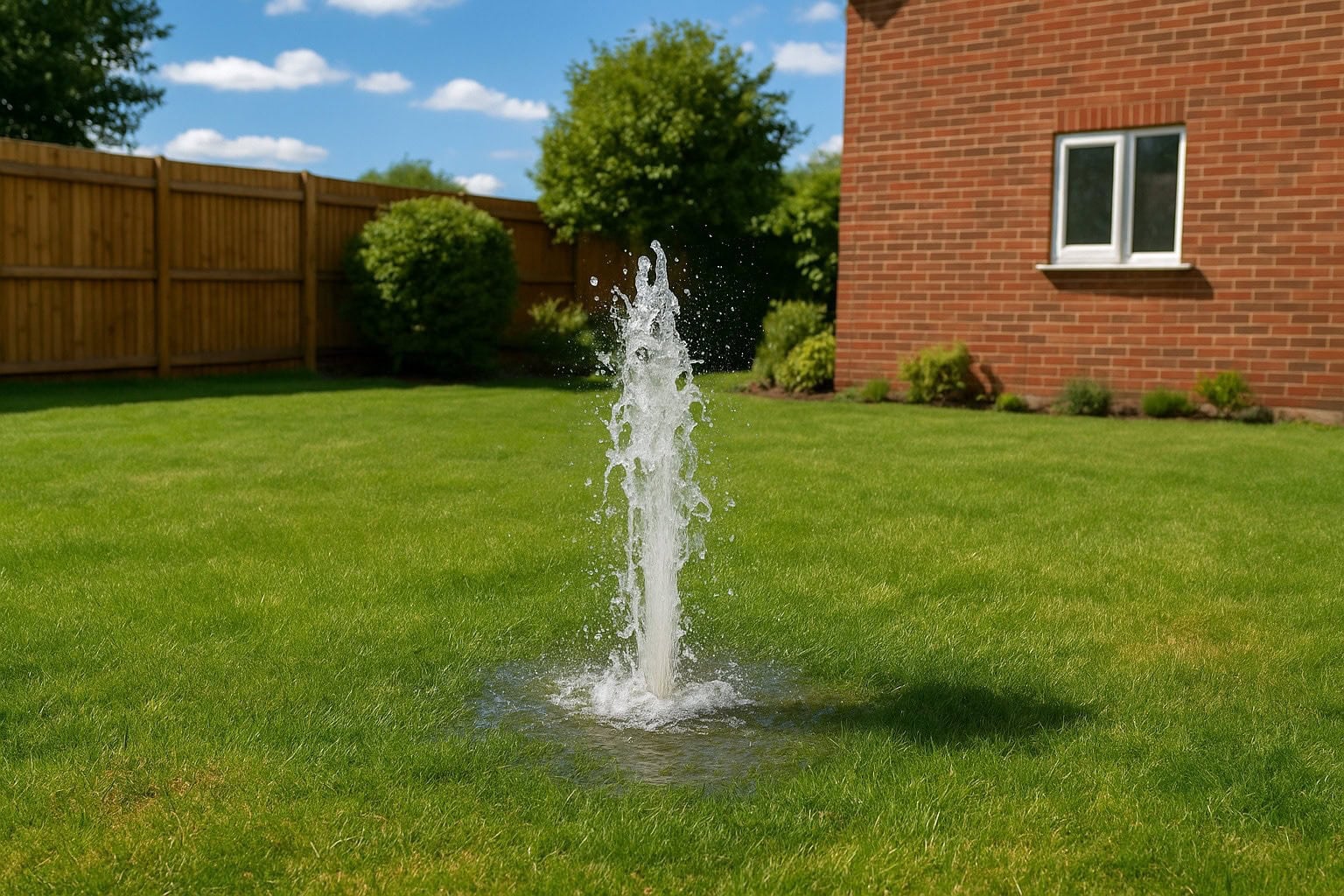
If your garden floods after even light rain, it can feel disproportionate. You might expect heavy rain to cause issues — but when a small amount of rainfall leads to noticeable pooling or saturation, it suggests something isn’t behaving as it should.
This kind of overreaction to light rain can be a sign that the ground is already holding more water than it should.
In some cases, that excess moisture is being caused by an underlying underground leak.
Why light rain can trigger flooding
Normally, soil absorbs rainfall gradually, allowing water to drain or evaporate over time.
If flooding happens after light rain:
- The ground may already be saturated before the rain starts
- There may be limited capacity for additional water
- Even small amounts of rain can push the surface past its limit
This is often a sign that the ground isn’t starting from a normal baseline.
If you want to understand how underground leaks affect ground conditions, see underground leaks explained.
What could be causing the ground to stay saturated
When the soil is consistently holding more water than expected, it usually means there is an ongoing source of moisture.
This can happen when:
- A pipe below ground is leaking slowly but continuously
- Water is entering the soil at a steady rate
- The ground never fully dries out between rainfall
This creates conditions where even light rain leads to visible problems.
Why this is often mistaken for poor drainage
It’s common to assume that flooding after rain is simply a drainage issue.
However, drainage problems usually:
- Affect larger areas more evenly
- Follow consistent patterns based on weather
- Improve when conditions are dry
If the issue persists regardless of conditions, there may be more going on beneath the surface.
Why this shouldn’t be ignored
If your garden floods easily, it’s often a sign that the underlying conditions are not stable.
Over time, this can lead to:
- Increasing saturation of the ground
- Expansion of affected areas
- More disruptive repair work if the cause continues
What seems like a surface issue can develop into something more complex.
How The Leak Hunter approaches this
The Leak Hunter will determine whether the flooding is being worsened by an underground leak and pinpoint the exact source without unnecessary excavation.
This ensures the issue is clearly understood before any repair work begins.
To see how this works, visit how we find underground leaks.
Why the visible flooding doesn’t show the full picture
The water you see after rain is only part of what’s happening.
In reality:
- The ground may already be holding excess moisture
- The source of that moisture may not be visible
- The rain is simply revealing an underlying issue
This is why proper investigation is important.
What happens once the cause is confirmed
Once the source is identified, the repair can be planned in a controlled and targeted way.
This may involve:
- Accessing the pipe at the correct location
- Repairing or replacing the affected section
- Restoring the garden once the work is complete
You can read more about this stage here: what happens after an underground leak is found.
Final thoughts
If your garden floods after light rain, it’s worth considering what’s happening before the rain even falls.
The issue may not be the rain itself — but the condition of the ground beneath it.
The Leak Hunter will confirm the cause, locate the source accurately, and carry out the right repair — ensuring the problem is resolved without unnecessary disruption.
To see how we investigate and resolve underground leaks, visit underground leak detection.
Frequently asked questions
Do you only cover my area?
If you’re outside these areas, don’t worry — our team covers most of the South East, providing trusted leak detection services throughout London, Kent, Sussex, and Surrey.
Is this just a drainage issue?
It could be, but if it happens repeatedly in light rain, it may indicate something more.
Can underground leaks affect how soil handles rain?
Yes. Ongoing moisture can reduce the ground’s ability to absorb additional water.
Should I investigate even if it only happens sometimes?
If the pattern repeats, it’s best to confirm the cause early.