

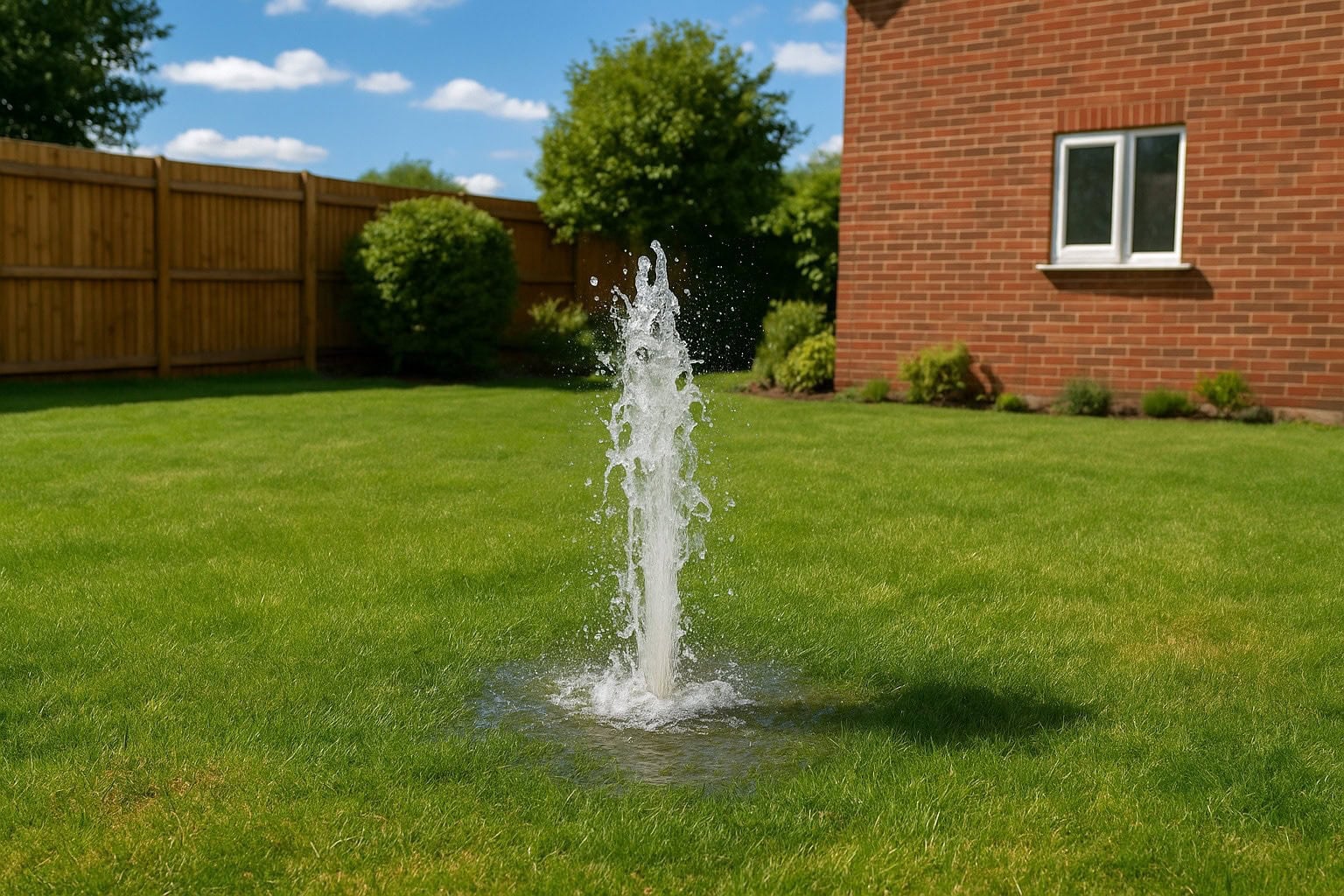
If the ground around your property feels firm one week and noticeably softer the next, it can be difficult to explain. There’s no clear pattern, no obvious cause, and yet something keeps changing beneath your feet.
This kind of inconsistency is often overlooked — but it can be an early sign of a developing issue below the surface.
The key is understanding why ground conditions would change like this without any clear external reason.
Why ground conditions can fluctuate
Soil naturally changes depending on moisture levels, but these changes are usually gradual and linked to weather.
If the ground alternates between firm and soft:
- Moisture levels may be changing unpredictably
- Water may be entering the ground intermittently
- The source of moisture may not be constant or obvious
This is when the situation moves beyond normal environmental conditions.
If you want to understand how underground leaks behave, see underground leaks explained.
What causes inconsistent ground behaviour
When ground conditions change from week to week, it often suggests that water is not being supplied evenly.
This can happen when:
- A small leak fluctuates in flow
- Ground pressure changes affect how water spreads
- Water intermittently reaches the surface through the soil
These factors can create a pattern that feels unpredictable.
Why this can be easy to dismiss
Because the issue isn’t constant, it’s often assumed to be temporary.
It’s common to think:
- The ground is just reacting to recent weather
- The softness will resolve on its own
- The changes are too minor to indicate a problem
However, repeated changes in the same area are rarely random.
Why the pattern matters
The key detail is not just the softness — it’s the fluctuation.
This suggests:
- There may be an ongoing but variable source of moisture
- The issue could be developing rather than fully established
- The ground is responding to changes happening below the surface
This pattern is often an early warning sign.
Why this shouldn’t be ignored
Even if the ground returns to normal temporarily, the underlying issue may still be present.
Over time, this can lead to:
- More consistent softening of the ground
- Expansion of the affected area
- Greater disruption if the issue worsens
Early investigation often prevents escalation.
How The Leak Hunter approaches this
The Leak Hunter will assess whether the changing ground conditions are linked to an underground leak and pinpoint the exact source without unnecessary excavation.
This allows the issue to be clearly understood before any repair work begins.
To see how this works, visit how we find underground leaks.
Why the surface doesn’t show the full picture
The condition of the ground is only a surface-level indicator.
In reality:
- The source may sit deeper below the surface
- Water may be moving through the ground unevenly
- The visible changes reflect a deeper, developing issue
This is why proper investigation is essential.
What happens once the cause is confirmed
Once the source is identified, the repair can be planned in a controlled and targeted way.
This may involve:
- Accessing the pipe at the correct location
- Repairing or replacing the affected section
- Restoring the ground once the work is complete
You can read more about this stage here: what happens after an underground leak is found.
Final thoughts
If the ground around your property changes from firm to soft without a clear reason, it’s worth taking a closer look.
The inconsistency itself is often the biggest clue that something is happening below ground.
The Leak Hunter will confirm the cause, locate the source accurately, and carry out the right repair — ensuring the problem is resolved without unnecessary disruption.
To see how we investigate and resolve underground leaks, visit underground leak detection.
Frequently asked questions
Do you only cover my area?
If you’re outside these areas, don’t worry — our team covers most of the South East, providing trusted leak detection services throughout London, Kent, Sussex, and Surrey.
Is changing ground condition normal?
Some variation is normal, but repeated changes in the same area may indicate a deeper issue.
Can a leak behave inconsistently?
Yes. Smaller or developing leaks can fluctuate depending on pressure and ground conditions.
Should I investigate even if it improves?
If the issue keeps returning, it’s best to confirm the cause early.