

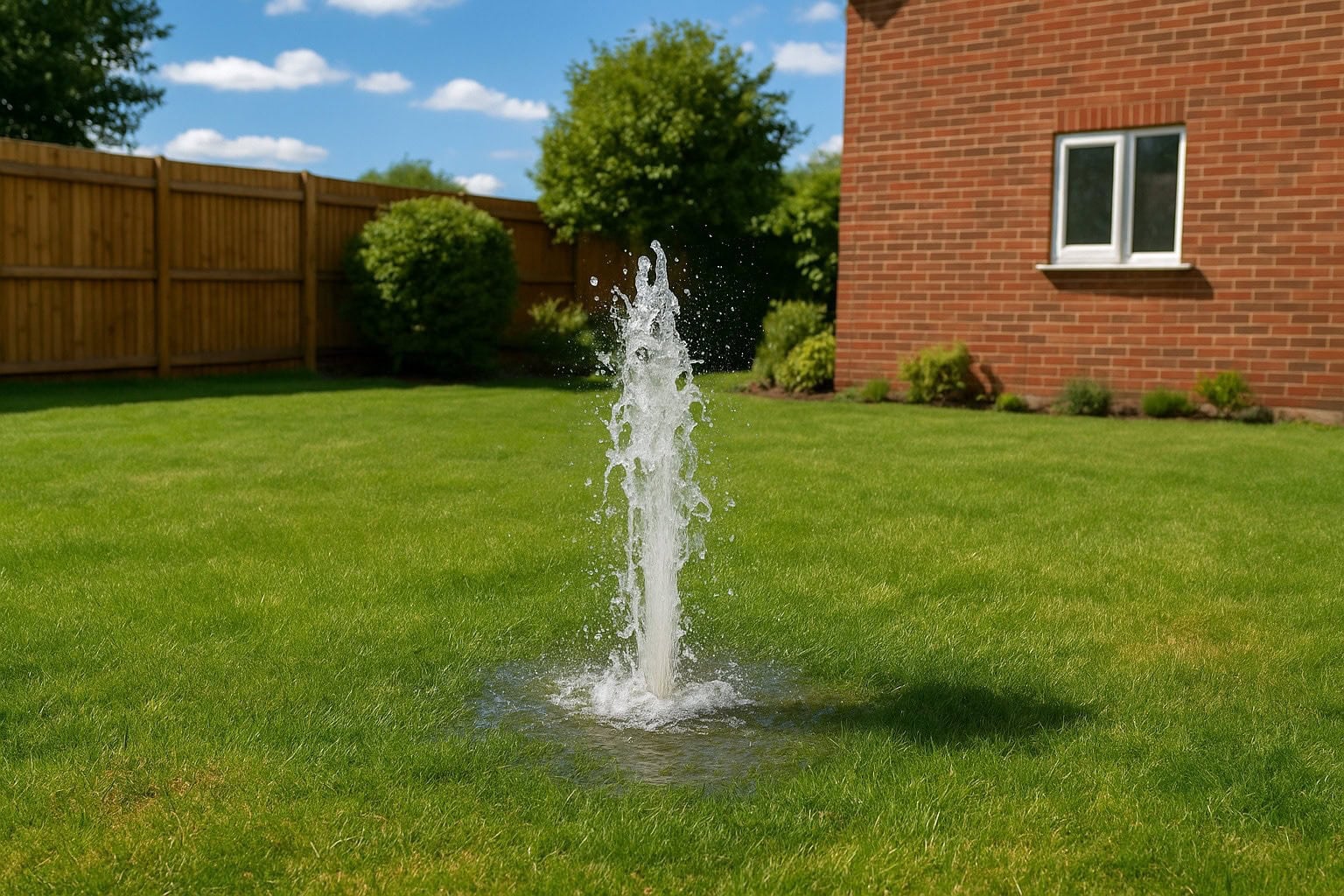
If you’ve noticed that part of your garden or outdoor space stays wet even during hot, dry weather, it can feel unusual. You would normally expect the ground to dry quickly in these conditions — but instead, the moisture remains.
This kind of behaviour often points to something more than just surface water.
In many cases, it suggests that the ground is being supplied with water from below rather than relying on rainfall.
Why ground should dry in warm weather
During warm or hot conditions, moisture in the soil typically evaporates or drains away.
This means:
- Wet areas should gradually reduce
- The ground should return to a firm condition
- Moisture should not persist without a clear source
If the ground remains wet despite these conditions, something is preventing that natural process.
If you want to understand how underground leaks affect ground conditions, see underground leaks explained.
What persistent wet ground usually indicates
When the ground stays wet during dry weather, it often means water is being introduced continuously.
This can happen when:
- A pipe below ground is leaking steadily
- The surrounding soil remains saturated due to ongoing flow
- Moisture is being replenished faster than it can evaporate
This creates a condition where the ground never fully recovers.
Why it’s often limited to one area
Persistent wetness is usually localised rather than affecting the entire outdoor space.
This typically suggests:
- A specific underground source in that location
- A consistent leak feeding moisture into one section
- Ground conditions that allow water to collect there
The defined area is often an important clue.
What homeowners often assume
It’s common to assume the issue is caused by:
- Shaded areas drying more slowly
- Differences in soil composition
- Residual moisture from previous weather
While these can influence drying, they don’t usually explain persistent wet ground during prolonged dry conditions.
Why this shouldn’t be ignored
Ongoing moisture may not seem urgent, but it can lead to:
- Worsening ground conditions over time
- Expansion of the affected area
- More complex repairs if the cause continues
Early investigation often prevents escalation.
How The Leak Hunter approaches this
The Leak Hunter will confirm whether the persistent wet ground is being caused by an underground leak and pinpoint the exact source without unnecessary excavation.
This ensures the issue is clearly understood before any repair work begins.
To see how this works, visit how we find underground leaks.
Why the visible moisture doesn’t show the full picture
The wet area you see is only part of what’s happening.
In reality:
- The source may be deeper below the surface
- Water may be moving through the ground before appearing
- The visible area reflects where moisture collects, not where it starts
This is why proper investigation is essential.
What happens once the cause is confirmed
Once the source is identified, the repair can be planned in a controlled and targeted way.
This may involve:
- Accessing the pipe at the correct location
- Repairing or replacing the affected section
- Restoring the ground once the work is complete
You can read more about this stage here: what happens after an underground leak is found.
Final thoughts
If the ground stays wet even during hot weather, it’s worth looking beyond surface explanations.
The issue may not be environmental — it could be a sign of a continuous underground problem.
The Leak Hunter will confirm the cause, locate the source accurately, and carry out the right repair — ensuring the problem is resolved without unnecessary disruption.
To see how we investigate and resolve underground leaks, visit underground leak detection.
Frequently asked questions
Do you only cover my area?
If you’re outside these areas, don’t worry — our team covers most of the South East, providing trusted leak detection services throughout London, Kent, Sussex, and Surrey.
Is this just because the area is shaded?
Shading can slow drying, but persistent wetness in hot weather is often worth investigating.
Can a leak continue even if I can’t see water moving?
Yes. Water can remain within the ground without visible flow at the surface.
Should I wait for it to dry out?
If it doesn’t change over time, it’s best to confirm the cause rather than wait.