

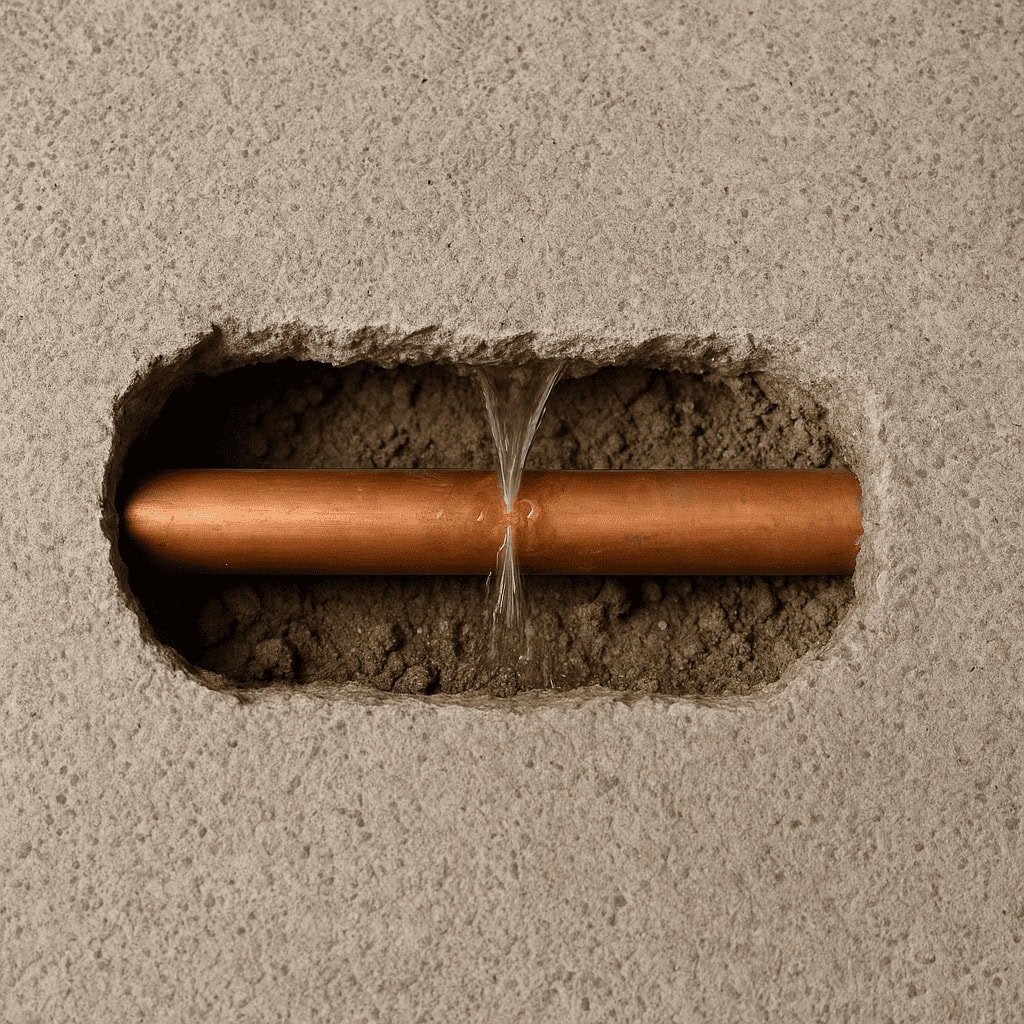
Leaks beneath concrete or solid floors can be difficult to diagnose and worrying for homeowners. Because the pipework is buried beneath screed or concrete, leaks are rarely visible and often mistaken for condensation, damp, or surface issues.
If you’re concerned about a leak beneath a solid floor, our Concrete Floor Leak Detection service explains how these leaks are located accurately without unnecessary disruption.
This page explains how concrete floor leaks occur, the warning signs to look out for, and how specialist detection avoids lifting large areas of flooring.
How Pipes Run Beneath Concrete Floors
In many properties, water or heating pipes run:
- Within screed
- Beneath solid concrete slabs
- Through insulation layers below the floor
When a leak develops, water can spread laterally beneath the floor before appearing elsewhere in the property.
This often makes the source difficult to identify without specialist investigation.
Common Signs of a Leak Beneath a Concrete Floor
Leaks under solid floors often present indirectly.
Common signs include:
- Unexplained damp patches near floor level
- Cold or wet areas on solid flooring
- Warped or lifting floor finishes
- Persistent musty smells
- Boiler pressure loss (where heating pipes are involved)
Because the leak may not surface directly above the pipe, signs can appear some distance from the source.
Why Concrete Floor Leaks Are Often Misdiagnosed
Leaks beneath concrete floors are frequently mistaken for:
- Condensation
- Rising damp
- Poor ventilation
- Surface water ingress
Treating the symptoms without identifying the source often leads to repeated damage and ongoing moisture problems.
Accurate detection is essential before any remedial work is carried out.
How Leaks Beneath Concrete Floors Are Found
Specialist, non-destructive techniques are used to locate leaks beneath solid floors.
These may include:
- Thermal imaging to identify abnormal temperature patterns
- Acoustic leak detection to detect sound from escaping water
- Tracer gas testing for leaks beneath screed or concrete
- Moisture mapping to understand how water has spread
Using multiple methods allows the exact leak location to be confirmed before any access is made.
Avoiding Unnecessary Floor Removal
Lifting large sections of concrete or flooring without confirming the leak location can:
- Cause extensive disruption
- Increase repair and reinstatement costs
- Fail to locate the actual leak
Non-destructive detection ensures:
- Only the affected area is accessed
- Flooring can often be reinstated
- Repairs are targeted and proportionate
What Happens Once the Leak Is Found
Once the leak beneath the concrete floor is located:
- The findings are explained clearly
- The precise access point is identified
- Repair options are discussed
This approach keeps disruption to a minimum and avoids unnecessary excavation.
When to Arrange Professional Investigation
You should consider specialist investigation if:
- Damp keeps returning near solid floors
- There are unexplained moisture issues
- Floor finishes are lifting or warping
- Boiler pressure continues to drop
Early detection helps prevent further damage and costly repairs.
What to Do Next
If you suspect a leak beneath a concrete or solid floor, accurate detection is the first step.
Our Concrete Floor Leak Detection service focuses on locating leaks beneath solid floors precisely, minimising disruption, and advising on the most appropriate next steps.


