

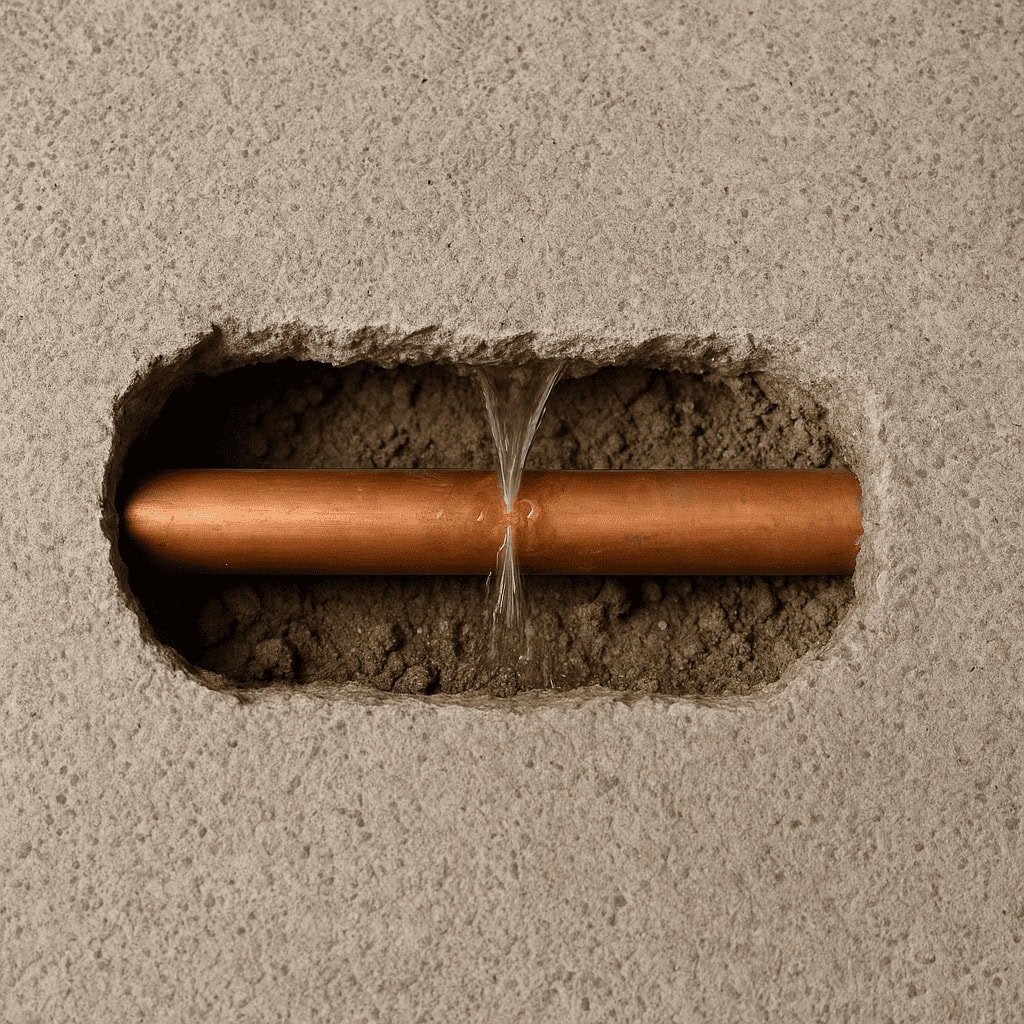
A leak beneath a concrete floor is rarely visible at the source. Because pipework is buried within screed or slab, the first signs usually appear as changes within the property rather than obvious water escape.
The source is below the surface.
In most properties we investigate, the symptoms develop gradually and are often mistaken for general damp or unrelated issues.
If you are unsure whether the problem is beneath the floor, our Concrete Floor Leak Detection service focuses on confirming the source accurately before any disruption takes place.
The key is recognising patterns that suggest water is escaping below the floor.
Changes in Flooring or Surfaces
One of the most common signs is a change in the condition of the floor. This may include lifting, warping, or areas that feel soft underfoot.
Moisture spreads beneath the surface.
This means the affected area may not sit directly above the leak.
The visible effect is often where water has travelled, not where it has escaped.
Persistent Damp or Moisture at Floor Level
Damp patches that do not dry out can indicate water escaping beneath the floor. This may appear along edges of rooms, near skirting boards, or across sections of flooring.
The moisture often returns.
This pattern suggests an ongoing source beneath the surface.
Warm or Cold Areas Underfoot
If the leak involves heating pipework, sections of the floor may feel unusually warm. In other cases, trapped moisture can create colder areas due to changes in heat retention.
Temperature differences can point to hidden pipework beneath the floor.
These changes are often subtle but consistent.
Unexplained Increase in Water Usage
A leak beneath a concrete floor may also show as increased water usage without any change in daily habits.
The meter may continue to move.
Unexplained usage often indicates water is escaping somewhere within the system.
Loss of Pressure in Heating Systems
If the pipework beneath the floor is part of a heating system, a leak may cause gradual pressure loss. This often results in the need to top up the system repeatedly.
Pressure loss without a visible cause is a key warning sign.
This is commonly linked to pipework beneath solid floors.
Musty Smells or Mould Growth
Moisture trapped beneath flooring can create a damp environment, leading to musty smells or mould forming near floor level.
The smell often lingers.
If conditions persist despite ventilation or cleaning, it may indicate a hidden source below the floor.
When the Cause Is Not Obvious
In many cases, these signs appear without a clear explanation. There is no visible pipework, no obvious leak, and no single point of failure.
The source cannot be seen.
When the cause cannot be identified by inspection, further investigation is needed to confirm whether water is escaping beneath the floor.
What to Do Next
If you are noticing any of these signs, the next step is to confirm whether there is a leak beneath the concrete floor and identify the exact location.
Our Concrete Floor Leak Detection service focuses on identifying leaks beneath solid floors, confirming the exact source, and resolving the issue with targeted access and repair.


