

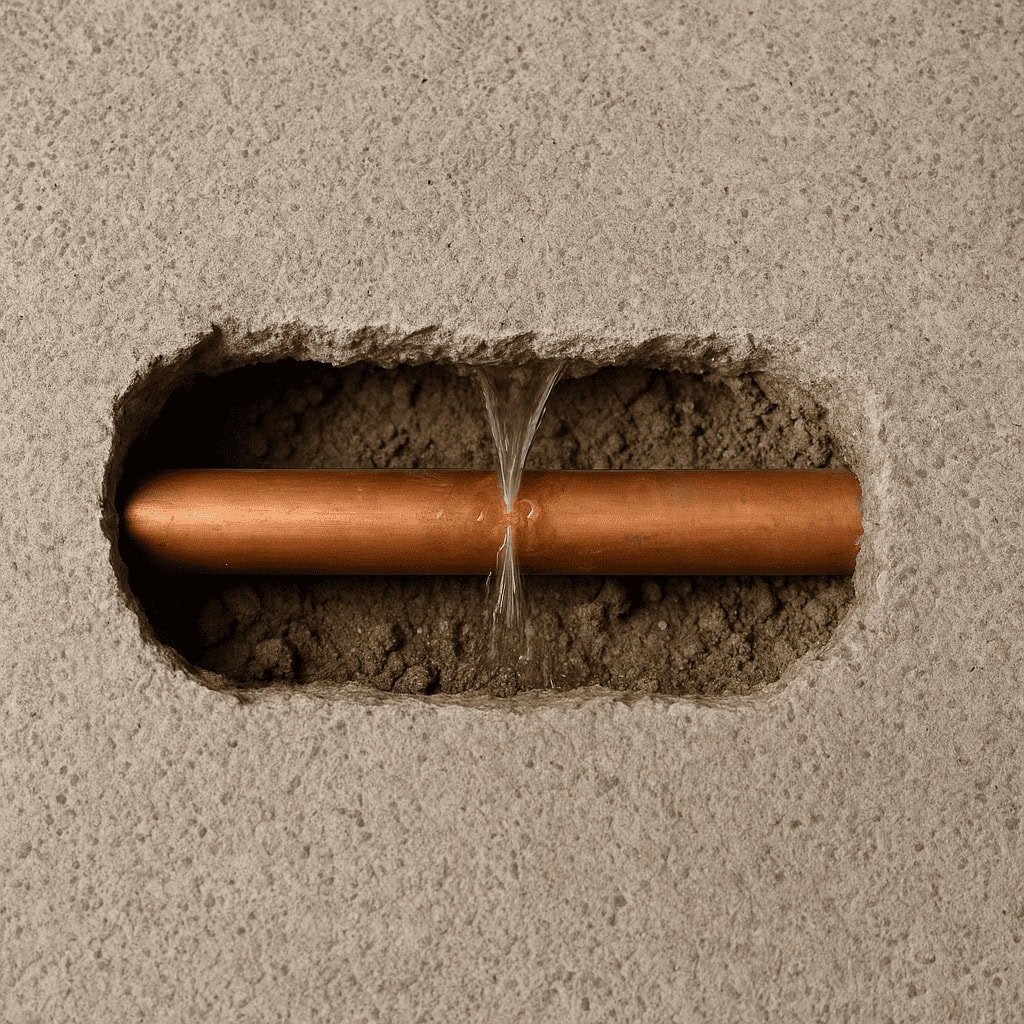
Concrete floor leaks occur beneath solid floors where pipework is buried within screed, slab, or insulation layers. Because these pipes are hidden, the source is not visible and the effects often appear somewhere else within the property.
The pipework is buried beneath the floor.
In most properties we investigate, the signs appear away from the actual point of failure.
If you are unsure where the problem sits, our Concrete Floor Leak Detection service focuses on confirming the exact location before any flooring is lifted or broken out.
Understanding where leaks commonly occur beneath solid floors helps explain why they are difficult to identify without specialist detection.
Within Buried Heating Pipework
One of the most common locations is buried central heating pipework running through screed or slab. When these pipes fail, pressure may drop gradually while the leak remains hidden below the floor.
Heating pipes often run unseen below solid floors.
Pressure loss without a visible cause often points to this area first.
Along Hot and Cold Water Pipes Beneath the Slab
Water supply pipes can also run beneath a concrete floor. If one of these pipes leaks, water may travel through insulation, membranes, or the slab before any signs become visible.
The visible moisture may not sit directly above the leak.
This is why damp edges, lifting finishes, or moisture at floor level often appear away from the source.
At Joints, Bends, and Connection Points
Leaks beneath concrete floors often occur at stress points within the buried pipework. This can include bends, joints, and connections where movement, wear, or previous installation issues have affected the pipe.
Weak points are not always visible from above.
The floor surface does not reveal where these faults sit.
Beneath Kitchens, Bathrooms, and Utility Areas
Concrete floor leaks are often suspected beneath rooms with a high concentration of plumbing, such as kitchens, bathrooms, and utility spaces. These areas may contain buried supply or heating pipework that continues below the floor finish.
High-use areas often sit above hidden pipe routes.
This does not confirm the source, but it often helps narrow down where further investigation should begin.
Around Floor Perimeters and Wall Edges
Although the leak may sit in the middle of the floor, moisture often becomes visible around the perimeter of the room. This can appear near skirting boards, thresholds, or wall edges where water has travelled and collected.
Water often shows at the edges first.
The visible area is often where moisture settles, not where it escapes.
Along Unknown Pipe Routes Beneath Solid Floors
In many properties, the exact route of buried pipework is not fully known. This is especially common in older homes, altered layouts, or floors that have been replaced or covered over time.
The route beneath the floor is often unclear.
This makes it difficult to assume where the leak is located without proper detection.
Why the Exact Location Cannot Be Assumed
Once water escapes beneath a concrete floor, it can move through layers below the surface before becoming visible. It may travel across the slab, along membranes, or into surrounding materials.
Water moves below the floor before it shows.
This means surface signs do not reliably indicate where the leak is actually located.
Accurate detection is required to confirm the true source beneath the floor.
What to Do Next
If you suspect a leak beneath a concrete floor, the next step is to confirm exactly where it is occurring before any surfaces are opened.
Our Concrete Floor Leak Detection service identifies leaks beneath solid floors, confirms the exact location, and carries out targeted repairs without unnecessary disruption.


