

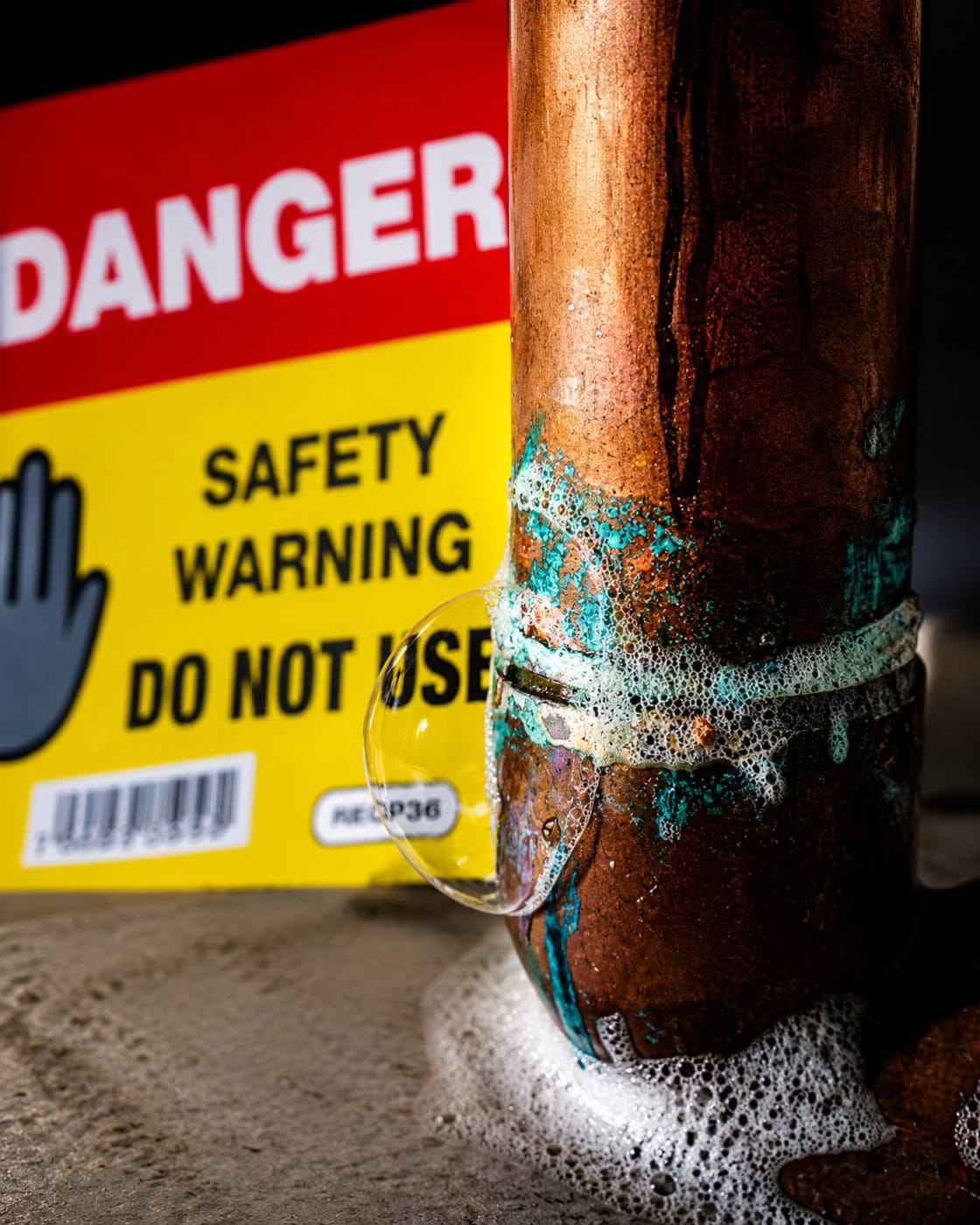
Once your gas supply has been turned off and the system has been made safe, the situation moves from immediate risk to controlled diagnosis. At this stage, the leak has been confirmed, but its exact location is often still unknown.
The system is safe to test.
The priority is no longer safety. It is accuracy. The leak needs to be located properly so the correct repair can be carried out.
Our Gas Leak Detection service focuses on tracing gas leaks after isolation. In most properties we attend, we identify the exact source so the leak can be repaired without unnecessary pipe replacement.
What Changes Once the Gas Has Been Turned Off
When the supply is capped, the system becomes safe to test under controlled conditions. This allows us to assess the pipework without risk.
The leak is already confirmed.
The focus now is identifying exactly where gas is escaping within the system.
This step determines whether the issue can be repaired directly or whether further work is genuinely required.
Why a Pressure Test Is Not Enough
A pressure test confirms that the system is losing gas, but it does not identify the location of the fault.
The location remains unknown.
This is why pipe replacement is often recommended at this stage. Not because it is always necessary, but because the leak has not been traced.
Proper tracing replaces uncertainty with confirmed evidence.
How We Trace Gas Leaks
We follow a structured tracing process to locate the exact point of failure.
We test the system, isolate sections, and narrow down the search area step by step.
We work along the pipe route, including concealed areas such as floors, voids, and enclosed pipe runs.
The aim is to pinpoint the exact source rather than a general area.
In most properties, the leak is found at a specific joint, fitting, or isolated section of pipework.
Why Accurate Tracing Matters
Without tracing, decisions are based on assumption. This often leads to unnecessary disruption and replacement of pipework that is still in good condition.
By identifying the exact location, we keep the repair targeted.
This reduces the amount of work required and ensures the solution reflects the actual condition of the system.
In many cases, once the leak is located, it can be repaired directly without a full pipe re-run.
From Tracing to Repair
Once we identify the leak, we assess the affected section and carry out the appropriate repair.
We then retest the system to confirm it is holding gas correctly before it is returned to service.
The system is verified before reinstatement.
How The Leak Hunter Handles This Stage
The Leak Hunter specialises in tracing gas leaks after the system has been made safe. We work methodically to identify the exact point of failure and confirm whether the issue is localised or more widespread.
We focus on repair, not unnecessary replacement.
In most cases, this allows us to repair the leak directly without replacing the full pipe run.
All work is carried out by Gas Safe registered engineers. We provide a 12-month warranty, and The Leak Hunter is a WaterSafe member, maintaining high standards across all plumbing and heating work.
If requested, we can provide a detailed trace and access report suitable for insurers.


