

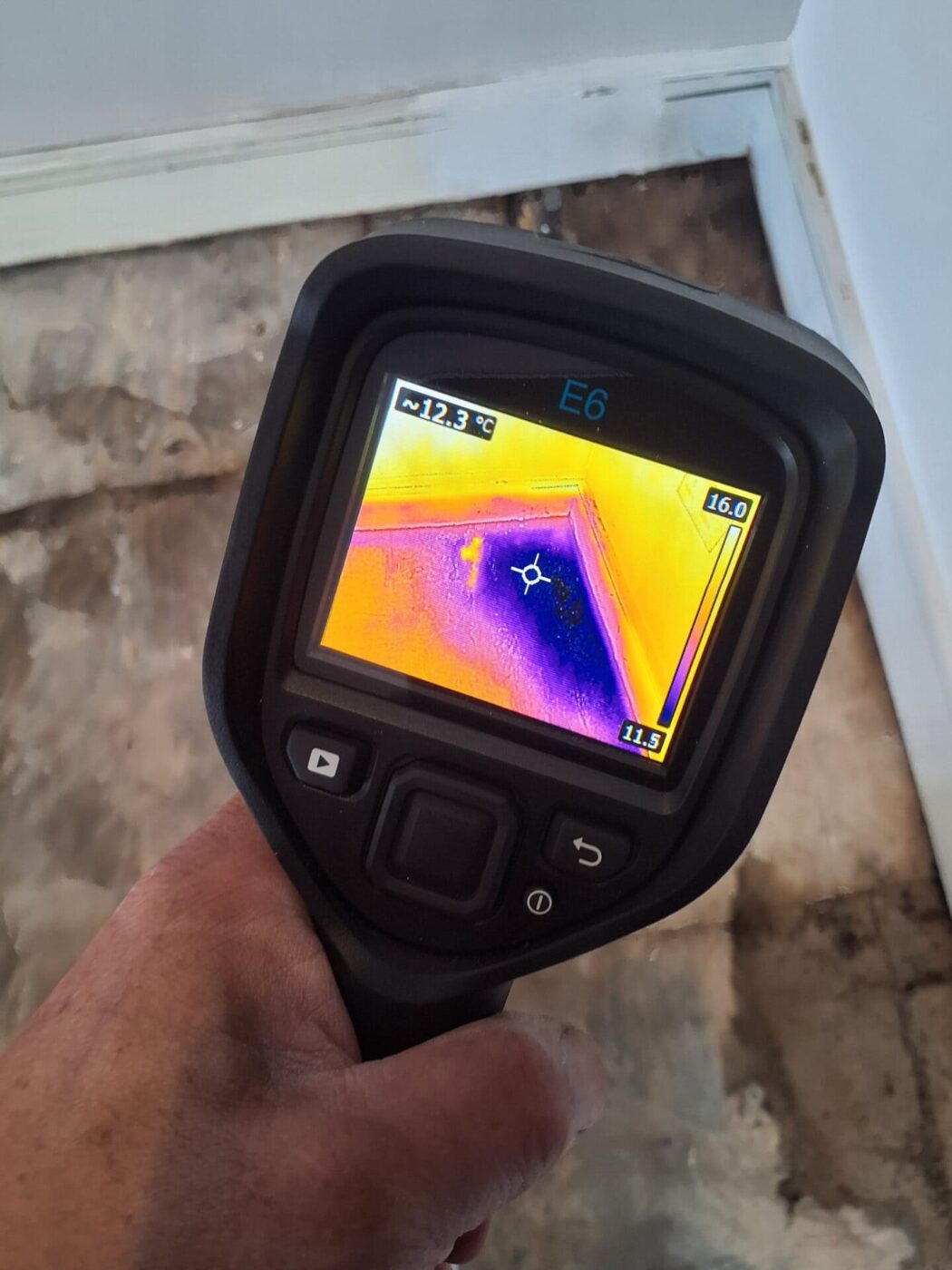
A hidden leak is usually identified when something isn’t right, but there is no visible source. Water may be escaping somewhere within the property, yet there is nothing obvious to explain where it is coming from.
This is where the problem begins — water is being lost, but the location of the leak is unknown.
In many properties we investigate, the visible signs are not where the leak is. Water travels through structures before becoming noticeable, often appearing far from the actual source.
If you are seeing signs of a leak but cannot find where it is coming from, this is typically treated as an unknown leak rather than a visible fault. Our Leak Detection service focuses on locating these types of leaks accurately before any disruption begins.
What Is a Hidden Leak?
A hidden leak occurs within enclosed or inaccessible parts of a property. This includes pipework behind walls, beneath floors, inside ceilings, or within structural areas where the source cannot be seen.
Because the leak is not visible, it is usually identified through symptoms rather than direct observation.
The leak exists out of sight, but the effects are still present.
Why Hidden Leaks Are Hard to Locate
Water does not stay where it escapes. It follows the path of least resistance, moving through materials such as plaster, timber, insulation, and concrete.
This means:
- The visible damage may appear far from the source
- Water can spread across multiple areas before showing
- The original leak point remains concealed
What you see is often where water has travelled, not where it has escaped.
Where Hidden Leaks Occur
Hidden leaks can develop anywhere pipework or water systems are enclosed within the property.
- Behind walls and plasterboard
- Beneath floors or concrete slabs
- Within ceilings and loft spaces
- Inside central heating systems
- Along underground or external supply routes
The location often determines how the leak behaves and why it is difficult to identify without proper testing.
How Hidden Leaks Cause Damage
Although hidden, these leaks can cause progressive damage over time.
- Moisture builds within walls, floors, and ceilings
- Materials weaken, warp, or deteriorate
- Mould and damp conditions develop
- Water usage increases without clear explanation
Because the source is not visible, these issues often develop gradually before being linked back to a leak.
Why Guesswork Doesn’t Work
Without confirming the exact location, opening floors, walls, or ceilings can lead to unnecessary disruption and may not resolve the problem.
Hidden leaks require confirmation, not assumption.
The source must be identified first before any repair work begins, ensuring the correct area is accessed and the actual issue is resolved.
What Happens Next
If you suspect a hidden leak, the next step is to confirm its exact location using controlled, non-invasive testing.
At The Leak Hunter, we locate hidden leaks precisely before defining the repair. This ensures the issue is resolved efficiently, without unnecessary disruption to your property.


