

When a leak leads to an insurance claim, the most important step is confirming the exact source before repairs begin. Without clear evidence, claims can be delayed, access can become more disruptive than necessary, and the cause of the damage may remain uncertain.
Accurate leak detection provides the evidence needed to show where the leak is, what access is required, and why that access is necessary.
Our Leak Detection service focuses on locating the exact source using non-destructive methods, so the findings can be explained clearly before repair work begins.
This helps homeowners, landlords, contractors, and insurers work from the same confirmed information.
Why Leak Detection Matters for Insurance Claims
Insurance claims relating to escape of water often depend on evidence rather than assumption. If the source of the leak has not been confirmed, it becomes harder to show what happened, what damage has been caused, and what needs to be opened to carry out repairs.
Leak detection provides that clarity before unnecessary disruption takes place.
The purpose is to replace uncertainty with confirmed findings before access or repair decisions are made.
What Insurers Usually Need to Know
While requirements vary between policies and insurers, the same core questions usually need to be answered. Where is the leak? What is the likely cause? What areas have been affected? What access is required to reach the source?
These are the questions that accurate leak detection is designed to answer.
Clear findings make it easier to explain the problem and justify the work that needs to happen next.
How the Leak Is Investigated
Leak detection for insurance purposes follows the same structured process used across our investigations. The property symptoms are assessed first, then the most appropriate non-destructive methods are used to confirm the source.
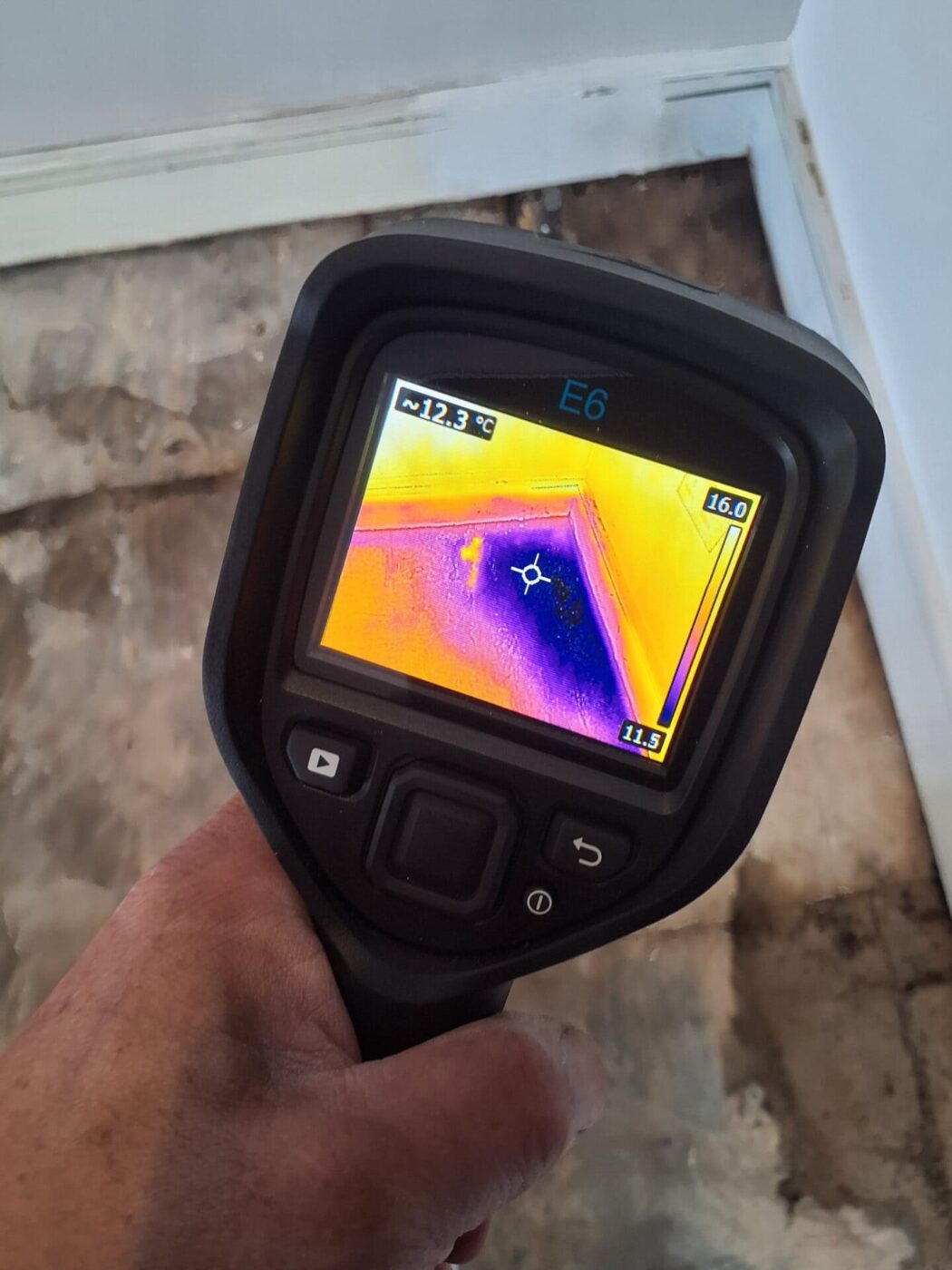
Depending on the type of leak, this may involve acoustic testing, thermal imaging, tracer gas testing, or moisture analysis. The goal is always to identify the exact source before any unnecessary opening up takes place.
The investigation is based on evidence and confirmation, not trial and error.
Trace and Access Reporting
If requested, we can provide a detailed trace and access report suitable for insurers. This sets out how the leak was identified, where it is located, what access is required, and why that access is necessary.
This gives all parties a clear record of the findings and helps support the next stage of the claim.
A clear report helps reduce confusion and supports communication between homeowner, insurer, and contractor.
Why Non-Destructive Detection Helps During Claims
One of the main benefits of non-destructive leak detection is that it reduces unnecessary damage. By locating the source first, access can be limited to the area that actually needs attention.
This helps control disruption, reduce reinstatement costs, and make sure repairs are carried out in the correct place.
Accurate detection protects both the property and the claims process that follows.
What Happens After the Leak Is Confirmed
Once the source has been confirmed, the next steps can be planned with clarity. This may involve controlled access, targeted repair, or passing the confirmed findings to the relevant insurer, loss adjuster, or contractor.
The important point is that the repair process begins with evidence rather than assumption.
Knowing the exact source first makes the claim and repair process more straightforward.
What to Do Next
If you need leak detection for an insurance claim, the first step is to confirm the exact source before any access or repair work begins.
Our Leak Detection service focuses on locating leaks accurately using non-destructive methods and providing clear findings, so the claim can move forward with the right evidence and minimal disruption to your property.


