

Ceiling leaks are often the first visible sign of a hidden water problem, but the damage rarely shows where the leak begins.
Ceiling leaks rarely appear at the true source.
In most cases we investigate, the leak is located above or away from the area where the ceiling damage appears.
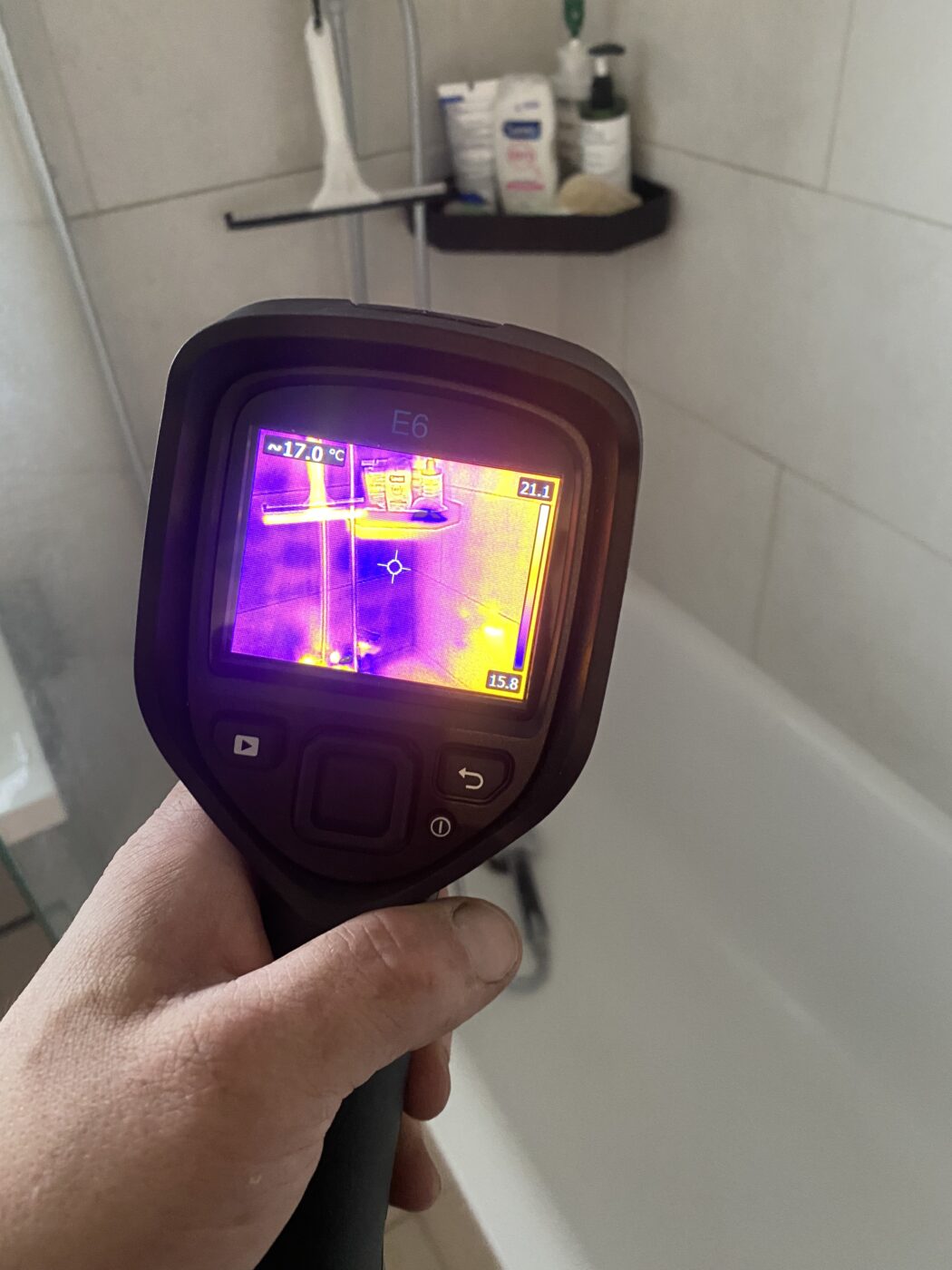
If you are dealing with a ceiling leak, our Water Leak Detection service focuses on identifying the true source accurately before any unnecessary opening up is carried out.
The key is understanding how water travels and why ceiling damage can be misleading.
Why Ceiling Leaks Are Misleading
When water escapes from pipework or fittings above, it does not always drip straight down. It can travel along joists, spread across surfaces, or collect within ceiling voids before becoming visible.
This means the area showing staining or damp is often not directly below the source of the leak.
The visible ceiling damage is where the water has settled, not where it has escaped.
What Commonly Causes Ceiling Leaks
Ceiling leaks are usually caused by issues in the level above. This commonly includes internal plumbing, bathroom fittings, shower trays, waste pipes, and water systems running through upper floors or loft spaces.
In many cases, the cause is concealed and cannot be identified by visual inspection alone.
We locate these leaks by tracing the source, not the visible damage.
Most ceiling leaks start somewhere above the visible damage.
How Ceiling Leaks Develop Over Time
Some ceiling leaks appear suddenly, but many build gradually. Small amounts of water can collect within ceiling voids for some time before staining, sagging, or damp patches become visible.
By the time the ceiling shows damage, the leak may already have been active for longer than expected.
Visible ceiling damage often appears late in the process.
Why the Source Cannot Be Identified Visually
Opening the area where damage is visible does not always lead directly to the source of the leak. Because water moves through structures, the origin may be located some distance away.
This is why cutting into the ceiling without confirmation can lead to unnecessary disruption in the wrong place.
Without proper detection, the true source of a ceiling leak cannot be confirmed.
Why Proper Diagnosis Matters
Ceiling leaks are often treated as surface problems when the real issue is hidden elsewhere. Unless the source is confirmed properly, repairs can be carried out in the wrong area while the actual leak continues.
At The Leak Hunter, we deal with this type of issue every day. We confirm where the water is escaping before any access or repair begins, so the correct problem is being solved.
What to Do Next
If you have noticed signs of a ceiling leak, the next step is to confirm where the water is coming from before opening up the affected area.
Our Water Leak Detection service identifies the exact source using non-destructive methods, so we can resolve the issue in the right place, with controlled access and no unnecessary disruption.


