

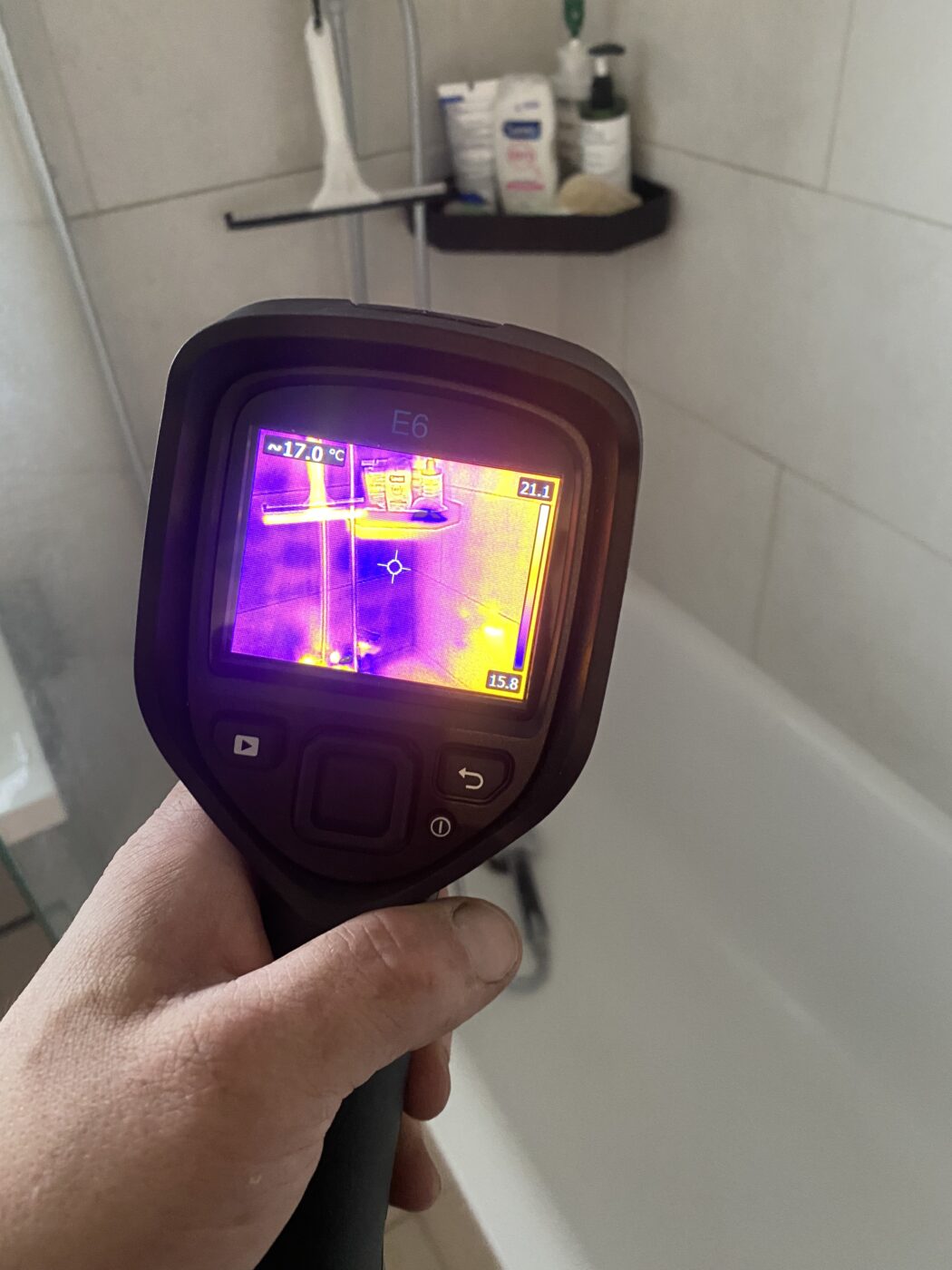
It is not always easy to tell whether a problem is caused by a water leak, damp, or condensation, as the signs can appear similar but require completely different solutions.
Damp, condensation, and leaks behave differently.
In many properties we investigate, ongoing damp issues are initially misdiagnosed when the underlying cause is actually a hidden leak.
If you are unsure what is causing the issue, our Water Leak Detection service focuses on confirming whether water is escaping and identifying the exact source accurately before any unnecessary work is carried out.
The key is understanding how each type of problem behaves.
How a Water Leak Behaves
A water leak involves water escaping from a pipe, fitting, or system. The source is usually concealed, and the effects often appear some distance away from where the leak is occurring.
Leaks create persistent or worsening conditions that do not resolve on their own.
Leaks do not improve without repair.
The defining characteristic of a leak is that water is actively escaping somewhere within the system.
How Damp Behaves
Damp develops due to moisture entering through walls, ground conditions, or structural factors. It is not always linked to internal pipework.
Damp problems often follow consistent patterns related to weather, building materials, or long-term exposure.
Damp usually develops gradually rather than suddenly.
Damp can lead to mould growth over time.
Unlike a leak, damp is not caused by a specific point of water escape within the plumbing system.
How Condensation Behaves
Condensation forms when warm, moist air comes into contact with a cold surface. This is common in bathrooms, kitchens, and areas with limited ventilation.
It is influenced by temperature, airflow, and humidity levels, and often improves when ventilation or heating conditions change.
Condensation appears in patterns, not from a fixed source.
Condensation is caused by moisture in the air, not escaping water.
Why the Signs Can Be Misleading
All three issues can result in similar visible effects, such as staining, discolouration, or damage to surfaces. This makes it difficult to determine the cause based on appearance alone.
Because water can travel within a structure, the location of visible damage does not reliably indicate the source.
Visible damage does not confirm the source.
This is where professional leak detection becomes essential.
Without proper investigation, it is not possible to confirm whether the issue is a leak or another form of moisture problem.
Why Correct Diagnosis Matters
Treating the symptoms without identifying the cause can lead to repeated problems. Repainting, improving ventilation, or surface-level repairs will not resolve a leak if water is still escaping.
Equally, assuming a leak where none exists can lead to unnecessary disruption.
At The Leak Hunter, we confirm whether a leak is present before any repair work begins, ensuring the correct problem is addressed.
Accurate diagnosis ensures the correct solution is applied from the outset.
How the Cause Is Confirmed
Specialist detection methods are used to determine whether water is actively escaping and to identify the source if a leak is present.
This allows the issue to be confirmed before any surfaces are opened, ensuring that work is targeted and proportionate.
We confirm the source before any repair begins.
The aim is to establish exactly what is causing the problem before taking action.
What to Do Next
If you are unsure whether you are dealing with a leak, damp, or condensation, the next step is to confirm the cause before carrying out any repairs.
Our Water Leak Detection service confirms whether water is escaping and allows us to locate and resolve the issue accurately, without unnecessary disruption.


