

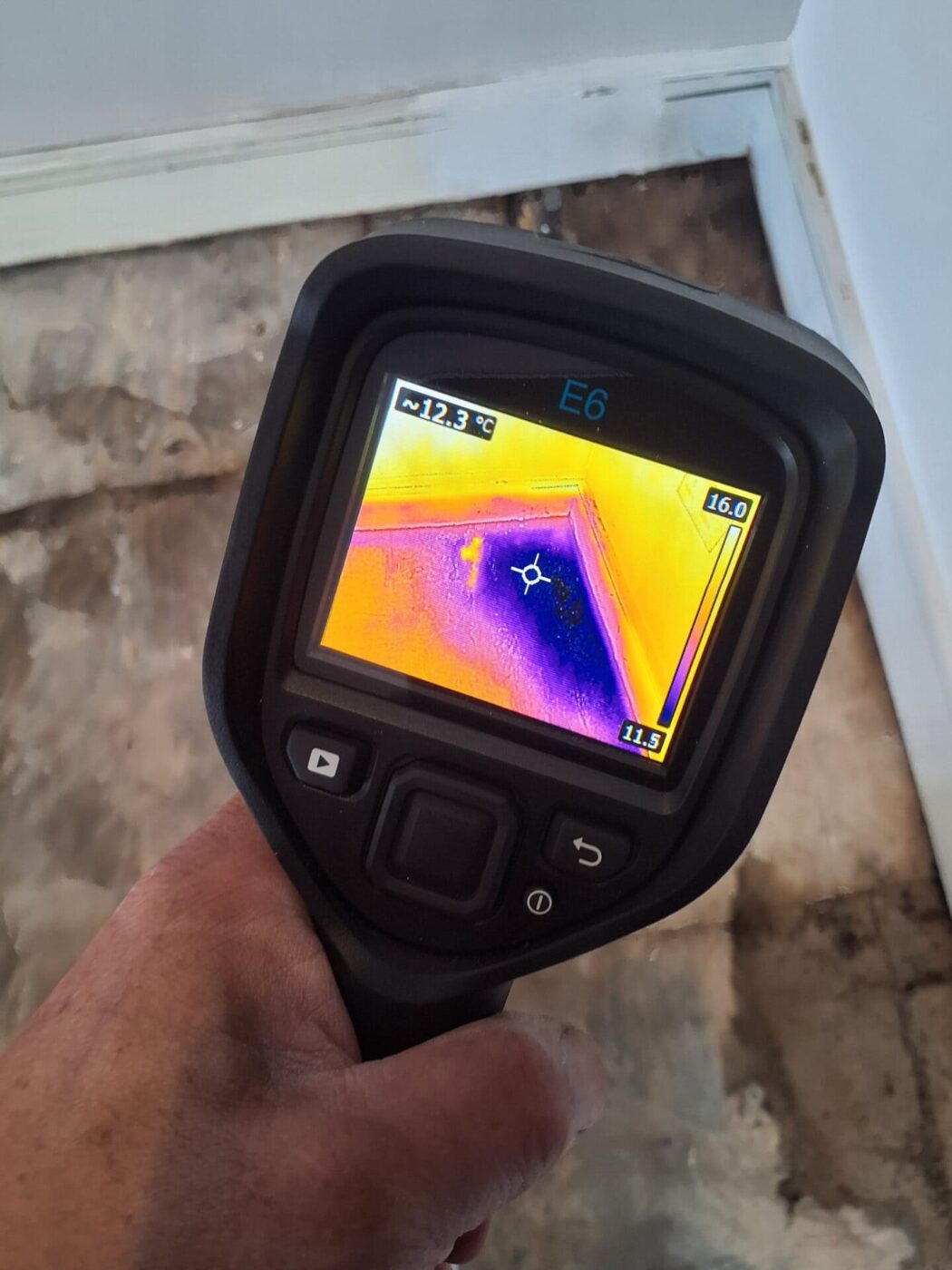
Leaks do not occur randomly. In most properties, they develop in predictable locations where pipework is concealed, stressed, or exposed to movement over time.
Visible damage rarely shows where the leak actually is. Water can travel through materials, along surfaces, and across structural elements before becoming noticeable.
Leaks occur in predictable areas.
Most leaks are hidden from view.
Access should follow confirmation, not assumption.
Leaks can develop across different systems within a property, including internal plumbing, central heating pipework, and underground supply pipes, depending on how water is distributed and where pipework is concealed.
If you are dealing with unexplained damp, pressure loss, or water-related issues, our Leak Detection service focuses on identifying the exact source before any disruption begins.
Where Leaks Commonly Occur Inside a Property
Internal leaks are often linked to concealed pipework and fittings within the structure of the building.
Common internal locations include:
- Within walls where pipework runs between rooms
- Beneath floors and floor coverings
- Inside ceilings and between levels
- Behind bathrooms, showers, and sanitary fittings
- Beneath kitchen units and appliances
In these areas, leaks can develop slowly and remain hidden for long periods before visible damage appears.
Leaks Within Pipework and Heating Systems
Leaks frequently occur within the systems that distribute water throughout the property.
This includes internal plumbing, central heating pipework, and underfloor heating systems, where pipes are often buried or enclosed.
Because these systems are sealed or concealed, leaks may not produce immediate visible signs. Instead, they often present through pressure changes, performance issues, or gradual moisture build-up.
The location of a leak is determined by how the system is installed, how the pipework is routed, and where stress or movement occurs over time.
Leaks Beneath Floors and Within Structural Elements
Some of the most difficult leaks to identify occur beneath floors or within structural elements of the property.
- Pipework buried within screed or concrete
- Pipes running beneath suspended timber floors
- Heating systems embedded within floor structures
- Pipe routes passing through structural walls
In these situations, water may spread beneath surfaces without becoming immediately visible, making accurate location more challenging without proper testing.
External and Underground Leak Locations
Leaks are not always confined to the inside of the property. External pipework and underground supply pipes are also common sources of water loss.
- Underground water supply pipes
- Pipework running beneath driveways and gardens
- External pipe routes between buildings or extensions
- Drainage or overflow-related pipe systems
Because these leaks occur out of sight, they often present through indirect signs such as water pooling, soft ground, or unexplained increases in water usage.
Concealed and Altered Pipe Routes
In many properties, pipework has been altered over time due to renovations, extensions, or system upgrades.
These changes can introduce additional joints, rerouted pipework, and concealed sections that increase the likelihood of hidden leaks.
Common areas include:
- Boxed-in pipework and service voids
- Extensions where pipe routes have been modified
- Loft or ceiling voids with concealed services
- Areas where multiple systems intersect
Because these routes are not always clearly visible or documented, leaks can develop in unexpected locations.
Why Leak Location Is Often Misleading
One of the most important factors in leak detection is understanding that water does not remain at the point of escape.
It can travel:
- Along joists and structural elements
- Through insulation and cavity spaces
- Across floors before appearing below
- Behind walls before becoming visible elsewhere
This is why visible damage is often not the source of the leak.
At The Leak Hunter, we regularly find leaks several metres away from where damage first appears.
Without confirming the exact location, access work can easily be carried out in the wrong area.
What to Do Next
If you suspect a leak within your property, the priority is to confirm where it is occurring before any access or repair work begins.
At The Leak Hunter, we identify leaks using structured, non-destructive methods and carry out controlled, targeted repairs once the source has been confirmed. The problem is located first, then resolved properly with minimal disruption.


